Obeying God’s Commandments–Torah Living Daily Challenge–Parashah 47 Part 4

Obeying God’s Commandments

Torah Living Daily Challenge—Parashah 47 Part 5

Remaining in verse 5 of the 13th chapter of Deuteronomy, I want to examine the second directive and that is to “obey His mitzvot” (or rather, “obey his commandments”). What does that look like to the Torah Observing Believer in Y’shua Messiah? Not what that looks like from the perspective of one of the more than 30,000 Christian denominations in the world, but what does the Word of the Creator say about obeying His commandments?

Mitzvot or mitzvah is the Hebrew term for the English word commandments or commandment or command respectively. In Christianity there seems to be some confusion as to the difference between commandments, the Law and Torah. The term commandments is found in 168-verses and used some 168-times in the KJV. Throughout the Bible the term commandments is used either as a directive given by men as in 1 Kings 2:43; Isaiah 29:13; Proverbs 6:20 or Nehemiah 12:24 or given by Yahovah/Yahweh as in Genesis 26:5 and as used in this passage. The question that would logically be asked is: in this verse was Moshe talking about the 10-commandments? Was he talking about the “613” commandments? Or was he talking about every commandment given by Yahovah/Yahweh?

Scribe

Well, I tend to practice contextual analysis of Scripture when I study Torah. I believe in applying logic, context and a literal read of the passages of Scripture in order to gain a proper understanding of what the Father would have us learn and obey. With the exception of a handful of passages that address specific cultural and ancient near eastern practices that we have limited information about, the bulk of Torah is plainly stated and does not require a ton of gray matter in order to gain a true perspective and understanding of what Moshe was attempting to pass on to us from the mouth of our Creator.

In order for me to understand what Moshe meant when he instructed us to “obey His (Father’s) mitzvot” (aka commandments or laws), I needed to gain an understanding of what is meant by mitzvot. Where else better to gain an understanding of the term mitzvot or mitzvah, than from Hebrew sources—more accurately, Jewish sources. And that is what I did.

In general, the term “mitzvot” refers to those directives that were transmitted from Father to Moshe on Mount Sinai. Now some would challenge the notion that Moshe received the full revelation of Torah on Mount Sinai, but rather, Moshe received the revelation of Torah on Mount Sinai and throughout our trek across the wilderness over the course of 40-years. Personally, I don’t care. Either theory is plausible. The bottom line is that Moshe was chosen by Father to receive His Torah and to transmit Torah to us and that is exactly what Moshe did.

Now the Jew has a nasty little habit of clumping the “Mishnah” and the “Talmud” into almost any discussion on “mitzvot” or the Law or Torah. There at this juncture, I thought it prudent to examine and gain an understanding of the Mishnah and the Talmud before moving on in our discussion on obeying Yahovah’s mitzvot.

Let’s take a look at the difference between the Laws of our Creator and the Laws or Traditions of the Elders.

Personal Perspective on the Mishnah and the Torah

As Torah Observant Believers in Y’shua Messiah, by virtue of the circles we are likely to run in we’ll inevitably come across some of our Messianic Jewish cousins. In those encounters we will inevitably be exposed to talk/discussion about the Oral Law (also referred to as the Oral Tradition)—formally referred to as the Mishnah and Talmud. Now, that talk regarding the Talmud or Mishnah may not focus on the Talmud or Mishnah as a document of rabbinic laws and teachings per se, but will likely take on a more subtle form such as a discussion on the validity or viability of a certain tradition, practice or teaching. Now that tradition or teaching may come across as being of Torah or as a commandment given to us from Yahovah. If we’re not careful, before we know it, we’re being told that this thing or that thing is a requirement of Yahovah/Yahweh and that we are commanded to obey that mitzvah. We had this very experience this past May when we attended the United in Torah Conference in San Diego California. We attended a Sabbath service where we were exposed to a traditional Torah ceremony or service. The many elements of that service, including touching the passing Torah scroll with our tzitzits, turning to the east and reciting various Jewish prayers and poems, were foreign to us. Yet the leader of the service demanded our complete obedience to these traditions and practices during the service. He communicated his position with a strength and conviction that I’d expect from someone who was teaching this stuff directly from Torah. Of course, we knew right away that these practices and traditions were directly from the Talmud. Sadly, some of his teachings even reached over into Kabbalahism.

If we’d not been so grounded in the Faith at the time (and I do not mean to come across as smug or pompous), we could have very easily fallen for these traditions and been right there with everyone else, turning to the east and touching the passing Torah scroll with our tzitzits. Needless to say, I was extremely put-off by these proceedings. I refused to participate and removed myself from my seat to the back of the auditorium. Later, after the ceremony had concluded, we were admonished by one of the guest speakers to not judge anyone nor any of the proceedings that we might observe during our time at that conference. That speaker’s perspective came from a genuine place I feel, as he sought to support and bolster the general theme and spirit of the conference that was entitled “United in Torah.” I got that. I tried my best not to judge any of the participants or attendees who were participating in that service. However, I could not help but draw a line in the spiritual sand that would, unfortunately, separate Hilary and I from those who would embrace the traditions of men and those of us who solely embrace Torah Y’shua style. As much as I respected the speaker and his sentiments, our two respective views on the Faith can not possibly co-exist. It just can’t. The reason I believe that the two-sides are incompatible is because our Master said so. It boggles the mind to think that certain sects of Messianic Judaism continue to embrace the traditions of the rabbis and the Talmud when the Gospel record clearly records the Master’s opposition towards it.
I refer you to the Book of Matthew and I’m going to reference Rood’s Chronological Gospels, event 109, entitled Y’shua confronts sages and Pharisees on the High Sabbath of the 1st Day of the 7th Month (aka Yom Teruah or Day of the Blowing of Trumpets) in 27 CE. This event takes place in Kfar Nahum (aka Capernaum). The point of contention between the Pharisees and Y’shua was the commandments of God. This event is recorded in Matthew 15:1-20 (with a corresponding passage found in Mark 7:1-23). The CKJV of the Matthew passage reads as follows:

”Then sages and Prushim (Pharissees), which were from Yerushalayim, came to Y’shua saying, ‘Why do your disciples transgress the takanot of antiquity, because they do not wash their hands when they eat bread?’ Y’shua answered them, ‘Why do you transgress the commandment of Yahovah by your takanot? For Yahovah commanded, saying, ‘Honor your father and mother, and he that curses father or mother shall be put to death.’ But you say, ‘Whoever shall say to his father or mother that whatever support they might have received from him is corban [a gift dedicated to the Temple], he is free [from his responsibility to caring for his elderly parents].’ In so doing, he does not care for his father or his mother! Thus, you have made the commandment of Yahovah of no effect by your takanot.’” (Matthew 15:1-6 CKJV)

It is this event that drives my Faith as it relates to a defining point where extra-Biblical instruction and teachings cross Torah and the teachings of our Master, Y’shua HaMashiyach. When we make allowances for traditions to have equal footing; equal authority to that of Torah and our Master’s teachings and instruction, then we may as well simply convert to Judaism or slither back to Traditional Christianity. Now, I realize this may not come across as politically acceptable talk on my part, but I’ve come to a point in my walk with the Master that I’m giving my all to Him and I seek everyday to be His loyal and trusting disciple. As His disciple, I am compelled; I am mandated; I am admonished to follow His commandments and seek to be like Him in every aspect of my being. It’s not rocket science; it’s doable; it’s what we all signed up for, despite what many of us in the true Faith once delivered seem to practice and believe.
It was around the supper table, just after Judas had left the gathering to see to the soon to come betrayal of our Master, that Y’shua explains to the remaining disciples,

“Truth I say to you, he who believes on me, the works that I do, he will do also; and greater works than these he will do, because I go to my Father. Whatever you ask the Father in my name, that I will do, that the Father may be glorified in the Son. If you shall ask anything in my name, I will do it! If you love me, Keep my commandments.” (John 14:12-15 CKJV)

Because we believe that Y’shua HaMashiyach is that prophet that the Father said he would send and whom we must “shema”

(“ADONAI will raise up for you a prophet like me from among yourselves, from your own kinsmen. You are to pay attention to him, (Deu 18:15 CJB)),

we don’t have the license to listen and adhere to the teachings and doctrines of rabbis and sages and others who would take it upon themselves to assume authority over our spiritual lives. And why complicate the situation? Father made it simple: He’s the boss and Y’shua is His proxy whom we must “shema.” There are no other dudes; no other middlemen whom we are to glob onto; and that includes the individual and collective writings of the sages and rabbis. It’s a very dangerous road we take friends, when we elect to adopt the traditions that are contained in the Mishnah and Talmud as so many of our brothers and sisters in the Hebrew Roots Faith have done. So strongly I feel about this that I’ve elected to attach this commentary to this Torah Living Daily Challenge posting. If indeed there is anything I can do to reason with those who have taken Jewish traditions and placed them in equal footing to Torah, and then teach others to do the same, by all means I will sound out the warning that this is wrong.
Now, let me just say this before I go any further: I could care less if anyone who is of the Hebrew Roots of the Christian Faith wants to light candles at the start of the Sabbath or recite a Jewish prayer; that’s their business and they can have at it. However, when anyone takes it upon themselves to say to me or any other brother or sister that they better turn to the east and touch the Torah scroll with their tzitzits or pray that the Torah teacher doesn’t drop the Torah scroll or else the congregation will be cursed for the remainder of that day, I take great exception to them and their ministries. How dare you! Most of us spent years in churchianity, under bondage of pagan traditions and religion; and to come out of churchianity for these men to dupe truth-seekers to adhere to another form of churchianity is nothing short of criminal. Just saying.

Defining The Mishnah and the Talmud
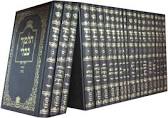
Talmud

I felt it imperative that I understand just what the Talmud was in order that I may in turn understand where Messianic Jews and other like sects of our Faith get their doctrines, teachings and laws from. In addition, gaining an understanding of what the Talmud is will provide a better understanding of what it was that Y’shua contended with as He debated with the Pharisees during His earthly ministry. If we are to be honest with ourselves, the Talmud is in great part the basis for the crucifixion of our Master. I said in great part because our Master was destined to die on the stake to atone for the sins of the world. However, it was His opposition to the traditions of the elders that provided the flash-point that would lead to His death on Calvary’s execution stake.
It was the Pharisees (or as known in the Hebrew, the Prushim or separated ones) that devised a religion around Torah that would ensure the Jewish nation would live a holy life and would keep the nation, in particular the Pharisees, Sadducees and Scribes, uncontaminated by the world around them. As we will see, these religious leaders were of the thinking that Torah by itself was insufficient to provide the Jewish nation the means of living holy and righteous lives in the midst of a corrupt and evil world. Thus they placed upon the Jewish people rules, laws and traditions that were not of Yahovah and were unreasonable and burdensome. The great physician Luke records the following:

“And one of the scribes answered and said to Him, ‘Teacher, when you say these things, you despise even us (this in response to the Master castigating the Jewish leaders who had challenged Him and His disciples for not washing their hands according to the traditions of the sages). And He (Y’shua) said, ‘Woe to you scribes also, because you make men carry heavy loads and you do not touch the loads with one of your fingers. Woe to you, for you build the graves of the prophets, those whom your fathers killed! You bear witness therefore and approve the works of your fathers because they killed them, and you build their graves!’” (Luke 11:45-46 AENT)

According to Rood, the Pharisees enacted more than 500 laws alone, governing the keeping of the Sabbath. That’s insane! But this is what the Master railed against and unfortunately, it’s this very same thing that many of our brothers and sister in the Faith are falling for even today. These rules or laws, according to the Jewish religious leaders, carry the same authority as those commandments found in Torah. The term “takanot” has become popular in some of our Hebrew Roots circles to describe these laws; this term having been introduced to me originally by the Karaite Jewish scholar Nehemia Gordon. Takanot can, according to Gordon, can “change or negate Torah Law.” This body of Pharisaical laws extend back before Y’shua’s birth. These laws or takanot were not written down, but were passed on to generations by Jewish leaders. This body of laws and rules were known as the Oral Torah, which according to Rood, “which gives them (the Pharisaic Laws) supremacy over the written Torah and that without the esoteric revelation transmitted through the oral torah, no one can properly understand the written Torah given at Mount Sinai.” (Rood-Chronological Gospels) Bear in mind that these terms—Oral Torah, takanot, law of the sages—are translated throughout the Gospel record in our English Bibles as “traditions.” Traditions can be cool things to celebrate and observe and treasure, such as Thanksgiving and other cultural traditions. But when traditions, such as those of the Pharisees, become equal to, and in some cases, even usurp authority over Torah, then we’re entering very dangerous and disastrous waters. It should be noted here, that the written Torah is the Law that was given to Moshe on Mount Sinai or in the Sinai desert. We will see that the Rabbis took it upon themselves to embellish upon the written Torah—the Laws given to us by Father through Moshe—through the their developing of the oral tradition or oral law. This in violation of the Laws of Yahovah/Yahweh whereby He commanded us as follows:

“Everything I am commanding you, you are to take care to do. Do not add to it or subtract from it.” (Deu. 13:1 CJB) “In order to obey the mitzvot of Adonai your God which I am giving you, do not add to what I am saying, and do not subtract from it.” (Deu. 4:2 CJB)

It was a Rabbi Judah the Prince, who took it upon himself to codify the Oral Tradition or Oral Torah, this he did about 200 CE. It is said that Judah the Prince codified the oral tradition for purposes of saving the Jewish culture and retaining the oral traditions of the Jews. The primary concerns over saving the Jewish culture and retaining the oral traditions were the result of two (2)-key events in Jewish history: the destruction of the Temple in 70 CE (Rood places the destruction in 68 CE) and the Bar Kokhba rebellion and defeat in 132-135 CE. Not only was the center of the Jewish Faith severely damaged by the destruction of Herod’s Temple by the Romans, the Jewish revolt resulted in severe restrictions being placed upon the Jews throughout the Roman Empire as it related to the Jew practicing and living out their religion. Thus, many a rabbi feared that their beloved race and religion would be wiped out by the sands of time.
Enter Rabbi Judah the Prince, who, through his codifying the oral traditions would save the Jewish culture and retain the teachings of Judaism. Notice I did not say Hebrew teachings or Torah or Tanakh. No indeed. The focus was on saving Judaism. This document became known as the Mishnah—a definitive collection of teachings from Torah teachers or the written down traditions of the sages. (Reference: www.myjewishlearning.com/article/mishnah)
Centuries after Judah the Prince, rabbis wrote down their discussions and commentaries on the Mishnah’s contents. The resulting series of books is known as the Talmud. There are two versions of the Talmud—the Talmud being a compendium of the Mishnah and Gemara which are interpretations and comments on the Mishnah: the Jerusalem Talmud (aka the Palestinian Talmud or Hebrew Talmud or Yerushalmi), edited by Palestinian Rabbis around 400 CE; and the Babylonian Talmud (aka the Bavli), believed edited around 500 CE. It so happens that the Babylonian Talmud is the more widely accepted of the two Talmuds because it is more extensive in its contents than its Palestinian counterpart and contains the most authoritative compilation of the Oral Tradition.
The Mishnah is useful to the Jew because it organizes, systematizes and codifies the Oral Law or Tradition. The Jewish leaders found fault with the written Law or written Torah because it lacked any perceived order, and more importantly to them, it lacked explanation and clarity on the Laws contained in Moshe’s version of Torah. An example that is given to support this contention is the law regarding “an eye for an eye.” The Oral tradition clarifies exactly what that law from Yahovah’s Torah means.
Thus the Mishnah is arranged topically into 63-tractates. Each tractate expounds upon specific Laws of Yahovah. For example, one tractate expounds upon the Laws governing the Sabbath—specifically explaining what the Sabbath is and how the Jew is to keep the Sabbath. Everything you ever want to know—down to the knat’s behind—about Sabbath according to the self-glorified opinions of the Jewish sages is contained in the Mishnah. Unfortunately, the rules and laws that the rabbis of old said were designed to put a fence around Yahovah’s Torah, have the authority behind them to supersede Yahovah’s Torah.
To the Netzir/Torah Observant Believer in Y’shua Messiah, the Mishnah is a violation of Yahovah’s Torah. I’m certain to get a lot of negative press about this post and my position on this issue, but I’m okay with that. As I mentioned at the outset of this post, I’m all about delivering the truth as Yahovah has delivered it to me through His Torah.
Now you have some basis to make up your own mind as to how you will serve Yahovah—obedience to His Torah and His Messiah, or obedience to the laws and traditions of men (i.e., the Oral Tradition). The Father gives us the freedom to decide. But it should be known before making this decision: one path leads to life; the other path will inevitably lead to destruction. I shouldn’t have to say which of the two fall into which category.

Bringing Obeying His Commandments Home

Back to the business at hand, Yahovah’s commandments and our responsibility of keeping them: Jewish tradition popularly places the number of mitzvot or commandments at 613: 365 of these are prohibitions that are equal to the number of days in the year; 248 are mandates corresponding in number to the number of bones in the human body. Crazy huh?

Now, when we see the terms commandments or mitzvot in the singular tense, it denotes the “code of law” and can clearly be referred to as Torah. (Reference: 2 Chr. 8:13; Ezr 10:3; Psa. 19:9; Deu. 6:25; 8:1) When commandments or the term mitzvot is used in a plural tense it designates specific commands that are contained in the code of law. Generally, passages that contain plural directions of law will start off with “Ye shall” or “Ye shall not” and then these are sometimes combined with the terms statutes (hukkot in the Hebrew) and ordinances (mishpatim in the Hebrew). In general, the term mitzvah refers to a “divinely instituted rule of conduct.” (Jewish Encyclopedia)

Here’s an important point that we in the Hebraic Roots run into when we find ourselves in a conversation with non-Torah believers and that has to do with the Laws contained in Torah and the hijacked doctrine of grace. A popular question and point of contention by the non-Torah crowd is: which of the 613 laws are we to keep? And my response to this question is: whichever ones still apply! Common sense huh? Not every mitzvah applies to every believer. We know that some mitzvot were directed to only a special class of people such as kings and priests; Levites or even Nazarites; while other mitzvot applied to local or temporary circumstances of the nation of Israel at the time the commandments were given; such as those circumstances related to agriculture, sacrifices and the Levitical laws. As it relates to sacrifices and the Levitical laws, the vast majority of these no longer apply since the Temple has been destroyed. [Not to mention the fact that Y’shua’s sacrifice superseded any further need for animal sacrifices—His sacrifice was sufficient to atone for all our sins once and for all.] So to imply or believe that we keep every single mitzvah or commandment or law in Torah is silly. Sadly, our traditional/fundamental Christian cousins have a field day accusing us of having fallen from grace because we choose to keep Torah when Torah was done away with by the sacrifice of Christ—according to Christianity.

The fundamentalists and traditionalists and charismatics have been indoctrinated to believe that it is impossible to keep Torah and to keep it perfectly. And here is a shocker that I’m sure many will take exception with: I agree with them. I agree that we can not keep the whole of Torah. We can’t keep the whole of Torah because not everything in Torah applies to us, as I’ve just stated. So yeah, these folks are right in one respect. But I’m no fool, I know what they really mean. These folks have been indoctrinated to believe that it’s impossible to obey the Laws of God because we are wretched sinners. Indeed, we are wretched sinners whose righteousness is as filthy rags as written in Isaiah 64:6. But that in no way implies that we are incapable of not killing; not stealing; not fornicating; not committing adultery; not coveting another’s property; not lying and the like. Sure, there are those of us, sadly, who have strongholds in our lives that make it virtually impossible for us to not do these things and that is where the Ruach Kodesh comes in. This is the grace that our misguided fundamental, traditional and charismatic friends are referring to, although they have an entirely incorrect-false understanding of the concept. It’s not that we’ve fallen from grace; it’s grace that provides us the means by which we can obey Torah and obey Torah to its fullest, as our Lord and Master taught us. Halleluah!!!! Yes! That’s the real deal! If only these could see the beauty of the Gospel message. It’s not about saying a contrived prayer (e.g., the sinner’s prayer), maybe having a jack-legger dunk us in some water, maybe sign up and be placed upon the church roll, and then to sit and occupy until Jesus cracks the sky and takes us away to heaven where we will sit and gaze at His face for the remainder of eternity. No indeed: it’s about fulfilling the roles that we failed to fulfill prior to entering and during our stay in Canaan. As we stood at the foot of Mount Sinai and received the covenant from our Creator, Father revealed to us His purpose for us: we were to be a kingdom of cohanim (i.e., priests); a nation set apart. (Exo. 19:6) We failed to keep His Torah. We failed because we were a stiff-neck people. We failed to keep Torah because of our stony hearts that was not conducive to obedience to God’s laws and His way of living. So we constantly rebelled and disobeyed Yahovah and His mitzvot; His Torah. Thus we lost the opportunity to be that kingdom of cohanim for Yahovah.

But along came Y’shua HaMashiyach, who showed us that we indeed can keep Torah and live the way the Father always intended for us to live. Not only would we live Torah as Moshe passed down to us, but we’d live Torah to its fullest potential. Instead of being written on stone, Torah would forever be written on our hearts. No longer just a cognitive understanding and rote obedience to Torah, we would now live Torah and not just obey out fear of punishment or curse. We live Torah in joy and adoration for our Creator and our redeemer. In order to help us achieve this, Master sent us His Ruach. It is the Rauch Kodesh that empowers us to live Torah to its fullest and thus re-establish within us that promise of becoming kings and priests unto Yahovah our Elohim—

5 ¶ And from Jesus Christ, who is the faithful witness, and the first begotten of the dead, and the prince of the kings of the earth. Unto him that loved us, and washed us from our sins in his own blood, 6 And hath made us kings and priests unto God and his Father; to him be glory and dominion for ever and ever. (Rev 1:5-6 KJV) Can the church say Amein.

Obeying His mitzvot pertains to obeying Father’s “code of law” which is recorded in Torah. We must be ever so careful to discern those directives that are masked as being God’s law, but in reality are rabbinic traditions or interpretations of Yahovah’s/Yahweh’s laws. An example of this is the reciting and reading of the Shema and the wearing of phylacteries and affixing mezuzahs and saying grace after meals that are loosely derived from Torah. These laws are not Torah and serve only to add or detract from Yah’s Torah and “code of law.” From there, we find directives that go beyond the realm of Torah to make us righteous—righteous in terms of man’s understanding of righteousness—such as the ablution of the hands before eating; the lighting of the Sabbath lamp; the Hallel liturgy on the Feast Days; the Hanukkah lights and reading the Esther scroll on Purim. As much as the Mishnah and Talmud capture the imagination of our Messianic Jewish cousins, we must be careful to properly discern what is Torah and what is not and obeying only Torah and our Master Y’shua HaMashiyach.

That is my challenge for this week. I realize it’s a rather long one, but the Spirit took me on a journey of learning and understanding as it related to obeying His mitzvot that I was inspired if not compelled to share with you. As always, please take what I’ve shared with you with spiritual caution; check this stuff out for yourself. Study, pray, meditate and even fast; and like the Berean, check what I’m saying is indeed true or not.

Until next time my dear friends, may you be most blessed. Shalom.

Companion Episode: Grace and the Law: Hasn’t the Law Been Done Away With? STAR 27

Grace and the Law–Hasn’t the Law Been Done Away With?–Part 1–Sabbath Thoughts and Reflections 27

Grace and the Law

Hasn’t the Law Been Done Away With?


That Which Separates Us

Those of us in the Hebraic Roots of the Christian Faith (Messianic Believers in Y’shua Messiah; Torah Observant Believers in Y’shua Messiah) are comparatively the smallest of minorities in the realm of self-professing Christians in the world. According to Wikipedia.com, approximately 1/3 of the world’s population consider themselves Christians. Christianity generally encompasses Protestantism, Eastern Orthodox and Catholicism. Now, I will step out on a limb and say that our group does not fall within any of these three (3) sub-groupings of Christianity. We are ostensibly a “forbidden” Faith that does not fall within the realm of the three (3) world Faiths—or better termed religions of Christianity, Judaism and Islam.

Probably the central-most element of our Faith—Hebraic Roots—is our adherence; our devotion; or love of Torah; or as the Christian-world prefers with excessive disdain, THE LAW!!!! It is our adherence and love of Torah that makes us pariahs to Catholicism, Christianity and the Eastern Orthodoxers. It is our love and adherence of Torah that, for whatever reason, causes our cousins, especially in Catholicism, to basically hate on us with the intensity of a hundred suns glaring upon the parched Serengeti plains. Furthermore, and this wasn’t even a distant thought in my mind until I met my dear friend Carmen Welker earlier this year, the Jews hate us because of our love and adherence of Torah and our devotion and loyalty to Y’shua HaMashiyach. And yes, there are other aspects of our Faith that just bug our cousins in fundamental Christianity. However, in this post I want to focus entirely upon the most glaring issue that separates us from our cousins in fundamental Christianity and that is our love and adherence to Torah and Traditional Christianity’s obsessiveness with the hijacked doctrine of grace. For whatever reason—mis-translations and misunderstandings of the Bible; doctrinal positions on both sides on the subject of the law or Torah; doctrinal opinions on the true meaning of grace and its role in the redemption plan; or just our conflicting respective views on the Bible, our Redeemer and our Creator–it would seem that our differences are irreconcilable.

It is the question of Torah’s efficacy and viability in a would-be Believer’s life that causes the greatest separation between Traditionalists and Messianics than any other issue. The fundamentalists strongly contend that those who would hold on to Torah as a staple of their Faith are grossly fallen from grace. We on the Messianic side believe that our churched cousins are living lives that are outside the way of life that our Master and our Creator commanded us to live. How then do we reconcile the two sides of this spiritual equation? Is there a right-side and a wrong-side to this equation? Or does this whole thing even matter? Can’t we just get along? (Rodney King)

Well, it does matter. It is the purpose of this post to explain why it matters and why any who would claim Jesus Christ as their Saviour is compelled to be Torah observant. Now I realize this may come across as disingenuous and I apologize for that at the outset. But my calling in this ministry is to tell the truth. The truth I tell is devoid of any denominational assertiveness and influences. It is purely derived from the Bible. And if the Bible is proved to be wrong, then my position on this subject will conversely be wrong. And with that sentiment, let me just say, if I’m wrong, my God, I have no problem saying to you all that I was wrong. But you better make sure that you are sure based solely upon what the Bible teaches and not what your denomination and your religion teaches. I don’t give a rat’s hoot what your denomination or your religion teaches on this subject and quite frankly, neither should you. Why? Because, when you stand in judgment before the Saviour who will judge the just and the unjust, you will have to give an account of your actions and inactions here on this earth during the time that the Father has allotted you. Your religion; your denomination; your pastor nor your teachers nor the scholars who give out their lame opinions without having the slightest in the way of a true relationship with the Master, these will not be able to answer for you. You will have to answer for yourself just as I will. I feel so strongly about this that I will absolutely hold no punches in this series. My love for you; the Saviour’s love for you, matters so much that you must be exposed to the truth without any dilution or alteration.

So stating the problem plainly, that which separates us is a firm disagreement over the issue of Torah and Grace. The Fundamentalist and Charismatic fervently contends that the Law was done away with at the cross and because of God’s grace, the believer in Jesus Christ has no responsibility but to await Jesus’ return. The primary father of this doctrine would be none other than Rav Shaul (aka the Apostle Paul). The Messianic Believer on the other hand, fervently contends that Torah remains in affect for any who would claim Y’shua as their Master and that grace is not a license to live a Torah-less, do-as-I-please, life. Grace according to the Messianic is the ability to live a holy and righteous life in the midst of a perverted and evil world. This doctrine is believed to have been co-authored by none other than Master Y’shua HaMashiyach and Rav Shaul (aka the Apostle Paul). Yes, as you will see in my argument here, Shaul falls out on both sides of this equation and this is why there remains a schism between our respective Faiths—this is why we continue to feud like the Hatfield and the McCoys. The crazy reality of this shameful split is that regardless which side you or I fall out on with this issue, we are all of Ephraim. And maybe once we all come to that realization, as strange as this may seem to some, we will be able to come to terms with the reality and truth of this crucial matter regarding grace and Torah.

I will tell you from the outset that I obviously fall out on the side of Torah being still in affect for every believer in Y’shua Messiah. I hope and trust that this episode will sway those of you who are opposed to believers being Torah-keepers over to my side, or that this episode clarifies for those of us who are unsure as to how this whole grace and Torah thing is supposed to work. To the Fundamentalist and Charismatic, this will be a defense for Christian Torah observance. For the Messianic/Netzari/Hebrew Rooters, this will hopefully be useful as an evangelistic resource. So let’s begin the discussion in earnest.

The Law (aka Torah) Has Been Done Away With

The Fundamentalist and Charismatic will vehemently contend that the Law was indeed done away with by the redemptive work of the Saviour upon the cross. Or, the Fundamentalist and Charismatic might equally contend that the Saviour kept the Law perfectly, therefore we don’t have to. At any event, God’s Law has been nullified by His grace. Sound familiar?

Well, the Fundamentalist and Charismatic have at their disposal a number of texts that they contend supports their position of the Law being nullified by God’s grace. Let’s take a look at these passages–especially the Pauline passages, that seem to be anti-Torah in content and fuel Churchianity’s claim that Torah was done away with and replaced by grace. I was originally going to use the Aramaic English New Testament to recite these verses, but given that the vast majority of Christians in the world use some form of the King James Version, I will use the KJV here.

Ephesians 2:8,9 8 For by grace are ye saved through faith; and that not of yourselves: it is the gift of God: 9 Not of works, lest any man should boast. (Eph 2:8-9 KJV) Here Shaul seems to be establishing a definitive teaching that would be hard to refute. Both Christian and Messianic agree that salvation can not be earned and that it comes by the grace of the Almighty. The Law or Torah on the other hand, has always been viewed in conjunction with works. Consider Romans 9:30-32–which reads: “What then shall we say? That the Gentiles who have not followed after righteousness have attained righteousness, but that righteousness which is of faith: but Israel, who followed after the law of righteousness, unto the law of righteousness have not attained. For why? Because it was not by faith, but by the WORKS OF THE LAW: for they stumbled over the stone of stumbling.” (ETH)

In Galatians 2:16, Shaul talks about man being NOT JUSTIFIED BY THE WORKS OF THE LAW but by faith in Jesus Christ. Shaul also wrote to the Galatian assembly that those who are of the WORKS OF THE LAW are under a curse—Gal. 3:10. So the works that Shaul was addressing the Ephesian assembly about must certainly be the works of the Law right? Thus, Ephesians 2:8 and 9, Shaul reasons that men would naturally gravitate towards trying to earn or achieve salvation through some type of effort; some type of process; some set of established rules and protocols. And in that effort to earn salvation, the whole aspect of salvation being a gift from the Almighty becomes obscured and even lost in translation, so to speak.

This is a critical verse in support of the Christian’s view of sola gratia, Latin for “grace alone.” But to the Netzari or Hebraic Roots believer in Y’shua Messiah, we don’t see this verse as being a problem at all. For we certainly agree that salvation comes via the Creator’s grace through our Faith in Messiah and that we can do nothing to earn it. We simply believe, however, that one must qualify for the free gift of salvation and one of those qualifications is obedience to our Master Y’shua’s commandments (John 14:15) and His commandments are the exact same commandments as His Father’s commandments or laws. Y’shua said, “If ye keep my commandments, ye shall abide in my love; even as I have kept my Father’s commandments, and abide in his love.” (John 15:10) Furthermore the Master said, “And He that sent me is with me: the Father hath not left me alone; for I do always those things that please Him.” (John 8:29)

If we can simply accept the free gift of salvation but ignore the Saviour’s directive that we keep His commandments, which I’m afraid most self-professing Christians have done today, then there’s a huge disconnect. Do we simply take Shaul’s instructions over that of our Saviour? I just have to ask; because it would seem that virtually every Christian bases their religion—and to some extent Faith—on the teachings of Paul and unknowingly, reject most if not all the teachings of Y’shua HaMashiyach. This is a tragedy that few in the Fundamentalist and Charismatic world are willing to address.

Let’s move on.

Romans 6:1414 For sin shall not have dominion over you: for ye are not under the law, but under grace. (Rom 6:14 KJV) Now this verse may be somewhat damaging to the Messianic and Netzari community when defending the position of Torah still being in effect for the Believer in Y’shua HaMashiyach. What can one make of this verse other than what is printed on the page: we are not under the Law but under grace. And if Shaul were to have simply written that and not attached the first half which says that sin has no dominion over us, then the Fundamentalists might have a valid and powerful argument against Torah-keeping by Christians.

Interestingly, sin continues to dominate many a Christian’s life, no matter how devoted they might be to Christianity. Think about it, sin is rampant in the Christian Churches of the 21st century, just as it was in the 20th and 19th and before. I’m not trying to be judgmental by any stretch of the imagination. But infidelity, fornication, adultery, idolatry, backbiting, hate, stealing, lying, etc has and continues to exist in many Christian Churches around the globe today. And the problem is not getting better. Yet in this verse, Shaul writes to the Roman assembly that sin shall not have dominion over them. Seems like a terrible disconnect, or seems as though Shaul (aka Paul) doesn’t know what in the wide-wide-world of sports he’s talking about.

But Shaul most-certainly knew what he was talking about. Indeed. The Traditionalist, focusing more on the second-half of the verse disavowing the law in favor of grace, will naturally analogize the first-half of the verse. Instead of seeing sin as having direct influence over us as individuals who are striving to do the will of the Father, the Fundamentalists will surmise that sin has no influence over our destiny—that is, sin has absolutely no bearing over whether or not the born-again believer in Christ will go to heaven. When looked at from this analogized perspective, then the born again believer in Christ Jesus has not a thing to worry about, don’t they?

Well, the problem with analogizing passages of the Bible is that the true meaning and interpretation of the passages in question, is inevitably obscured; blacked out; summarily removed from the eyes, hearts and minds of the Bible student. Analogizing the Bible serves only to cause the seeker of truth to give over their quest to the agendas of men; men who are bent to control the hearts and minds of every believer they can coral and bring into their fold. Those who would create analogies of passages of the Bible, and completely ignore the true meaning of passages based upon sound Biblical, contextual Biblical study—rejecting the urge to latch onto Bible-verse sound bites to support Church doctrine—are building their spiritual homes on sand. I was once that person. I analogized everything in support of the doctrines that I received from the Baptist Church of my youth. How did that work for me? Well, at the time it made me feel good and I convinced myself that I was destined for heaven by way of the pre-trib-rapture-express B-A-B-Y. But all that changed when I miserably failed to adequately explain to someone who asked me to defend why I was a Christian. I had nothing but analogies upon which to make my defense. It was quite disconcerting to say the least. From that point forward, I wanted to make sure that I would always allow the Bible to interpret itself and not rely on jack-leg-preachers and teachers and televangelists to tell me what I am to believe. I have chosen to know, to the extent that the Bible, sound extra-biblical resources and the Ruach haKodesh provides, the truth of what Father has to say—regardless how distasteful that truth may seem at the time.

But back to Romans 6:14: here Shaul seems to be saying that sin no longer has dominion over us because we are no longer under the Law or Torah, but we are now under grace. If we simply take this verse at face value and as written on the pages of our Bible, the interpretation is quite simple to determine, heh? Well, the problem is that sin continues to be a problem for Christians all over the world. Now we must bear in mind that this verse says nothing about salvation or eternal life, so for one to attempt to analogize this verse to mean that sin will not impede one’s access to eternal life, would be a stretch. But as we all well know, Fundamental and Charismatic Christians have no problem stretching the content of the Word to match whatever wind and doctrine they’ve ever dreamed up over the centuries. But shouldn’t this thing go the other way: shouldn’t our doctrines stretch to match the true teachings of the Bible, and for that matter, match common-sense. We can not move anywhere until we adequately do something about that nasty, nagging statement about sin found in this passage.

What about sin? Well, what is sin? We know from Scripture that sin is lawlessness—that is, being without law. In context, being without The Law or being without Torah. Sin is defined by Rav Yochanan (aka the Apostle John) as the transgression or violation of The Law. (1 John 3:4) The funny part of this whole equation is that believers all over the world talk about sin; preachers preach against sin; Bible teachers teach against sin; we admonish those of us who are backslid to abandon their sinful lives. Yet we summarily reject even the thought of Torah having any role in a believer’s life. We can not know or truly understand what sin is unless we know and embrace the Law or Torah. Rav Shaul (aka the Apostle Paul) wrote: “What then shall we say? That the law is sin? By no means! Yet if it had not been for the law, aI would not have known sin. For I would not have known what it is to covet if bthe law had not said, “You shall not covet.” (Rom 7:7 ESV) It’s right here folks! In black and white! Shaul unceremoniously reveals all we need to know about sin; that being, without Torah, we can not truly know what sin is. Oh, we can be told what constitutes a single incident of sin. Heck, we can become thoroughly indoctrinated into a rather full understanding of what activities are sinful. But at the end of the day, understanding of what activity is sinful comes only via an understanding of Torah. And let’s face it, we all grew up knowing a great deal about what activities are sinful—stealing, murder, adultery, fornication and the like. But then, there are a ton of other things that go on around us, and we unknowingly may even be party to, that are sinful such as eating pork and shell fish; rejecting the seventh (7th)-day Sabbath and honoring the Creator’s annual Festivals. Thus, we can not know that an activity or behavior is sinful unless we know from Torah that it is prohibited or is mandated.

So, does knowing the Law or Torah and thus knowing what is sin, eliminate sin’s dominion over us? What did Shaul mean by “sin shall no longer have dominion” over us? The problem is not that men can’t or won’t learn Torah and thus can’t or won’t understand what constitutes sin—because the truth of the matter is that we can learn Torah and thus we can know what sin is. The problem is that man is prone to sin despite knowing what sin is. You see, when we were wandering in the Sinai desert and were being taught by Yahovah through Moshe (because we were too afraid to receive the teachings directly from Father—but that’s beside the point) His commandments—His Laws—His precepts and ordinances and statutes—His Torah, we continued to violate. We sinned and we sinned with gusto! So many of us died because we simply couldn’t resist sinning. We have a nature that is prone to sinning. But just because we have a hard time resisting sin, doesn’t make us any less responsible for obeying the Laws and Commandments of the Almighty and thus, not sinning. Yahovah still holds us responsible for keeping His Torah. Fast-forward 1,500-or so years, around 28-CE, when the gift of the Ruach Kodesh was given to us on the Temple Mount that fateful day of Pentecost—from that point on, when we become Y’shua HaMashiyach’s disciples and the gift of the Ruach is imparted unto us, we receive the wherewithal to resist sin and live Torah perfectly just as our Master lived and demonstrated Torah to us flawlessly. Sin has no dominion over us any longer, as it once had over us in the Sinai desert and throughout our history dwelling in Palestine. Thus, that bull that a million and one preachers throw out there in their varied and many pulpits each Sunday—that we can’t possibly keep Torah so don’t even think about trying to keep it—is a lie from the pit of hell. If what these jack-leggers say was even remotely true, then the Gift of the Holy Spirit was and continues to be a lie and a fraud. I don’t think so!

Moving on to another verse that the anti-Torah crowd uses–Romans 7:6— 6 But now we are delivered from the law, that being dead wherein we were held; that we should serve in newness of spirit, and not in the oldness of the letter.1 (Rom 7:6 KJV) Certainly, another damaging blow to our pro-Torah stance it would seem. A simple read of this passage would have us understanding the Apostle Paul to say to the Roman assembly that “we have been delivered from the Law.” Boy, this carries a rather harsh tone to it, for it implies that Torah was such a negative thing, that we needed to be delivered from it. And the one thing that I don’t recall ever hearing an explanation of is, what about Torah was so bad that it necessitated our being delivered from it? The best I can come up with are those handful of Torah passages that commanded us to put the offenders of certain of God’s Word/God’s Law/God’s commandments, to death; those handful of passages that commanded us to wipe out the nations that were occupying the land of promise ahead of us; those handful of passages that locked us into a lifestyle that was in utter opposition to that of carnal man who sought to live in accordance with his/her desires and preferences. If indeed being under complete subjection to God’s commandments and His ways was and is so distasteful and undesirable—which to the carnal man it absolutely must be that way—then it would absolutely stand to reason that one would need deliverance from it at the very first opportunity. Again, to the Roman assembly, Shaul writes: “For the mind controlled by the old nature is hostile to God, because it does not submit itself to God’s Torah – indeed, it cannot.” (Rom 8:7 CJB) So then, what aspect of the Law have we been delivered from? If Torah or the Law provides the measuring stick for righteous living and it defines sin for us, why was there a need to be delivered from it? What was so bad about it that it necessitated our deliverance from it? As we saw with Romans 6:14, there is likely something about Torah that is not readily apparent in this verse that Shaul was clearly aware of, but his writings fail to adequately dispense to us living in the 21st century.

Rav Kefa (aka the Apostle Peter) wrote of Shaul: 14 ¶ Wherefore, beloved, seeing that ye look for such things, be diligent that ye may be found of him in peace, without spot, and blameless. 15 And account that the longsuffering of our Lord is salvation; even as our beloved brother Paul also according to the wisdom given unto him hath written unto you; 16 As also in all his epistles, speaking in them of these things; in which are some things hard to be understood, which they that are unlearned and unstable wrest, as they do also the other scriptures, unto their own destruction. 17 Ye therefore, beloved, seeing ye know these things before, beware lest ye also, being led away with the error of the wicked, fall from your own stedfastness. 18 But grow in grace, and in the knowledge of our Lord and Saviour Jesus Christ. To him be glory both now and for ever. Amen. (2Pe 3:14-18 KJV)

I humbly submit to you that Shaul’s writings have been at the center of most every schism that exists between the denominations and between our Faith (i.e., the Hebraic Roots) and Churchianity. Shaul’s brilliance is undeniable and accepted across the wide spectrum of Christian believers, scholars, teachers and preachers. What isn’t understood by most, however, is Shaul’s deep understanding of Torah and its unbreakable connection to grace, faith and truth. Most of us are in the dark about this. Shaul gives his pedigree to us, in part, in his epistle to the Galatian assembly. The first chapter gives us a slight glimpse of this man, who was selected to be a sent one of Yahovah from his mother’s womb; who was trained not only at the feet of Gamli’el as a child (Acts 22:3), but one-on-one by Y’shua HaMashiyach in Arabia for upwards of three (3)-years. He was to be the twelfth-disciple to replace Judas Iscariot, not Matthias (Acts 1:23-26) whom we never heard from again after his appointment. Shaul would, because of his unique mission, be special and he would have to be brought on-line unlike any who would have preceded him. Shaul was uniquely qualified to be the apostle to the Gentile. The situations that he had to deal with during the course of His ministry can not possibly be fully understood by 21st century folks, who are prone to explain away Shual’s writings and behavior and life and ministry from a western worldview. Embarking upon such a course—that is attempting to read and understand Shaul’s writings from a westernized worldview—will invariably falter and ultimately find us heading for destruction.

Galatians 3:10-14— 10 ¶ For as many as are of the works of the law are under the curse: for it is written, Cursed is every one that continueth not in all things which are written in the book of the law to do them. 11 But that no man is justified by the law in the sight of God, it is evident: for, The just shall live by faith. 12 And the law is not of faith: but, The man that doeth them shall live in them. 13 Christ hath redeemed us from the curse of the law, being made a curse for us: for it is written, Cursed is every one that hangeth on a tree: 14 That the blessing of Abraham might come on the Gentiles through Jesus Christ; that we might receive the promise of the Spirit through faith. (Gal 3:10-14 KJV) This passage is filled with some tough to swallow seemingly anti-Torah rhetoric. Let’s itemize them: (1) those of us who are Torah observant are under a curse—seemingly implied and my wording only applies here. (2) We, claiming to be righteous, must live by faith only since Torah can not make us righteous before Father. (3) Torah has nothing to do with faith, thus by living in Torah, we live a faithless life. (4) Torah is a curse and Torah is what Y’shua Messiah came to deliver us from. Christ took on the curse of Torah so that we don’t have to. And (5) we Gentiles have replaced the Jew in the promises of God our Father—i.e., replacement theology. But is all that I’ve listed in the way that I’ve stated them true? Is Torah a curse that believers in Y’shua Messiah must reject or avoid? Are Torah Observant Believers faithless people who have fallen from grace? Has Torah been completely done away with and we, born-again Christians, the new Israel that have replaced our forefathers who sadly proved that we humans are incapable of keeping Torah? But I pose a rebuttal question: if Father chose Israel to be His “chosen” ones, why would He saddle us with something that we couldn’t possibly keep and that would be considered a curse? How does that work? Is our Creator schizophrenic? Yet we sing the praises of God our Father each Sunday, proclaiming how wonderful He is. How could we say He’s wonderful, loving and caring, when we believe that He cursed us with Torah? Makes no sense does it? So like the previous verses used by the anti-Torah crowd, there must be something to this passages about Torah that eludes us as well. We’ll take a closer look at this too.

And the last seeming anti-Torah passage I wish to cover in this episode is Galatians 5:2-4— 2 ¶ Behold, I Paul say unto you, that if ye be circumcised, Christ shall profit you nothing. 3 For I testify again to every man that is circumcised, that he is a debtor to do the whole law. 4 Christ is become of no effect unto you, whosoever of you are justified by the law; ye are fallen from grace. (Gal 5:2-4 KJV) Ah yes, the ole “ye have fallen from grace” passage that those of us who are Torah honoring and observant have been accused of—having fallen from grace. The traditionalists and fundamentalists and charismatics are quick to reference this passage to prove that we who honor and obey Torah have, by our Torah-keeping lifestyle, nullified for ourselves the work and sacrifice of our Lord and Saviour Jesus Christ. They contend that by our keeping Torah, we are saying that we are not reliant upon Jesus to be our redeemer and our savior. I remember vividly holding this very belief in the Baptist and inter-denominational churches of my youth. The rationale is, if Christ kept Torah perfectly and by His death, He has paid our sin debt—then Torah has in effect been nailed to the cross with Jesus and has been done away with. What’s that Pauline passage that the anti-Torah crowd loves to use to explain this eliminating of Torah? Colossians 2:14—”Blotting out the handwriting of ordinances that was against us, which was contrary to us, and took it out of the way, nailing it to the cross…”

Closing Thoughts and Call to Action

Now I will say as I bring this bad boy to a close, that we of the Hebraic Roots/Netzari communities, have contributed to a greater or lesser degree, to the Fundamentalists’/Traditionalists’/Charismatics’s anti-Torah argument. Why do I say this? My observations over the years, having started this journey into the Hebrew Roots of the Christian Faith for over a decade now, is our extreme focus on Torah. Many of the ministries associated with our Faith focus so much on Torah and over-analyzing the written Torah (i.e., getting deep into the Hebrew and numerology and even Kaballaism), that Y’shua Messiah is factored entirely out of the lives of those believers. We focus on the nuances of what we can and can not do on Sabbath. We worry about the best ways to celebrate the Feasts. We delve into the Talmud/Mishnah or the Oral Tradition for direction on how to be Torah compliant. Before we know it, we’re facing east and touching passing Torah scrolls with our tzitzits at a torah service. [By the way, I discuss this whole Mishnah-Talmud thing in-depth in my latest Torah Living Daily Challenge episode entitled “Obey My Laws (Mitzvot)”—this is a must read/must hear episode of Torah Living Daily Challenge that fits so well with this subject of Grace and the Law. Please check it out.]

In some circles, the very mention of Jesus and the Holy Spirit makes us uneasy. I remember when I first entered into this Faith, I attended one of the Worldwide Churches of God splinters, the United Church of God in Garden Grove, California. After a couple years of attending, I found that I had completely outgrown the church spiritually and I transitioned to a spirit-filled Sabbath-keeping congregation located in the inland empire of Southern California. The pastor of this church was a former member of that United Church of God church I had just left. He explained to me that he had left that United church because the singing group he was part of sang too much about “Jesus” according to the pastor of the United church. So he left that United church and started his own church.  And it wasn’t too long before I found that this new church I had begun attending was indeed focusing entirely upon Jesus and discouraging the members of following Torah. I remember hearing one sermon from that pastor when he told us, “don’t even think about trying to keep the Law—it can’t be done—and if you do try, you better keep the whole thing and not falter on any one law…” And that’s me paraphrasing of course.

Well, what can you say to that? Certainly some would focus entirely upon Jesus as in many charismatic churches, while the other side focuses entirely on Torah. That’s just the way the cookie crumbles so to speak. I am of a belief that the two are inseparable–Torah and Grace (Y’shua). It is not one or the other. I believe that Y’shua is the living Word of Yahovah—the living Torah. It is through Y’shua HaMashiyach that we have our being; whom we serve; whom we imitate; whom we obey. Obeying Y’shua means obeying and honoring Torah. Y’shua’s sacrifice on the cross made atonement for our sins once and for all, eliminating the need to sacrifice animals every time we transgressed Torah. Y’shua’s gift of the Ruach Kodesh provides a means for us to keep Torah the way He did, in the midst of an evil and perverted world. Y’shua is our soon coming King–He is our Master today. He will establish His eternal kingdom here on earth. That kingdom, like any other kingdom that has ever existed, has a legal code that the citizens of that kingdom are required to adhere to. We operate in the spirit within Yahovah’s kingdom and thus we live by His code. It is imperative that we keep everything in perspective. It is imperative that we know what it is we believe and are able to articulate those beliefs to whoever may ask us to explain our beliefs. The Apostle Peter wrote: “Be not terrified by those who would terrify you, nor be in uproar: but sanctify Master YHWH the Mashiyach, in your hearts. And be you ready for a vindication before everyone who demands of you an account of the hope of your faith, in meekness and respect, as having a good conscience; so that they who speak against you as bad men may be ashamed for having maligned your good conduct in the Mashiyach.” (1 Peter 3:14-17 AENT)

This is the point behind this Sabbath Thoughts and Reflections for today dear friends: being able to “give an answer to every man that ask of us a reason for the hope that is in us.” (KJV rendering of verse 15). I found myself lacking when this issue confronted me last weekend. Thus, I did not post an episode, but went into deep study and preparation for this episode that you have before you today. Next week, we’ll start putting together an impregnable defense as it relates to our keeping and honoring Torah. This may be the most important series of postings that we’ve ever done. This issue is the dividing point between us and our sorrowfully mistaken and misled cousins of the Christian religion.

Please, as always, don’t simply take the content of this posting as gospel. Study, pray, meditate and maybe even fast. Allow the Ruach Kodesh to reveal to you the truth of this matter. Don’t hesitate to contact us with any questions or concerns you may have on this or on any other content we’ve posted. We’re all on a journey with Messiah. We must each give an account on that fateful day as to how we lived our lives during the years the Father has allotted to us here on earth. We will have to answer alone. But that doesn’t mean that we shouldn’t bless one another with the knowledge and understanding that Father has blessed each of us with today. Isaiah wrote: “Come now, let us reason together, saith the LORD: though your sins be as scarlet, they shall be as white as snow; though they be red like crimson, they shall be as wool.” (Isa. 1:18 DBY)

We are a community. We can and must learn from one another, if we are to face well the tasks assigned to each of us by our Master. The road ahead is not going to be easy. By virtue of us signing on to be His disciple, many of us are destined for martyrdom, contrary to the pre-trib-rapture Christian belief. It’s gonna take everything we have to make it through the tribulation, that is if we live to see those days. So while it is still day and we still have the freedoms afforded to us to practice our Faith, let us dig deep and hard and rely in some part upon one another for our spiritual sustenance. The writer of Proverbs wrote: “Just as iron sharpens iron, a person sharpens the character of his friend.” (Pro. 27:17 CJB) And with that, I’ll start preparing for next week’s episode. Please come back next time and let’s get into part 2 of this series Grace and the Law.

In the interim, may you be most blessed fellow saints in training. Shavuatov. Shalom.

Music by Dan-O–“The Experiment”
Terms and Names:
  • Y’shua HaMashiyach–Jesus the Messiah
  • Yahovah–Yahweh–Adonai–the sacred names of Creator or as Christians refer to Him as simply God
  • Hebrew Roots/Messianic Believers/Netzari–Torah Observant Believers in Y’shua the Messiah
  • Torah-1st five books of the bible believed to be written by Moses (aka Moshe in Hebrew)

Christianity and Biblical Inspiration–Understanding the Bible Part 4–STAR 26

Christianity and Biblical Inspiration
 
Introduction
This will be part 4 of the series generally subtitled “Understanding the Bible.” Today’s title is “Christianity and Biblical Inspiration.” Certainly one of the most familiar phrases known by Bible readers and disciples of Y’shua Mashiyach throughout the world. This simple phrase, in a sense, provides a critical explanation as to why Scripture is unlike any other work of writing in history. Since posting part 3, I’ve written, recorded and posted a ton of content unrelated to this series. I am finally getting back to the topic “Understanding the Bible” that I believe is one of the most important topics that we as a Faith must come to a firm understanding of, as well as a community, must come to an agreement upon.
If you are joining me for the first time and listening or reading this posting, I would humbly ask that before you get into this 4th episode of the series that you first read/listen to parts 1 through 3. These 3 episodes sort of lay the ground work for this 4th episode. But if you’d prefer to just go on with listening/reading this episode, that’s fine. Knowledge of parts 1 through 3 are not required in order to follow what I’m going to talk about in this 4th episode.
Scripture a By-product of Inspiration
Bible Reader
There is no doubt in my mind that Rav Shaul (aka the Apostle Paul) had in his day the greatest insight of any as it relates to Scripture–that is, the value, purpose and substance of Scripture. Why not Shaul? This man was uniquely qualified to shed light on Scripture for the sake of the incoming swarm of Gentiles, of whom He was called to evangelize by none other than Y’shua Himself. (reference Gal. 1:15-19) All indications are that He lived under the tutelage of Y’shua for some 3 or so years, temporarily out of sight and out of mind of any who would discourage or dissuade or even assassinate him for that which he would do in the service of our Lord and Saviour and for the Kingdom of Yahovah.  And if being under the tutelage of the Son of Yah wasn’t the absolute best training anyone in his position could receive, Shaul’s pedigree was supported by a career of intense Torah training and service to the Sanhedrin. This fellow sat at the feet of Gamli’el, one of the greatest Torah scholars living in Shaul’s day. He was a self-described “zealot” for the Jewish faith and we all know that those dudes were crazy. The zealot community had no problem taking anyone out in the name and for the cause of the Jewish faith if they deemed it necessary. (reference Acts 22:3-5) As an aside, one of the most infamous zealots known to most Christians, Catholics and Messianics/Netzaris, is none other than Judas iscariot, whom we know deemed it religiously and philosophically practical to facilitate the execution of Y’shua our Redeemer.
Interestingly, with the exception of small pockets of verses scattered throughout the Bible, the Bible is grossly silent on what it is and where it came from. The terms “scripture” is recorded just 32 times in the KJV and NAS; 33-times in the NIV, 5-times in the CJB; and 34-times in the Etheridge Peshitta. Of the times that Scripture is mentioned in the Bible, we are told the following:
  • the scripture is a book of truth (Dan. 10:21)
  • the scriptures contain prophetic information about Y’shua haMashiyach (Mar. 12:10; 15:28; Luk. 4:21; Joh. 2:22; 7:38, 42; 13:18; 17:12; 19:24, 28, 36, 37; 20:9; Act 1:16; 8:32,35; Rom. 10:11; 1 Pet. 2:6 )
  • the scriptures document the history of Israel (Rom. 4:3; 9:17; 11:2; Gal. 3:8; Ja. 2:23)
  • the scriptures reveal Yah’s instructions for man (Gal. 3:22; 4:30; 1 Tim. 5:18; 2 Tim. 3:16; Jam. 2:8; 4:5; 2 Pet. 1:20)
Thus, we have very little to go with as it relates to the bible defining itself. So we are forced to grab tenaciously onto those few morsels here and there to try and make sense of this thing we call the Bible. The problem with having so few references in the Bible about itself is that there will inevitably exist an void that “let me fix it” man will insist on coming up with the answers on his own. And we know that whenever that happens, there will be a million and one variations on the theme and ultimately we’ll still be in the same position we were in when we first asked the question.
Note
Now before we go any further, let us establish one thing if we are going to remain on the same page as it relates to the subject of Bible and scripture–so to speak. The Bible as we have it today (that is the 66-books in the protestant and the 73-books in the catholic bibles) did not exist at the the time that Shaul wrote of all scripture being divinely inspired. Maybe better stated: the canon of scripture–that is a formal list of the set-apart books that the Church triumphant established as being “inspired of God”–did not exist at the time Shaul penned his letter to Timothy. There was no bible–no leather-bound; no hard-bound; no electronic-super-duper search-able bible on the market of Shaul’s day. Scripture was essentially a collection of individual scrolls kept in the Temple in Jerusalem and in the synagogues that were scattered throughout the Roman empire. These scrolls would be read each Sabbath or during one of the Feasts/Festivals of Yahovah. Only the wealthy and powerful of Palestine and the middle east owned these scrolls. We must remember, there was no such thing as a printer, or for that matter, the printing press would not be invented until some 1,400-years later. So if you were a person of means or the Jewish synagogue was in need of a new copy of a certain scroll, one would have to commission a professional scribe to copy by hand that scroll–every jot and tittle. And it should not come as a surprise that commissioning the copying of a new scroll–especially a Torah scroll–was beyond the financial means of the vast majority of people in the world of the first-century CE.
Most scholars agree that the Jewish (Hebrew) canon (that is, the absolute final listing of books that make up the tanakh or old testament) did not exist until about 90-C.E. (Reference A. C. Sandberg–The Bible Canon…) All the books that now comprise the “Old Testament” portion of our bibles were in circulation in virtually every synagogue throughout the Roman empire of the first century CE. This collection of books, or more accurately referred to as scrolls, likely included the writings that are commonly referred to today as the “Apocryphal” books–Maccabees, Esdras, Tobias, Judith, Wisdom, Sirach, Baruch, Epistle of Jeremiah, Susanna, Prayer of Azariah, Prayer of Manasseh, Bel and the Dragon, Laodiceans. Other books known to have been read by our Jewish cousins include the Books of Jubilees, Jasher and Enoch. Thus, when all was said and done, the Jew of Shaul’s day, revered to some greater or lesser extent, some 40 or more writings. And bear in mind, we’ve not even broached the issue of the New Testament writings, which by the time of Shaul’s second letter to Timothy, were either limited to a very minimal circulation among assemblies in and around Palestine proper, or had not even been written yet. Remember, the Apostle John lived into the 90’s CE. So to say that Shaul was referencing the New Testament writings as being divinely inspired of Yah would be speaking out of total ignorance.
Despite Shaul’s second letter to his beloved apprentice in the ministry, Timothy, being penned while on death-row somewhere in Rome sometime around 68 CE., his understanding of scripture was completely different from what we in the 21st century consider to be scripture. Shaul’s concept of scripture was plain and simply the body of scrolls that composed the Torah, the prophets and the writings. Did Shaul consider the Apocryphal books scripture? I would say it’s conceivable, but generally unlikely since the Jewish canon would be finalized a little over 20-years after Shaul’s death. So if we are to follow the tried and true method of bible study that employs contextual analysis of the passages of interest, the scriptures that Shaul reminded Timothy were profitable for doctrine, reproof, correction in righteous, were those writings of the Tanakh. Christians have long viewed the New Testament writings to be of the same class of writings that Shaul classified as scripture (referencing 2 Tim. 3:15,16) and if that is what you as a believer in Y’shua choose to consider as scripture, certainly have at it. But for the sake of this discussion and working within the confines of the text as it was written around 68 CE, then the body of writings that Shaul considers to be scripture are the scrolls/books of the Tanakh. We’ll certainly get into the Brit haDashah writings later on in this post.
Continuing on
The most notable passage of bible that speaks directly to the what, where and how of scripture is found in 2 Timothy 3. The KJV reads as follows: 10 ¶ But thou hast fully known my doctrine, manner of life, purpose, faith, longsuffering, charity, patience,1
11 Persecutions, afflictions, which came unto me at Antioch, at Iconium, at Lystra; what persecutions I endured: but out of them all the Lord delivered me.
12 Yea, and all that will live godly in Christ Jesus shall suffer persecution.
13 But evil men and seducers shall wax worse and worse, deceiving, and being deceived.
14 But continue thou in the things which thou hast learned and hast been assured of, knowing of whom thou hast learned them;
15 And that from a child thou hast known the holy scriptures, which are able to make thee wise unto salvation through faith which is in Christ Jesus.
16 All scripture is given by inspiration of God, and is profitable for doctrine, for reproof, for correction, for instruction in righteousness:
17 That the man of God may be perfect, throughly furnished unto all good works. 1 (2Ti 3:10-4:1 KJV)
In part 3 of this series on Understanding the Bible, I began a discussion on this rather convoluted concept, or as the Church loves to refer to it as, the Doctrine of Biblical Inspiration. In that post, I examined the simple concept of inspiration and what it means to be inspired. I used the example of Francis Scott Key penning the poem “The Star Spangled Banner” as a result of being inspired by the flag still flying over Fort McHenry after a night of brutal bombardment by the British Royal Navy. That poem was ultimately adopted as our national anthem. I went on to describe other actions that we as a race take when something that we witness; something that we feel; something that comes to our mind that so profoundly affects us that we are moved to take some form of concrete action. The end product that comes to us as a result of the most talented of our race who respond to the call of inspiration, becomes of greatest use to the rest of society. When I think of the millions upon millions of books that have been written over the course of human history; the works of art that have been created; the songs that have been written and sung; the technology that has been invented and so on, I am convinced that inspiration is the igniter of it all. Thus the concept of inspiration is something that we can not understate or fail to fully apply to this topic of understanding the bible.
Now please don’t get me wrong on this dear brother and sister: I don’t mean to say that the inspiration that leads an individual to write a song or climb Mount Everest is the same as the inspiration that led certain men to pen the books that are now contained in our bibles. I’m simply saying that we are an emotional and spiritual race of beings that respond to certain stimuli in various and sundry ways. The key element of this discussion as it relates to inspiration then, is the source of the inspiration. Is the inspiration that prompted men to write from Yahovah/Yahweh or as a result of a personal agenda that they hope to achieve once they’ve concluded their work?
Recall from episode 3 of this series that I addressed the Catholic perspective of inspiration. Rome’s position on inspiration is quite interesting and what I’d consider to be mystical to a certain extent. As it pertained to the writing of scripture, the Catholic contends that the writers’ intellect was commandeered by the Holy Spirit; the writers’ cognitive functions came under direct control of the Holy Spirit; the writers’ personal efforts, however, remained their own. There was no guarantee that the writers’ work would be perfect in the sense of literary excellence. The Holy Spirit assisted the writers’ intellect and the writings that came out of this process was “destined of God for the Church (that is the Holy Roman Catholic Church) and is readily recognized as God’s written word. Can the church say amen.
Biblical Inspiration from the Christian/Protestant Perspective
 
Before we look at the truth about Biblical Inspiration, I felt it important to at least get an understanding of the Protestant perspectives on Biblical Inspiration. And let me just say right now, that I also firmly believe that it is absolutely essential for us to gain a full understanding about Biblical Inspiration if we are to truly understand the Bible. One of the many reasons I believe the Bible is so misunderstood and so terribly under-read by believers in Christ and even by Hebrew Roots folk is that the world at large doesn’t have a true understanding of why the Bible exists and how we ultimately got it. Not having these two critical pieces of the puzzle answered only makes the content of the Bible that much more difficult to read and understand. Which in turn leaves open the door for churchianity to tell us what the Bible says and means. That’s why Christians and Catholics have bought off on Easter and Christmas; that’s why they’ve rejected Sabbath as the day the Creator explicitly commanded us to remember and keep as holy. That’s why Christians and Catholics have no problem feasting on pork products and shell fish and anything else they can shove down their throats. That’s why the Jew feels so free to reject Y’shua as their Mashiyach, completely ignoring the dozens upon dozens of prophetic renderings throughout the Tanakh that give credence to His title and person. That’s why the Christian and Jew feel so at ease to reject the call for obedience to Torah. That’s why the Catholic is so easily willing to place his or her eternal life into the hands of a man who pretends to be the “vicar of Messiah.” That’s why we have some 30,000-plus Christian denominations on the books. As Charleton Heston so aptly screamed out to his ape captors–“It’s a Mad House! It’s a Mad House!” (reference The Planet of the Apes) The great prophet Isaiah so aptly stated the situation we have facing the masses of biblically illiterate believers: “We all, like sheep, went astray, we turned, each one, to his own way, yet ADONAI laid on him the guilt of all of us.” (Isa. 53:6) The great prophet Jeremiah also echoed the same sentiment: “My people have been lost sheep. My shepherds made them go astray, turning them loose in the mountains. As they wandered from mountain to hill, they lost track of where their home is.” (Jer. 50:6) Simply put, unless we as true disciples of Y’shua are also true students of the Bible, we have only two choices facing us: go it alone in the Faith without benefit of sound biblical understanding; or become slaves to those who would place themselves over us as our Bible instructors. Most folks have punked out on the first option and have just decided that the Bible is too hard to understand and to simply rely upon others to tell them what the Bible says and means. Then there are the rest who have simply kept the Bible on the shelf and relied upon someone else to tell them what the Bible says and means. Obviously, not being armed with Biblical understanding and truths, we are susceptible to whatever wind and doctrine that comes our way. Shaul wrote to the Ephesian assembly: “We will then no longer be infants tossed about by the waves and blown along by every wind of teaching, at the mercy of people clever in devising ways to deceive.” (Eph. 4:14)
Well, it is what it is. I’ve come to the conclusion that widespread biblical literacy is but a pipe-drive. People are just not interested in Bible. There is way too much other stuff to capture one’s attention. And then, at the end of the day, our cousins in the Christian, Catholic and Jewish faiths have every right to ask: who cares; what difference does it really make; so what? To the Christian, the ole battle cry of the evangelical is “God knows my heart;” we’re saved by grace; all I need is Jesus and him crucified. Indeed a mad house.
But it’s not all doom and gloom. There are a precious few of us who have sold the farm–we’ve sold out to the truth. We will stop at nothing to arrive at the truth. We can be seen pouring through the tattered pages of our worn Bibles in search for the seemingly most inane nuggets of truth. We revere those legendary Bereans of Shaul and Sila fame, for we know that this is what its all about–searching the “…Scriptures each day…” to see if the things that come to our attention as we walk with Mashiyach were true. (Act. 17:11) We love the Bible, despite the countless self-avowed scholars who contend that our Bibles have over the centuries become so corrupted as to make it essentially worthless. We are not phased by the biblical naysayers, for we precious few know that the Bible defines and supports itself; archeology attests to its validity; the Spirit of Yahovah that is in us attests of it’s truth and validity. Science attests of it’s truth and validity; we are not forced to just blindly believe, although Faith is an undeniable requirement in understanding the Bible.
Christianity teaches and believes that the Bible is a divinely inspired compilation/collection of writings. But my research on the issue of Biblical inspiration has not shown a clear nor unified understanding as to what is meant by the phrase Biblical inspiration. As I alluded to above, it is this lack of clear understanding on the issue of the nature and origin of the writings that make up our Bible, that the Faith is forced to contend with a lot of confusion, refutations, denigrations, malignings and the like from those who would challenge the relevancy of the Bible as the Word of God. I know, who cares. Well, we all should. If we are unable to give the secular world a united and clear understanding of just what the Bible is and how we got it, then we become the poorest of witnesses. We have been called to be His witnesses, have we not?
As it relates to Christianity, Biblical scholars have fallen into either one of two camps: Biblical Criticism versus Textual Criticism. Biblical Criticism takes into account, when discussing the validity, relevancy and origin of the Bible, the cultural, governmental, timing and human frailties that would be associated with the writings. Biblical Criticism views the Bible as solely a human literary product that is devoid of any divine involvement. Textual Criticism views the Bible from the perspective of the texts contained within the existing manuscript. The focus is on determining the accuracy of the texts. As with Biblical Criticism, Textual Criticism sees the writings of the Bible as purely a human literary product that is devoid of divine influence–that is, the writers were not inspired by a Supreme Being. There is heavy emphasis on dates of composition, authorship and cultural influences. The analysis is highly speculative and subjective and there is little reliance upon any scientific investigation.
Now I must be open and transparent with you: I fell into the Biblical and Textual Criticism realm when I first transitioned to this Faith. I had been so damaged and hurt upon learning of the many scribal errors and manipulations done to our beloved Bible over the centuries that I felt I couldn’t trust my Bible any longer. I came across a number of books where the authors critically examined the lives of Y’shua and His apostles. These authors presented, what appeared to me at the time, very compelling information that led me in the direction of doubting the genuiness of the Apostle Shaul and his writings, as well as the true leanings of Y’shua’s family and His hand-picked apostles. To me, the Bible became nothing more than a history book; and an inaccurate history book at that. I got so caught up trying to decipher the accuracy and viability of the Bible that I no longer looked to the Bible as being or containing the Word of God. It was a crazy time indeed. Supernatural events recorded in the Bible were explained away as being embellishments of the writers or as explainable natural occurrences. Praise be to Yahovah for his patience and long-suffering towards me and my stupid dallying. Looking back, I could have very easily fallen permanently into a Biblical and Textual mindset which could have resulted in me completely divorcing myself from the bible entirely, like so many of our cousins who have left churchianity in recent years.
The Protestant view of Biblical inspiration seems to have derived from Martin Luther, of the Reformation Fame. Luther’s view of scripture was that it was not dictated by the Holy Spirit as the Catholic perspective would suggest. Instead, there was some sort of “illumination from the Holy Spirit that produced in the minds of the respective writers knowledge of divine truth–be it knowledge of the Saviour or of salvation. This divine truth was expressed in human form and it became a possession of men. The resultant writings were human as opposed to a supernatural act.” (Wikipedia) Clear as mud huh?
The Evangelical perspective is somewhat similar, but this area of Christianity is a little more detailed than its fundamental counterpart. The Evangelical–defined as a transdenominational movement within Protestant Christianity that stands on a doctrine of salvation obtained by grace and simply through one’s Faith in Jesus Christi’s atoning sacrifice–attributes the sacred writings of the Bible as being of the Holy Spirit’s direct influence. It was that influence that “allowed the writers to communicate without corrupting God’s own message to both recipient and those who’d come after.” Thus, the authors’ works were “preserved from error without eliminating their specific concerns, situation or style.” (Wikipedia)
Throughout the entirety of Christianity, there appears to be three distinct perspectives on the issue of Biblical Inspiration:
 (1) Dictation–whereby God dictated the books of the Bible word-for-word.
(2) Verbal Plenary–whereby the writings of the Bible are deemed human writings, but writings produced as a result of the writers being moved to write according to that which God intended
(3) Dynamic–whereby the thoughts contained in the Bible are inspired but the actual words used by the writers were left to the writer’s’ discretion.

I think I’ve talked your ears off on this for one day. Basically, the Christian or Protestant view of Biblical Inspiration is nebulous at best. It is this nebulous thinking that lends itself to the epidemic that is Biblical illiteracy. Denominationalism has taken upon itself the job of explaining how we got the Bibles that line our bookshelves. In our next installment in the series, we’ll look at the Jewish perspective on Biblical Inspiration and then lay the ground work for gaining an understanding of the Bible’s perspective on Biblical Inspiration–that is, if such a perspective actually exists. Until next time, may Yahovah bless you and keep you; may Yahovah life up HIs countenance upon you; may His beautiful face shine upon you and grant you Shalom. In the name of our soon coming King, our redeemer, our Master, our older brother, Y’shua haMashiyach–Amein and Amein. Blessings to you and yours.

Idolatry-False Prophets and Teachers–Clinging to the Father–Torah Living Daily Challenge–Parashah 47–Part 3

Idolatry-False Prophets and Teachers-and Clinging to Father

Deuteronomy 12:28-13:19

Picking up where we left off in parashah 47, we come upon this portion that addresses three key issues: (1) the consequences associated with inquiring after the gods of those nations we were positioned to destroy; (2) dealing with false prophets and those who would influence us to pursue false gods and stray from Father and Torah; and (3) maintaining a sound and healthy relationship with Father. Each of these key issues are of such importance as it relates to our relationship and walk with Father and they are individually substantive in their scope and practicality.

When I study Torah, the first thing I do is to step back and try to gain as much of an understanding of the global situation at play–at the time that portion was written–as I possibly can, using the best resources that I have available to me at the time. I am a huge proponent of context. In conjunction with this contextual approach, I rely fully upon the leading of the Ruach Kodesh. This bi-fold approach to Torah study, as well as Bible study in general, has never failed me. I may not receive the answers to my questions at that moment, but the answer ultimately comes. And if there’s anything I can say to you to encourage you in your Torah journeys, it would be, to utilize a contextual approach in conjunction with the leading of the Holy Spirit. I do no crack open my Bible—actually fire-up my BibleWorks software—first thing in the morning, until I commune with Father and press Him to reveal His Word to me—His will—His truths, utilizing whatever means He sees fit to do so.

Since coming into the true Faith once delivered, I do not rely upon a church pastor, teacher, preacher, or even denomination to instruct me on how my walk with the Creator should work. Been there, done that. Instead, I’ve learned to rely exclusively upon Yah’s Word and His Ruach haKodesh to learn of His ways. That’s not to say that I am not a student of Torah under the instruction of Yahovah’s Torah teachers. Certainly Father can reveal His truths to me and you through His anointed teachers. But I’ve evolved to realize that in order for each of us to gain the fullest understanding of Torah Yshua-style, we must be as the Bereans were during the time of Rav Shaul (ref. Acts 17:10-15). Essentially, Shaul and Silas had been run out of Thessalonica as a result of their evangelistic work. Shaul and Silas then shuffle into Berea, located southwest of Thessalonica near the Olympian Mountain range in Macedonia. Berea had a thriving Jewish population. These Jews were described of noble demeanor and disposition. These continued in the study of the Scriptures each day and when Shaul delivered the gospel to them they naturally “searched the Scritpures” to verify all that Shaul was teaching was indeed true. As a result of Shaul’s ministry in Berea, many a Berean became a follower of Y’shua Messiah via Shaul. Unfortunately, those troublesome Thessalonicans took it upon themselves, upon learning that Shaul was operating in Berea, to high-tale over to Berea and attempt to put a stop to Shaul’s evangelical operations.

So I’ve come to learn—painfully so I might add—that proper study, prayer, meditation are essential to gaining a firm grasp of the Torah life abundant.

So that brings us to the crux of this portion: that being three key issues of concern Father had regarding us as His people. And quite frankly, as I read through the Deuteronomic portions, I am so taken by the obvious concern Father has regarding how we would fare in the land of promise. Over and over, throughout this book, Father tells us—don’t stray from me! Don’t even think about the lifestyles of the soon-to-be disposed inhabitants of Canaan. Obey my Torah without exception. I am you everlasting portion. I am your focus. I am your all-in-all. You will be my priests of light to a dark world.

chomesh

I wondered as I read through this portion—what did Yahovah know about the people in the land of promise that we didn’t know? What was so bad about those people? What did they worship that would present such a threat to our relationship with the Creator of the Universe? Well, I found it with relative ease that indeed there were some pretty bad folks residing/inhabiting the land of promise. Canaan was a subregion of The Levant which also included the subregions of Ugarit, Ebla and Mitanni (reference Wikipedia.com—Religions of the Ancient Near East). The gods, or as scholars refer to them as deities, were many: Adonis, Anat, Asherah, Asima, Astarte, Atargatis, Attar, Baal, Berith, Chemosh, Dagon, El, Elhyon, Eshmun, Hadad, Kothar-wa-Khasis, Melqart, Moloch, Mot, Nikkal, Qetesh, Resheph, Shahar, Shalim, Shapash, Yam and Yarikh. Human sacrifices and disgusting sexual practices were common to the worship of many if not most of these false gods. So powerful were was the draw that these gods and their associated worship had on those who would adopt these gods as their own, that Father had no other choice than to put lay the Law down to us—over and over. And as harsh and inhuman as the penalty for falling for or pursuing after these religions and their gods may appear to our “enlightened” and civilized world of today, the threat that these nations and their idolatrous ways and their pagan gods posed to mankind’s salvation could not be left up to the hopeful good will of us as a people. Yah had to insist and had to get our attention.

As it would relate to our potential interest in learning about the people whom we’d dispose in the land of promise, nothing holds true more than the old adage that “curiosity killed the cat.” Verse 30 in certain translations suggests that showing or adopting an interest in the prior nation’s practices, culture and religion would naturally lead to our entrapment. The most popular translations utilize strong terms to describe this threat such as ensnare, snare, fall into a trap. The LXX versions do not employ such strong terms of admonishment but simply to take heed not to follow after their ways.The term used in Hebrew is “piel” which translates into English as “to set a trap”

The Babylonian Talmud has an interesting take on this passage of Torah. According to the opinions of the so-called sages and rabbis, one is guilty of seeking after the ways and gods of the disposesd nations if they “say I will worship” or “I will go and worship,” or “we will go and worship.” On the surface and to a Y’shua rejecting Jew, such a stance would be most acceptable. But to a Torah Observing Believer in Y’shua Messiah, there are some inherent problems with this talmudic ruling. As much as it may appear that the rabbis and sages were protecting us from overstepping the boundaries of Torah but insinuating that commission of a violation of Torah comes from utterance of the desire to pursue after false gods. But our Master clearly taught us that our allegiance to Father and rejection of paganism and false religion falls within the category of the “heart.” If we desire after or are consumed within ourselves to adopt the ways of the pagan; if we are taken by the ways of the pagan; if we are not disgusted by the ways of the pagan, then “we have a problem Houston.” Rabbi and sage, it’s not an action that brings about guilt and violation of Torah—it’s the inherent desire, the heart, the mind to commit a violation of Torah that becomes the violation of Torah. And this is the biggest challenge facing the would-be disciple of Y’shua: that being able to discern when and where sin starts and that being in our hearts and mind. As admirable as many might think—that being the sages and the rabbis created the Talmud to put a fence around Torah for us so that we would not violate Torah—their actions were in and of themselves a full-on violation of Torah. Father told us: “Everything I am commanding you, you are to take care to do. Do not add to it or subtract from it.” (Deu. 12:32—CJB) “In order to obey the mitzvot of Yahovah your Elohim which I am giving you, do not add to what I am saying, and o not subtract from it.” (Deu. 4:2) Joshua admonished in the land of promise: “Only be strong and very bold in taking care to follow all the Torah which Moshe my servant ordered you to follow; do not turn from it either to the right or to the left; then you will succeed wherever you go.” (Jos.1:7-CJB)

The talmudic actions of the rabbis and sages did not rescue us from violations of Torah. On the contrary, their actions imprisoned us. These created a religion, that being Judaism. This is what Y’shua came to deliver us from–the thoughts, beliefs and traditions of the so-called elders, sages and rabbis. To the spiritless rabbi and sage, to state one’s desire is the start of the violation of this mitzvah. However, Y’shua came and taught us that by simply “thinking” or entertaining in our hearts to do wrong is violation of Torah.

Verse 31 is interesting for the various extant English translations provide slightly differing takes on pagan worship in comparison to worship of the true God, Yahovah/Yahweh/Yahuwah. Most English translations simply state that we were “not to do this” nor were we to “behave thus toward Yahovah.” My question upon reading this verse was: what exactly were we not to do toward Yahovah? The NLT and the NET actually expounds upon this passage by stating that we were not to worship Yahovah the way the other nations worship their gods. It came to me to consider how churchianity has over the centuries fused pagan practices into the worship of the true God to the point that knowledge of the origins of many of the traditions, practices and beliefs of churchianity have been lost to antiquity. The celebration and observance of pagan holidays, the wearing of crosses and Sunday worship are prime examples of this.

Of particular disgust to Yah was the worship of Molech:

molech

Lev 18:21 And thou shalt not let any of thy seed pass through the fire to Molech, neither shalt thou profane the name of thy God: I am the LORD.

Jer 7:31 And they have built the high places of Tophet, which is in the valley of the son of Hinnom, to burn their sons and their daughters in the fire; which I commanded them not, neither came it into my heart.

Deu 18:10 There shall not be found among you any one that maketh his son or his daughter to pass through the fire, or that useth divination, or an observer of times, or an enchanter, or a witch,

Jer 19:5 They have built also the high places of Baal, to burn their sons with fire for burnt offerings unto Baal, which I commanded not, nor spake it, neither came it into my mind:

The religion that surrounded Molech worship appears to have been one of the more heinous religions to come our way in the Ancient Near East. Molech worship entailed human sacrifices and gross sexual immorality. Some scholars have even contended that the tradition of coloring easter eggs has it basis in Molech worship where the blood of the babies sacrificed to Molech were used to color eggs for the associated religious festivities. ( Rev. Alexander Hislop’s “The Two Babylons” and Michael Rood’s “The Chronological Gospels”) And even today, we train our children to practice this heinous tradition as the centuries have all but eliminated the repulsive foundation upon which this seemingly innocent children’s tradition was based. Does forgetting the origin of certain traditions make the practice today okay or acceptable? Some would answer in the affirmative. But I hope that those of us who have been freed by Master from the scourge of religion know better and behave better.

Verse 32(13:1)–provides the prescription that will inoculate us from falling into the snare of following after other gods. That prescription quite simply is to carefully keep every Word of Yahovah and not add to or diminish the Father’s Torah. But we’ve the redeemed of the Most High know that we’ve been called to a much higher state of being. Master says that it is not enough to simply avoid physical violations of Torah. We are required to internalize Torah and worship Father in Spirit and Truth. Master taught:

27 ¶ Ye have heard that it was said by them of old time, Thou shalt not commit adultery:

28 But I say unto you, That whosoever looketh on a woman to lust after her hath committed adultery with her already in his heart.

29 And if thy right eye offend thee, pluck it out, and cast it from thee: for it is profitable for thee that one of thy members should perish, and not that thy whole body should be cast into hell.1

30 And if thy right hand offend thee, cut it off, and cast it from thee: for it is profitable for thee that one of thy members should perish, and not that thy whole body should be cast into hell.

31 ¶ It hath been said, Whosoever shall put away his wife, let him give her a writing of divorcement:

32 But I say unto you, That whosoever shall put away his wife, saving for the cause of fornication, causeth her to commit adultery: and whosoever shall marry her that is divorced committeth adultery. (Mat 5:27-32 KJV)

Verses 1-4 I found very interesting. Here Yah is insinuating (to me He seems to be insinuating) that some of the things that false prophets proclaim may very well come to light. Just because the prophecy of an individual comes to light doesn’t mean that that prophet is of Yah. In fact, Torah is the only means by which we are to gauge truth and to gauge whether that prophet is of Yah. Prophetic manifestations are not guarantors of truth. I use to be of the mind that the only way to tell a false prophet is if his/her prophecies fail to come true. Certainly these verses helped change my mind and heart on this subject. If a would-be prophet teaches that something is going to happen and it happens as he/she promised, but that prophet also directs or teaches us to abandon Torah and Yahovah, he is a full-on false teacher and preacher. We see this today. We’ve had countless incidents of people who have prophecied about this thing or that thing, and those things have come to light. Many have clung to these individuals despite those individuals teaching a doctrine that is contrary to that of the true Faith once delivered. These individuals, despite their prophecies coming to light, are still false prophets and teachers. These must reject and even avoid. Since we no longer live under a theocracy, we can not nor should we not execute these false ones. Their lot will then be decided by the Master on the last day. All indications are that in the end times, prophetic manifestations will be the undoing of many a believer as the great serpent and his chosen one will perform many lying signs and wonders and trick the world into following his human proxy. That is why we must meticulously study Yahovah’s Word so as to not be bamboozled by the works of the enemy, not only today, but in the future. In this passage, these were to be executed and eliminated from our community because they served no purpose but to incite rebellion against Yahovah and according to the LXX “thrust us out of the way which Yahovah our Elohim commanded us to walk in (verse 6). It gets very personal–even those whom we love, honor and respect in our lives, if they attempt to draw us over to paganism, it became a mandate that we be the first at putting that individual to death along with the rest of the community found to be in violation of Torah. Father instructed that we not have pity or remorse for those whom we have to destroy and who have meant so much to us. (verses 7-12) Thus, it becomes our personal “skin in the game,” so to speak, that we must head the punishment that comes as a result of our accusing the loved offender(s). Heading the execution of the loved offenders would serve to preclude us from making false accusations and then hiding behind the executioners and escape having blood on our hands. This would be done via stoning.

Furthermore, those individuals of the community that Father refers to as “worthless men” (belial) who take it upon themselves to sway our community to “inquire” after false gods and these are found successful in swaying the citizens of that community into a life of idolatry and paganism, the entire town including their livestock was to be destroyed by the sword and all the remains burned in an open space. The resulting ruin would remain as a heap forever (verses 13). Again, the present day westerner is appalled by such a passage. I recall recently watching a television program on Netflix—I believe it was “West Wing.” A discussion broke out between characters of the show on things concerning the Bible and living a Christian life. The lead character of the show, in utter indignation, spoke out against Torah and whom He described as the “God of the Old Testament,” whom He could not tolerate. He could not tolerate the so-called God of the Old Testament because of passage such as this one. That God was barbaric and uncaring. The other character, trying to stick to his steadfast position on Christianity and living in accordance with the things recorded in the Bible ultimately was talked over and his position on the Bible, in particular the Old Testament was demeaned. The lead character quoted numerous Bible verses that supported his position that the so-called God of the New Testament was a much better choice, whose values and proposed religion aptly fit the beliefs and values of the American republic and democracy. Certainly the writers of this show were expressing their true and personal positions on Scripture and Yahovah and I would say, given the popularity of the show at the time, many Americans and members of the Hollywood elite. I recall thinking that such thinking that I could be one of those who felt that way about Yahovah if not but for the grace of Father to free me from my westernized—pagan-based—godless worldview. Sure, from a western perspective, passages like this are hard to swallow—hard to accept. Yah says to those who would balk and be appalled by such commandments and teachings:

8 “For my thoughts are not your thoughts, and your ways are not my ways,” says ADONAI.

9 “As high as the sky is above the earth are my ways higher than your ways, and my thoughts than your thoughts.

10 For just as rain and snow fall from the sky and do not return there, but water the earth, causing it to bud and produce, giving seed to the sower and bread to the eater;

11 so is my word that goes out from my mouth – it will not return to me unfulfilled; but it will accomplish what I intend, and cause to succeed what I sent it to do.” (Isa 55:8-11 CJB)

Despite our erroneous belief that we are civilized and the life we live is virtuous, Isaiah reveals the truth about us as a race of beings: 6 But we are all as an unclean thing, and all our righteousnesses are as filthy rags; and we all do fade as a leaf; and our iniquities, like the wind, have taken us away. (Isa 64:6 KJV) What do we know about compassion? Righteousness? Holiness? What is and isn’t true? None of this comes without revelation from Yahovah and that revelation comes through obedience and study of His Torah and through His Ruach haKodesh. We are a sad lot who think that our righteousness exceeds that of Father. We only delude ourselves and with such ideals and beliefs launch ourselves on a course of certain destruction.

Verses 5 tells us that we are to (1) fear Yah; (2) obey His Torah; (3) listen to what Father says; (4) serve Him; (5) cling or as the LXX reads–attach ourselves to Him (my personal favorite rendering) and (6) follow Him. As I read this I wondered: what does it truly mean to fear Yahovah. I could certainly come up with an explanation that would be based upon my western mindset of what fear of God means and entails. But given that our ways are not His ways and that our ways are often influenced by our own petty desires, hopes and fears, my understanding of what fear of Yahovah looks like would probably be off. Furthermore, what does it mean to keep His Torah; to obey His voice; to serve Him; to cleave to Him and to walk with Him? What does all this look like? What are the practical applications that we as disciples of Y’shua haMaschiyach should apply to our day-to-day lives? Does popular churchianty hold the key to understanding what all that looks like? I seek to examine and arrive at an answer to these crucial questions my next continuation on this parashah and Torah Living Daily Challenge. May you walk in the power and might of His Ruach haKodesh. Until next time—Shalom dear Saint.

The Prayer Shawl Controversy-Part 1–STAR 25

The Prayer Shawl Controversy–Part 1

In recent months we’ve noticed a rather disturbing trend taking place in traditional Christianity, especially in the more charismatic circles of the Christian Faith. As more and more adherents/believers/Christians, if you will, are feeling the tug towards the Hebraic Roots of the Christian Faith, the church’s leaders are seeing and actually acting upon opportunities to take advantage of their members’ and followers’ interests in things Hebrew or more popularly, Jewish. And again, this seems to be more localized to charismatic churchianity.

It wasn’t but 3-short years ago that so-called Rabbi Ralph Messer, in a rather disturbing and strange ceremony, wrapped Bishop Eddie Long in a Torah scroll and crowned Eddie Long some kind of king. This of course upset to no small degree many traditional and orthodox Jews around the nation and possibly even the world. You can actually see this travesty on youtube.com–simply type in the search term Ralph Messer Torah Scroll Eddie Long and you’ll have a number of video clips that clearly show this incident.
prayer shawl
Other Christian leaders have taken it upon themselves to take hold of the ever burgeoning interest in the Jewish/Hebrew roots of the Christian Faith, taking it upon themselves to teach, preach, produce videos and CDs, and write books on the subject. The vast majority of content on the subject that these preachers are putting out to their flocks is based upon horribly twisted theology, doctrine and Jewish tradition and even mysticism that in the long-run serves only to severely damage their credibility as men and women of Yahovah/Yahweh/Yahuah or whatever name you refer to the God of Abraham, Isaac and Jacob by, and worse, lead their followers down a path of spiritual destruction.
The Eddie Long incident is an extreme example of what can go wrong when money and power hungry preachers and teachers see an opportunity to tap into a new trend that they identify as being of potential interest to the so-called Body of Christ. As more and more people who once identified themselves as Christians are leaving Christianity for various and sundry reasons–mainly because they’ve come to terms that Christianity is in and of itself hollow and it is an irrelevant aspect of their overall spiritual lives–these jack-legged preachers are finding themselves scrambling to come up with new, thought-provoking schemes and themes to capture the imaginations of their followers and to keep the cash-flow going.
In this multi-episode series of It’s Not As You Perceive, we explore and discuss one of the latest trends seemingly taking charismatic churchianity by storm in recent months–that being the Jewish Prayer Shawl. As you will see, the issue we will present to you in this series has nothing to do with Christians, or for that matter Jews, owning or using prayer shawls. The issue, as you will hear dear friends, is the false teachings and prophecies that these men and women of churchianity are putting out to their members and followers, potentially leading them astray. Seemingly gone are the days when sermons and teachings were based primarily on what is contained in the Bible. Instead, the sermons and teachings are geared toward appealing to the itchy ears, the greed, and desperation of believers looking for anything that their beloved religion could offer to make their unfulfilled lives match the ill-perceived abundant life that the Master promised to those who would be His disciples.
We warn you that a great deal of what you will hear in this series as being taught, preached and advocated by various preachers and teachers may disturb you as much as it disturbed us when we first heard it. If you are indeed disturbed, then it’s a sure bet that your spiritual discernment meter is properly functioning. After gaining a clear understanding of such false teaching, the challenge then becomes, what do we do with that which we’ve just learned? Let’s discuss and sort this thing out.
This is a combined episode of It’s Not As You Perceive, Episode 63 and Sabbath Thoughts & Reflections 25–The Prayer Shawl Controversy, Part 1.
References: