by Rod Thomas | Apr 18, 2014 | Podcasts
1. Life’s many disappointments
A. Family
B. Relationships
C. Careers/jobs

2. The flesh wants what it wants–The heart is deceitful above all things, and desperately wicked: who can know it? (Jer 17:9 KJV)
A. Money
B. Fortune/fame
C. Success
D. Things to go our way
3. The problems associated with being discontent-discontentment and being disappointed
A. Takes our focus off the Father
B. Clouds our judgment in terms of the proper things to do
C. Brings out the worse in US-carnal nature often prevails
D. Hinders our prayers
E. Inability to see other things, benefits, possibilities
4. Not confusing righteous desire with disappointment
A. In Yehovah’ s good time
B. In Yehovah’ s purpose
C. Timing is often everything, especially when it is God ordained
5. My recent experiences with disappointment
6. What are we as believers to do?

A. Give thanks—1Thess. 5:18-In every thing give thanks, for this is the will of God in Christ Jesus concerning you…cf. Eph. 5:20-Giving thanks always for all things unto Yehovah in the name of our Lord Yeshua Hamaschiach…Give thanks is eucharisteo
B. Don’t covet–Be content-Heb. 13:5–DBY Hebrews 13:5 Let your conversation be without love of money, satisfied with your present circumstances; for *he* has said, I will not leave thee, neither will I forsake thee.
(Heb 13:5 DBY)(cf Deu. 31:8; Exo. 20:17)
C. Stay focused on Yah’ s purpose for our lives-Matt. 6:33-But seek ye first the kingdom of God and his righteousness, and all these things shall be added unto you. (Mat 6:33 DBY)
D. In whatever situation we find ourselves, blow it out the water
E. Pray!-pray without ceasing-1 Thess. 5:17; Col. 4:2; Rom. 12:12
F. Praise Him-Psm. 34:1; Heb. 13:15-…let us offer the sacrifice of praise continually to God, that is, the fruit of our lips confessing His name
by Rod Thomas | Apr 16, 2014 | Podcasts
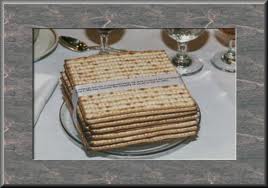
The directive to observe and the rules concerning how to observe Passover and the Feast of Unleavened Bread is recorded in Leviticus 23:4-8 (cf. Exo. 12:15; 13:6; 23:15; 34:18; Num. 28:17
- The Feast of Unleavened Bread begins on the 15th day of the Month Aviv
- Exo. 12:15 defines for us the process
- the feast lasts for 7-days
- we are to discard leaven out of our homes
- we are to eat unleavened bread (aka: matsah) throughout this 7-day perioid
- we are to bring a gift/offering when we appear before Yehovah
Passover and Unleavened Bread has traditionally been viewed as one-feast that is a joyful celebration. As it relates to the consumption of matzah during this 7-day observance, it was to serve as a remembrance of the children of Israel’s hasty departure out of the land of Egypt (reference: Deut. 16:3)
Feast=chag (khawg)-Hebrew for festival–a gathering–a pilgrimage that implies hagag, Hebrew for celebration; a day to hold or keep; a holy day.
This 7-day pilgrimage festival appears to have been filled with prayer, praised, and godly meditation.
Yeshua was diligent to keep the Passover–reference Matt. 26:17-20; Luk. 22:15; Joh. 2:13, 23. At 12-years of age Yeshua’s parents went up to Jerusalem to observe the Passover–reference: Luk. 2:41-50.
The crucifixion occurred on Passover in the year 28 CE–Matt. 26:2; Mar. 14:1,2; Joh. 18:28
Yeshua is referred to as our Passover by Paul (I Cor. 5:7) and John the Immerser.
Like Passover, Unleavened Bread provides the Believer in Messiah with a beautiful shadow picture of good things to come. Yeshua, our Passover, atoned for our sins. He was the perfect sacrifice that provided a means for us to have direct access to the Creator 24/7. As it relates to the Feast of Unleavened Bread, the process of purging sin from our lives becomes a formal, key element in the redemption plan and process. Our bodies have been likened to the Temple of Yehovah. When Solomon completed the building of the Temple, he had it dedicated to Yehovah for a period of 7-days (reference: 2 Chr. 7:9). Additional references: Lev. 23:36; Num. 7:10; 2 Chr. 30:23)
by Rod Thomas | Mar 31, 2014 | Blog, Podcasts
For, brothers, I don’t want you to miss the significance of what happened to our fathers. All of them were guided by the pillar of cloud, and they all passed through the sea, 2 and in connection with the cloud and with the sea they all immersed themselves into Moshe, 3 also they all ate the same food from the Spirit, 4 and they all drank the same drink from the Spirit- for they drank from a Spirit-sent Rock which followed them, and that Rock was the Messiah. 5 Yet with the majority of them God was not pleased, so their bodies were strewn across the desert. 6 Now these things took place as prefigurative historical events, warning us not to set our hearts on evil things as they did. (1Co 10:1-6 CJB)

Weeping that Captures the Father’s Attention
The History Books of the Bible document the reign of several Kings of Israel and Judah. Most of the kings of the combined and separated nations were evil in the sight of Yehovah. For instance: Manasseh, came to the throne at 12-years of age, and reigned over Judah from Jerusalem. His story is capture in 2 Chr. 33:1; 2 Kin. 20:21. Manasseh’s reign was saw evil in the land of Judah–2Kin. 16:3. The primary evil was the worship of Molech. Molech worship was left over from the former inhabitants of the land (2 Kin. 16:3). When Manasseh came of age he oversaw the rebuilding of the high places that once destroyed by his father, Hezekiah. Manasseh also oversaw the erecting of alters for Ba’al and the production of groves (or asherah), as Ahab had become famous for. Lastly, the worhsip of the heavenly hosts became a mainstay religion of the nation.
How could this have happened to the nation of Judah. Knowing that their sister nation Israel had suffered irreparable harm as a result of similar worship of pagan gods and observing pagan rites. Judah effectively left Torah observance for worship of molten images and the erecting of groves or asherah. They left the fear of Yehovah for the service of Ba’al and the worship of the host of heaven. Both had erected alters in the Temple of Yehovah to other gods (Jeremiah) and to the host of heaven. This practice provokes Yehovah to anger (Deu. 4:19). The host of heaven included the worship of the sun, moon, and stars and this all took place on the Temple grounds (2 Chr. 33:5; Eze. 8:16).
The Tanakh is clear that Yehovah brings evil upon those who know better but choose to worship Ba’al, the host of heaven, and asherahs. In the sake of Israel and ultimately Judah, Yehovah aimed to forsake His inheritance (His chosen) and deliver them into enemy hands.
Sadly, Manasseh’s son Amon followed in his footsteps. Amon was murdered by his own servants. But praise be to Yehovah, He can and has provided for the raising of a righteous seed and thus Amon’s son, Josiah, succeeded him to the throne at the tender age of 8 (2 Kin. 23). Josiah took the nation of Judah on a 180 degree turn from their decades of practicing evil and brought them back towards the light of Yehovah’s Torah. This inspiring and touching story is documented in 2 Kin. 23.
Essentially, after Amon’s death, Josiah ascended to the throne of Judah at the age of 8. Despite the evil that his father oversaw during his reign, Josiah came to to know Yehovah and follow His ways. At 26-years of age, King Josiah realized that the Temple was in noticeable disrepair. Thus he directed the Temple administrators to assess the Temple and determine what needed to be done to get it in proper order, deserving of the House of the Lord. The administrators were instructed to take the funds from the treasury and hire the professionals to make the needed repairs, this after years of disrepair and neglect of the House of the Lord under the reigns of Mannesseh, Amon and the other evil kings of Judah. While assessing the Temple, a priest by the name of Hilkiah placed into the hands of a scribe by the name of Shaphan the Temple’s Torah. Shaphan the scribe read the Torah to King Josiah (reference 2 Kings 22:9-10). Josiah’s response to hearing the Word of Jehovah? He learned and understood the problems through the content of Torah that was read to him that he and his nation were headed for certain disaster and destruction. Certainly, the books of Leviticus and Deuteronomy outline for the peoples of Yehovah the blessings and curses to be had in the event Yehovah’s chosen are obedient to Yehovah’s Laws or they are disobedient to His Laws, respectively. Clearly, after hearing these passages denoting blessings and curses, Josiah must have been horribly alarmed. This likely came atop Josiah coming to understand what Yehovah expected of His chosen people. The years of idolatry and the nation’s persistant wallowing in the filth of the very uncleanness that Yehovah strictly forbade His people to avoid, must have been a glaring realization for the young ruler.
Have you ever had the ocassion whereby you learned that you or someone you loved had been doing something or some things grossly wrong for a long period of time? Recall how it made you feel. Recall how you likely tried to rationalize the wrong doing in hopes that you could dispell the truth of the matter. Recall how it sickened you to your stomach and the desparation that followed as you searched for ways to make proper amends to the one(s) who may have been offended. Not to mention the fear that took center stage in your mind of the pending repercussions for the times of wrongdoing. If, however, we are of pure hearts, we are ultimately thankful for the revealed knowledge that we were doing wrong. It is this revealed knowledge that provides us the opportunities to make amends and get on a proper track of living.

Terrified of the impending doom that was likely overshadowing Judah as a result of her decades of idolatry and adultery (both involving the turning away from the one true God), Josiah sent immisaries to a prophetess, by the name of Huldah, to “inquire of Jehovah for me, and for the people, and for all Judah, concerning the words of this book that is found; for great is the wrath of Jehovah that is kindled against us, because our fathers have not hearkened unto the words of this book, to do according unto all that which is written concerning us. (2Ki 22:13 ASV)” What Josiah’s immissaries learned from Huldah likely confirmed Josiah’s worse fears: “Thus saith Jehovah, Behold, I will bring evil upon this place, and upon the inhabitants thereof, even all the words of the book which the king of Judah hath read. Because they have forsaken me, and have burned incense unto other gods, that they might provoke me to anger with all the work of their hands, therefore my wrath shall be kindled against this place, and it shall not be quenched. (2Ki 22:16,17 ASV)
Indeed, indicting and severe information to receive from the spokesperson of the Almighty. What makes matters worse here, is the addendum from the Eternal that was attached to the edict and that was that Yehovah’s wrath would not be quenched. In other words, there are often consequences associated with disobedience to Torah and no amount of obeience will change that. Sometimes, we find ourselves in situations of disobedience to Torah, yet when we come to terms that we need to repent and change our ways, we are ill-prepared to accept the consequences that must come with the offense.
It became apparent to me as I studied this amazing story, that often, during our periods of disobedience to Torah, our actions of evil against Yehovah and His Law, often sets in to motion a chain of events that we may not be altered despite our genuine desire to make the proper amends with the Father and to turn back to His Law. In these situations, we must be prepared to accept and endure the resulting punishment. The resulting punishment often has nothing to do with the repentance. Shaul (aka: Paul) taught: 23 For the wages of sin is death; but the gift of God is eternal life through Jesus Christ our Lord. (Rom 6:23-1 KJV)
Of course, this was not the end of the story. Our Father is merciful: “but thou art a God ready to pardon, gracious and merciful, slow to anger, and of great kindness, and forsookest them not. (Neh 9:17 KJV)” The love the Father had and continues to have for His chosen ones often leaves in place an enduring ledge of mercy that may not entirely stave off punishment for disobedience to the Father’s Torah, but may provide some form of respite or stay of execution for the pure of heart. In Josiah’s case, he exemplified the weeping that gets the Father’s attention.
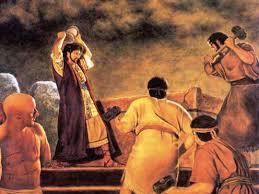
The prophetess of the Most High explains: But unto the king of Judah, who sent you to inquire of Jehovah, thus shall ye say to him, Thus saith Jehovah, the God of Israel: As touching the words which thou hast heard, because thy heart was tender, and thou didst humble thyself before Jehovah, when thou heardest what I spake against this place, and against the inhabitants thereof, that they should become a desolation and a curse, and hast rent thy clothes, and wept before me; I also have heard thee, saith Jehovah. Therefore, behold, I will gather thee to thy fathers, and thou shalt be gathered to thy grave in peace, neither shall thine eyes see all the evil which I will bring upon this place. And they brought the king word again. (2 Kings 22: 18-20 ASV) After receiving the prophecy and the Words of the Almighty from the prophetess, Josiah did not rest upon his brand new insurance policy. He took action, despite the fact that His weeping caused the Father to impose a stay of execution upon the nation. Josiah obviously knew that if he were to save his nation from certain devastation, he had to reimpose the practice of Torah in the land; destroy the idols that had proliferated the land of Judah for decades (2 Kings 23:4, 8); walk after Yehovah (2Ch 15:12 And they entered into a covenant to seek the LORD God of their fathers with all their heart and with all their soul;); and to keep the Eternal’s commandments, His statutes (2 Kings 23:3). And if all this wasn’t enought, Josiah had the priests of Ba’al, Molech, and the heavenly hosts (i.e., the moon, the sun, and the planets) executed to ensure that the worship of the false gods and the worship of Yehovah’s creation would be eliminated. Indeed, Josiah’s heartfelt repentance on behalf of the nation proved to be quite revolutionary and left no doubt in the citizens of Judah’s mind that Judah would henceforth become a Torah adhering, Yehovah fearing, and idolatary hating nation. And what better time than the time of the Passover for this all to have happened? Passover marks the beginning of God’s calendar and the first of Yehovah’s appointed Feasts. A new beginning for Judah. A chance for rededication and purification for a once evil and pagan nation.
What weeping captures the Father’s attention? Weeping that is wholly associated with deep repentance and most importantly, decisive action to correct the wrongs that have been committed against the Almighty and our neighbor. Compared to the Children of Israel’s weeping in the Sinai, one can only conjure up a description of shame on the part of the Sinai-wanderers. The chosen ones wept because of a lack foods they had in Egypt and a misplaced sense of loss of material goods and comforts. They wept out of selfishness and bitter contempt towards Yehovah for placing them in the refiners fire known to us as the Sinai wilderness. Instead of weeping because they were failing Yehovah’s tests and refinements to become God’s special possessions at every turn–which would have been the proper weeping to be done in this particular situation and as was demonstrated by Josiah–they wept as a 2-year old who has been told “no” when they demand something that shouldn’t have.
Sadly, this is the state of our Faith today dear friends. Our focus is upon self and upon an eternity in heaven. The focus is NOT upon our relationship with the God of Abraham, Issac and Jacob; the creator of heaven and earth; the Great I AM. This misplaced focus is idolatrous and it sickens the Father. Yet the Father’s patience is unfathomable. We deserve the fate that was due Judah but was stayed by Yehovah because of Josiah’s repentance on behalf of his nation. Ultimately, Yehovah did punish the nation of Judah. I fear that our western nations are heading for a similar if not worse fate. We must not rest upon a false assumption that we will be raptured away from this world prior to the great tribulation. There is nothing in the Holy Writ that states such a thing. Although we may not be the direct cause for the impending punishment that is coming to our respective nations, we, like many of the patriarchs of Judah and Israel who saw their nations destroyed by Babylon and Assyria respectively, will endure and witness the destruction of our nations by the satanic led forces of this world (reference: 12 For we wrestle not against flesh and blood, but against principalities, against powers, against the rulers of the darkness of this world, against spiritual wickedness in high places. (Eph 6:12 KJV)). It will be required of us to endure to the end (reference: 13 But he that shall endure unto the end, the same shall be saved. (Mat 24:13 KJV)).
The Messianic Torah Observer lesson I see here is that we are in positions to be Yehovah’s special possession–the position that the Sinai Wanderers of the Exodus story once contended for but failed and lost because of their stiff neck nature and short-sightedness. Thus, there are tremendous benefits to be had as one of the Eternal’s special possessions. Once we have accepted this aspicious opportunity to be the Eternal’s chosen, we are no longer our own. Every aspect of our being should be and in most cases, must be, ordered by Yehovah. When we fail to acknowledge this or we stumble before the Almighty and the Spirit convicts us of our wrong-doings, then is the time for weeping with deep and honest repentence to emerge from our inner being that cries out to the one true God in such a way that it appeals to His heart and we are reconciled to Him and thus we may be spared serious punishment. When will we learn that complaining to Yehovah about our tirals and tribulations is not the answer to life. 18 In every thing give thanks: for this is the will of God in Christ Jesus concerning you. (1Th 5:18 KJV)20 Giving thanks always for all things unto God and the Father in the name of our Lord Jesus Christ; (Eph 5:20 KJV). Is this an easy thing to do? Heck no! In fact, for me, it has to be the most backward and awkward thing to do. I am a complainer by nature. Thus, I’ve learned to make complaining my outlet for venting my frustrations and hardships. However, this Torah lesson has provided me the wherewithal to correct this behavior and further cement my relationship with the Father. When I fail to do that which the Almighty would have me do or I violate His laws and commandments, I realize now what I must do and not, as the vast majority of self-professing Christians contend, simply utter “forgive me Lord for my sins” and leave it at that. Consider: if you wrong a spouse, would simply saying to him or her, he forgive me for messing up do the trick? In some cases, it might. In most cases, you might need a lot more words and most important, some actions to support your words, to reconcile you back to him or her. If words are not accompanied by actions, what security is there to be found by your spouse that you won’t repeat the same mistakes all over again? Why do we treat Adonai differently? Why do we treat Yehovah differently? Why do we treat Him as some nebulus concept that is immune to hurt feelings and thoughts of being abandoned? He is real and He is like us in some many ways? He loves to be loved and He loves to be first in our lives. It isn’t until we come to that place in our relationship with the Almighty where we acknowledge Him as real and we treat Him as real, then we move our relationship with Yehovah to the next level!
by Rod Thomas | Mar 11, 2014 | Blog, Podcasts
For what great nation is there that has God as close to them as ADONAI our God is, whenever we call on him? 8 What great nation is there that has laws and rulings as just as this entire Torah which I am setting before you today? (Deu 4:7-8 CJB)
Having taken on the daily study of Torah in my life, I have come to terms with many interesting and important aspects and elements affecting my daily walk with Messiah. Some of these aspects and elements are good to know things while others are downright disturbing and are likely impediments in my relationship with the Eternal. I dare say that I probably get on God’s (or as I will use for the remainder of this post, Yehovah’s) nerves more times than I care to guess. I realize in the back of my mind that if I do not correct those deficiencies in my life, I stand the chance of damaging my long-term relationship with Yehovah.
The Wilderness Example
CJB Numbers 11:4 Next, the mixed crowd that was with them grew greedy for an easier life; while the people of Isra’el, for their part, also renewed their weeping and said, “If only we had meat to eat! (Num 11:4 CJB)
Numbers chapter 4 is one of those chapters of Torah (better known to western Christians as the Old Testament) that paints a vivid picture of a people in seemingly perpetual wandering. Initially, the escape from years of bondage under the cruelty of the Egyptians was obviously jubilant and auspicious. The stuff that epics such as the Charlton Heston’s and Cecil B. Demil’s classic the “10-Commandments” captured in all its perceived pomp and circumstance. Beautiful and handsome actors from the United States and Canada, made to look the part, brought a sense of awe and mystery to the story. Despite the brilliance of the film, it failed to capture the inner workings of the human experience: that is the struggles of the flesh as it attempted to fall in line with the requirements of a Holy God; the challenges associated with basic human relationships, especially when a mixed multitude accompanied the Exodus party; Yehovah’s overarching purposes in bringing His Chosen out of the land of Egypt and subjecting them to the many problems and challenges they were to experience. Even today, Orthodox Churchianity and her appendages fail to grasp the immense purpose behind Yehovah’s subjection of those whom He claimed to love to such stark and abject poverty and inconvenience. Beyond that the leaders of orthodox churchianity, these supposed learned men of God, consistently fail to seek the Spirit for understanding how their story (i.e., the children of Israel), their experiences, and their lives impact us today.
The Grace Doctrine Muddies the Water
This problem of minimizing the lessons that would be learned from the Sinai experience by western orthodox and popular churchianity teachers, I believe, may be attributed to the all-encompassing doctrine of grace. This doctrine, more than any, has resulted in millions throughout the centuries, missing entirely what their purpose in Jesus Christ (from this point forward, Yeshua HaMashiach) was. You see, sola gratia (Latin for grace only) requires very little of the child of the Most High to ensure his or her eternal security. In fact, sola gratia provides the would-be child of Yehovah with the opportunity to live as the uncontrollable brat he or she is predisposed to be. Overall, the focus is eschatological (that is, where will I spend eternity and how will I escape the tribulation). Is our only purpose as the redeemed of the Most High to aspire to an eternity that is NOT hell? How many a soul has prayed the sinner’s prayer, not for reasons of being a light to a lost world (Matthew 5: 14) or a friend to Yehovah (James 2: 23), but rather to avoid spending an eternity in hell? (Hell is an entirely separate topic of its own we may discuss at some future time, Yah willing.) Why have we missed the mark and abandoned this life we currently have for some ill-conceived and unbiblical life in heaven sometime in the perceived future? So much benefit is to be had here today in this world for the analogous benefits that salt brought to the ancient Middle East (Matthew 5:13). The preservative and flavor benefits translate into a picture of a people who would bring life to the world and the example by which the human race would be saved. Being the salt to the world as Messiah crowned every follower of His to become and remain, is indicative of the emphasis that Yeshua put on the here and now. He, Messiah, built His entire ministry on relationships–love for His Father and love for His people–the two great categorical basic elements of Torah. It is high-time my friends that we stop focusing on the future and eternity, but instead focus upon our relationships with both Yehovah and our brothers and sisters today. If we are faithful to do what the Master commanded us to do as His disciples, the future will indeed take care of itself. Needless to say, we have very little to no control of the future. What we do have influence over is our relationships with Father and those whom the Father has placed into our spheres of influence.
Weeping for the Wrong Thing
The children of Israel began to weep over lack of meat at the expressed lusting of the mixed multitude. Just prior to this episode, the Children of Israel murmured amongst themselves and against Yehovah for their present situation:
CJB Numbers 11:1 But the people began complaining about their hardships to ADONAI. When ADONAI heard it, his anger flared up, so that fire from ADONAI broke out against them and consumed the outskirts of the camp. 2 Then the people cried to Moshe, Moshe prayed to ADONAI, and the fire abated. 3 That place was called Tav’erah [burning] because ADONAI‘s fire broke out against them. (Num 11:1 CJB)
Thus, we have before us a very unhappy and depressed group all around.
The weeping of the Children of Israel was certainly misplaced here. Indeed the human flesh wants what it thinks it needs and what it selfishly wants. I ask you: knowing what we know about this situation, was the situation that the Chosen ones found themselves valid enough reason to weep before Yehovah and Moses and the hangers on?
I am a firm believer in cause and effect. My job as a Coroner’s Investigator is focused upon learning what the circumstances leading to the death in question were. Many a family member and associate of the deceased would query my staff and me as to the reasons for our inquiry, particularly when the cause of death appeared to be quite apparent. It all comes down to what were the driving elements that led to the death: why did the decedent crash his/her car? Were they sleep at the wheel? Did they have a cardiac event that caused them to become unconscious and lose control of their vehicle? Was someone else in the vehicle who distracted them and caused them to lose control of their car and then crash? Are there criminal elements associated with the death? Criminal negligence? Drugs? Psychological influences leading the individual to commit suicide maybe? The list can go on of course.
Many times, we weep for purposes of soliciting attention and sympathy from those around us, more so of course when we see ourselves incapable of containing or remedying a certain situation. Weeping in these cases seems to bring the comfort that help will come and relieve us of our heavy burden.
However, what about those situations where weeping is a response to something that we’ve done to someone or in response to some situation or some thing; when the only response to an embarrassing or tragic situation is to let the emotions and the depression that collects within us spill over the edges of our souls? What about the weeping that comes from having the knowledge that we’ve disappointed or hurt someone close to us and the only response is a wailing of abject sorrow and rejection of ourselves as subhuman and unworthy of the love of the individual we’ve wronged? When we are in such a deep and uncompromising relationship, either with Yehovah or with our brothers or sisters, we are just a stone’s throw away from finding ourselves in a state of remorseful weeping simply by doing something stupid; and that stupid something can be anything that causes the other party hurt or pain.
As an adult and prior to reaching my 50’s, I had little need of weeping apart from when my Grandmother (of whom I was equally raised by along with my mother and father in our Baltimore Maryland home) died from cancer. The sorrow I felt was of course a reaction to the intense sense of loss I was experiencing at the time; knowing that I would never see my grandmother in this life again. The weeping that emerged from within required no effort; no mental contemplation of how and why; no physical pushing or pulling on my part; just being and allowing myself to feel the pain. Knowing my grandmother was a born again Christian saved by grace (at the time I was a traditionalist/pop Christian), I felt confident she had gone to heaven and that I would see her again in the resurrection and rapture. Yet that assurance did not assuage the sorrow that seemed to engulf my being over the course of a number of days.
Indeed, the Holy Writ is festooned with numerous “weeping” passages; the weepers weeping for various and sundry reasons:
- Sorrow over the death of a loved one (Gen. 23:2; 37:35; Ecc. 3:4; Jer. 9:1; Luk. 7:13; 8:52)
- The lost love/longing for a loved one (Gen. 43:30; 1 Sam. 30:3,4)
- Concern over the anticipated death of a loved one and you can’t do anything about it (2 Sam. 12:21; Job 30:25; Isa. 22:4; Joe. 2:17; Luk 23:28; Jam. 5:1)
- Shame before the Creator and men over one’s transgressions against the Father (2 Chr. 34:27 Neh. 8:9; Isa. 15:2)
- Sorrow over the pain and devastation one we care for is undergoing (Jer. 13:17; Lam. 1:16; Eze. 24:16; Gen. 27:38; Num. 11:4)
- Sorrow over lack of resources, one’s plight, etc (Luk. 6:21)
- Joy (Gen. 29:13; 33:4; 45:2)
In many cases throughout Scripture, the weeping was misplaced and was indicative of a lack of trust and even understanding of those who wept of Yehovah. The weeping was indicative of the hopeless perception the weeper held regarding his or her situation.
Weeping that is Appreciated by Yehovah
Our heavenly Father deeply cares for His creation and there are a few rare examples in Scripture where the weeping of one of His children swayed His heart to change His intended course to bring destruction upon His chosen or the weeping bent His will or the course of natural human events in favor of the weeper:
- The case of Hagar’s remorse over the impending plight of her son Ishmael (Genesis 21)
- The case of the Children of Israel weeping over lack of food (Numbers 11)
- The case of Hannah seeking of Yehovah a child as she was childless and ashamed (1 Samuel 1)
- Josiah’s weeping on behalf of His people for their grave sin and upon re-discovering the Torah in the temple (2 Kings 22)
Weeping does strike at the heart of the creator and has proven from time to time to move the Father to action. But no weeping moves the Eternal more than the weeping of one who sorrows over having offended the Most High and having transgressed His Torah.
We’ll pick this up next time.
We trust that you have been blessed as I have been blessed in this study of Numbers 11:4. I would then ask you to subscribe/register to this podcast and website simply by filling in the three boxes to the right of this post that is titled “subscribe to this website and podcast.” In doing so, you show your support for this ministry as well as provide for yourself updates on the happenings of this ministry. We’d love to have you and rest assured that we will never share your information with any person or organization. We thank you in advance dear friend.
Until next time dear friend, may you be most blessed.