by Rod Thomas | Mar 7, 2014 | Blog, Podcasts
Continuing on from our previous study, we find ourselves still looking at Numbers 11: 4 and the situation involving a mixed multitude of peoples who accompanied the Chosen People in the Exodus out of Egypt. The passage reads beautifully as:
CJB Numbers 11:4 Next, the mixed crowd that was with them grew greedy for an easier life; while the people of Isra’el, for their part, also renewed their weeping and said, “If only we had meat to eat! (Num 11:4 CJB)
This issue of a mixed multitude appears to be a most intriguing element to the Exodus story. Most accounts of the story of the Exodus focus main upon the Children of Israel and all their associated problems and challenges. However, this mixed multitude or in the Hebrew, this rabble, paints for a us a most fascinating story and life lesson. So many parallels here. So many analogies here. So many truths to be taken in and incorporated into our lives quite frankly. There is of course the low hanging fruit of matter that suggests the lesson to be learned here is to watch very closely those who are in our lives that are unequally yoked, so-to-speak. Clearly the rabble never anticipated the testing phase of the Exodus journey and thus they wanted off the bus quite early. Their influence upon the Chosen of Yehovah was evident in the latter half of this verse. Fast forwarding roughly 4-millennium, we can see the dangers of rabble in our walk with Messiah. Oh these folks may not be part and parcel of our walk with Messiah, but they are always present in various segments of our daily lives: unbelieving and unsupporting family members; grumpy and negative neighbors; co-workers and bosses who see the badge of our Faith as nothing more than a ploy to get time off for so-called “Jewish Holidays” or taunting us for being in supposed “cults.” It is these that often drive us to the very edge of compromise and drag us in to their unclean conversations and or personal and professional life problems that cause us great discomfort and frustration.
I know, for example, that I face each day I go in to the office a litany of staffers who come to me with their seemingly petty issues and expect me to make those problems magically go away. Or I am dragged into meaningless conversation that ultimately leads me astray and I find myself thinking, feeling, and saying things that are not of Kingdom essence. As we clearly see in the latter half of this verse, the Children of Israel “renewed their weeping” for food. I tell you, this Messianic life is a vicious circles much of the time and it can certainly weigh upon psychologically and physically if we are not girded about on our spiritual bodies with the whole armor of Yah.
CJB Ephesians 6:11 Use all the armor and weaponry that God provides, so that you will be able to stand against the deceptive tactics of the Adversary. (Eph 6:11 CJB)
But then, there is the higher level thought behind all this and that involves the overall leaven that infuses our lives on a daily basis. I’m not a huge fan or one who defers to commentary on the Bible, but I do from time to time enjoy reading what other well knowing experts or even lay folk think about a particular passage or Torah concept. According to Matthew Henry for instance (and I absolutely love this term he used to describe the rabble), this mixed multitude became “hangers on.” He goes on to describe these “hangers on” as individuals who saw and opportunity to latch on to the anticipated blessings of Yehovah that would be extolled upon the Children of Israel (my wording of his). I have to tell you, this gave me great cause for pause and reflection as he goes further to say that “scabbed sheep can easily infect a flock and he concludes his description likening the hangers on to leaven that leaven the whole lump.
Leaven and Scabs
One of the major challenges to those of us who embrace the Messianic lifestyle has to do with all of the elements that make up our life that can virtually infect us and hinder our walk with Messiah. As I mentioned above, the low hanging fruit is easily identified as those people who provide us opportunities to falter and stumble along the way. This situation my friends can be managed if we are careful to understand what it is that these hangers on bring to the table of our lives. In some cases we can simply dismiss them and have nothing to do with them unless we absolutely are forced to deal with them in a situation or problem. On the other hand, there are those we are either married to, related to and live with, or have to work with in order to make a living. In these cases, it may take a little more finesses than a simple dismissal. It may require that we set barriers and rule around how we will deal with them and what we will and will not tolerate from them. It may come down to having those “crucial conversations” (the name of a leadership book that describes having critical conversations to get your point across) with these individuals in order to establish an understanding as to what it is they are doing to create havoc in your life.
But then there is the compendium of things in and around us that have a leavening and scabbing influence upon our walk with Messiah and with that, we’ll pick this up next time.
We trust that you have been blessed as I have been blessed in this study of Numbers 11:4. I would then ask you to subscribe/register to this podcast and website simply by filling in the three boxes to the right of this post that is titled “subscribe to this website and podcast.” In doing so, you show your support for this ministry as well as provide for yourself updates on the happenings of this ministry. We’d love to have you and rest assured that we will never share your information with any person or organization. We thank you in advance dear friend.
by Rod Thomas | Mar 2, 2014 | Blog, Podcasts
Greetings Saints. This Torah Living content is being posted on the 28th Day of the 12th Biblical Month of 6014 (according to Rood’s Astronomically & Agriculturally Corrected Biblical Hebrew Calendar). I trust that you are well and blessed in all areas of your life.
I want us to continue our journey in Numbers 11:4, picking up where we left off in discussing the Matthew Henry generated description of the rabble accompanying Israel as the Hangers On. The latter half of verse 4 reads:
while the people of Isra’el, for their part, also renewed their weeping and said, “If only we had meat to eat! (Num 11:4 CJB)
Over the last several postings I’ve beaten up on the rabble or hangers on and I explored with you the likely reasons why the rabble acted the way they did as recorded in the first half of verse 4. Now the second half of verse 4 it seems pretty evident that the Children of Israel (i.e., those who were not hangers on) began to react to the grumblings of the rabble. The Chosen’s reaction to their situation was slightly different than the reactions of the hangers on group’s reaction to their situation. The Chosen’s reaction was to renew their weeping over the lack of “meat” (or in the KJV and other similar translations–flesh) to consume. If you recall, Numbers 11:1-3 records an event where the people began to complain about something. The Complete Jewish Bible–CJB (which I have grown to love and consult more than any other translation of the Bible) provides us with the object of the people’s complaining and that object is “…about their hardships.” Every other translation that I’ve consulted fails to provide a specific object or reason for the complaining or “murmuring.” I tend to give a goodly amount of credence to the CJB translation such that it seems to take into account the context of what was happening to the wandering nation and instead of attributing the people’s miserableness and murmurings to food, heat, water, inconvenience, CJB elected to group it all into the simple package of “hardship.” At the end of the day, it is all about hardship, whether it is about having a lack of meat or having to endure the challenges of the wilderness.
Yehovah did not appreciate the murmuring of the people and reacted with extreme force, incinerating many individuals in the camp until Moses intervened on the offenders’ behalf.
Before I move beyond this, I see here a shadow picture (reference Hebrews 10:1) that is quite awesome. Moses, in intervening and advocating on behalf of the people in their sin, took on one of the roles of Yeshua, our High Priest. Recall that Yeshua is our advocate to the Father when we sin. Consider:
CJB 1 John 2:1 My children, I am writing you these things so that you won’t sin. But if anyone does sin, we have Yeshua the Messiah, the Tzaddik, who pleads our cause with the Father. (1Jo 2:1 CJB)
Even in the midst of the nation’s sin and waywardness, she had an advocate and his name was Moses. Over and over again I revel in the beauty of Torah and see the wonderful shadow pictures that are painted upon its pages. Here, laying before me, is the image of the nation of Israel who today is a former image of us–Truth Seeking Messianics. I stumble and falter on a daily basis and I am so honored and happy to know that I have an advocate before the Father who intervenes on my behalf and by doing so staves off certain destruction. Paul aptly addresses this reality in his letters to the Roman Believers and to his young mentee Timothy respectively:
Rom 8:34 Who is he that condemneth? It is Christ that died, yea rather, that is risen again, who is even at the right hand of God, who also maketh intercession for us.
1Ti 2:5 For there is one God, and one mediator between God and men, the man Christ Jesus;
Yehovah chose His leader well. Moses is certainly a type of savior, not only for physical Israel, but also for spiritual Israel, which is us. If Yehovah’s ire went unabated, the nation could have been utterly destroyed and our futures uncertain. We owe Moses a debt of thanks for stepping in the roll of advocate for the nation, in spite of that less than palatable inherent nature of the Israelites.
Getting back to the situation at hand in verse 4, the hangers on through their lusting after or for an “easier life” according to the CJB, likely prompted the Chosen Ones to renew their murmuring and the start of weeping for their lack or absence of “meat.” I wondered when looking back at the previous 3-verses if the Children of Israel had been cured of their complaining tendency. Well, it appears that it didn’t take much to sucker them back in to their old ways.
Are we any different friends? When I consider that I am in so many ways, like the Children of Israel, constantly looking at the glass being half-empty and having the “woe is me” mentality, it doesn’t take much for me to find myself falling back to this mentality with its associated behavior. Using my job as an example: lately, I have been cognizant of my tendency towards being a complainer and a murmurer. Thus, I have taken firm action to stem this tendency. I have made significant leeway in combating this tendency. However, it takes very little to push me back over to the tendencies that I am fighting to overcome. It could be something that someone says to me; it could be something that someone does to me; it could be something that I read; or even something that I observe. I think Paul stated this dilemma quite well:
CJB Romans 7:15 I don’t understand my own behavior- I don’t do what I want to do; instead, I do the very thing I hate!
(Rom 7:15 CJB)
Rom 7:19 For the good that I would I do not: but the evil which I would not, that I do.
Gal 5:17 For the flesh lusteth against the Spirit, and the Spirit against the flesh: and these are contrary the one to the other: so that ye cannot do the things that ye would.
Indeed, we are always in some form of internal and spiritual struggle that more times than not, the flesh wins over. And it is those that we find living and working alongside us that usually prompts this internal and spiritual conflict to wage. I do not believe it is something that we could ever expect to see go completely away from us. Indeed, these types of situations add to the testing regimen that prepares us for the Kingdom. The positive thing to gain from this, however, appears to be the knowledge that we must always be cognizant of our weaknesses and equally alert to those things, people, and situations that cause us to stumble. It is a process and speaking from experience, it is a constant challenge. Yet, I believe this is something that must be put into perspective as we walk this walk with Messiah. We are being called to walk according to the Spirit. The Spirit always flies contrary to the ways of the flesh as Paul so aptly put it:
CJB Romans 8:7 For the mind controlled by the old nature is hostile to God, because it does not submit itself to God’s Torah- indeed, it cannot.(Rom 8:7 CJB)
We are in a much better place than the wandering nation of Israel. We have been blessed with the Holy Spirit that provides a means to overcome our fleshly tendencies. The Children of Israel lacked this ever-present help. Instead for them, it all came down to them obeying Yehovah’s commandments and laws and we know that mankind can certainly do that if he so desires. Contrary to popular Christian teaching, man can indeed keep Yah’s laws. It seems pretty foolish to think that the Father would provide man a system of ordinances that would make them wholly acceptable to Himself if mankind was physically incapable of keeping them and obeying them to the full. Yet we tell ourselves, through this false teaching, that it is impossible to keep Torah and thus we don’t have to nor should we be made to. Why? Because Yeshua kept Torah perfectly and thus we have been released from all responsibility of keeping Torah. Hogwash! That’s like saying, I own this hot muscle car and thus it is impossible for me to observe the speed laws because my muscle car is inherently so fast. Therefore, I shouldn’t be expected to obey the speed laws. For real!? Come on. Let’s be real about this. We have the capacity to endure and pass any test
CJB 1 Corinthians 10:13 No temptation has seized you beyond what people normally experience, and God can be trusted not to allow you to be tempted beyond what you can bear. On the contrary, along with the temptation he will also provide the way out, so that you will be able to endure. (1Co 10:13 CJB)
The Father placed the Chosen Ones in a multi-faceted situation: a wilderness, lacking many provisions, and with a multi-cultural grouping of individuals. All of these elements made for a crucible that the Father could use to mold and fashion His chosen in to a set apart people, holy unto Himself, Yehovah’s unique treasure out of all the peoples on the face of the earth. So it is with us today: we find ourselves in an unequally yoked world. Our world is part and parcel of the testing ground to shape us in to the form and image of Yeshua. When we come to terms with this reality, then and only then may we move beyond our fleshly defaults. I’m working on this and I’m hanging so very hard to the Holy Spirit to give me that extra weight to help me overcome my evil tendencies. I hope that you will join me, in whatever capacity you are struggling, and overcome our tendency to adversely react to the people, places and things around us. May we be victorious over the flesh and shine as the sun among the peoples of the earth.
Be most blessed.
by Rod Thomas | Feb 25, 2014 | Podcasts
CJB Numbers 11:4 Next, the mixed crowd that was with them grew greedy for an easier life; while the people of Isra’el, for their part, also renewed their weeping and said, “If only we had meat to eat!(Num 11:4 CJB)
The term mixed in Hebrew is “as-pee-oof” and denotes a collection, a rabble, a collected multitude. “As-pee-off” is only used in Numbers 11:4
CJB Exodus 12:38 A mixed crowd also went up with them, as well as livestock in large numbers, both flocks and herds. (Exo 12:38 CJB)
Mixed in Hebrew in this passage is “ereb” meaning mixture or mixed people. These people fell alusting; lusted exceedingly; grew greedy; had strong craving; lusted greatly. The people wept and lusted after an easier life–Oh that we had meat to eat…”
CJB 1 Corinthians 10:1 For, brothers, I don’t want you to miss the significance of what happened to our fathers. All of them were guided by the pillar of cloud, and they all passed through the sea, 2 and in connection with the cloud and with the sea they all immersed themselves into Moshe, 3 also they all ate the same food from the Spirit, 4 and they all drank the same drink from the Spirit- for they drank from a Spirit-sent Rock which followed them, and that Rock was the Messiah. 5 Yet with the majority of them God was not pleased, so their bodies were strewn across the desert. 6 Now these things took place as prefigurative historical events, warning us not to set our hearts on evil things as they did. (1Co 10:1 CJB)
These things were our example so that we do not set our hearts on “evil things” or better, things other than that which Yehovah intends for us to have. This story provides for us types or examples.
by Rod Thomas | Feb 24, 2014 | Podcasts
The Gospel Your Pastor Never Taught You
Part 5
Concluding the Parables of Matthew 13:
In Matthew 13, Yahoshua gave the people eight parables about what the Kingdom of Heaven is like. Each parable contained its own message. After Yahoshua gave the last parable, He was done teaching. He then asked the crowd if they understood what he had taught them and they said “Yes”. So he gave them the gravity of their calling in the form of a parable: “51Jesus said unto them, have you understood all these things? They say unto him, Yea, Lord. 52 Then said he unto them, Therefore, every scribe which is instructed unto the Kingdom of Heaven is like unto a man that is a householder, which brings forth out of his treasure things new and old.” The people who answered yes are claiming to understand the parables that went forth. What did they understand? In verse 52, Yahoshua is telling them what they are claiming to understand by their “yes “answer. Now that they have learned what the Kingdom of Heaven is like, He is now turning His focus to the workers in the kingdom, after spending a few hours instructing them.
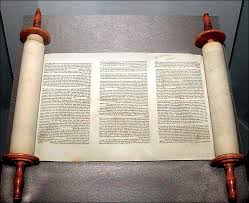 Now that you have been instructed about the Kingdom of Heaven, and you have claimed to understand the teachings by your “yes” answer, you are now in the position of scribes because you have been given specialized knowledge about the Kingdom of Heaven. Therefore as a scribe you are like a householder, which is the master who holds a key to the house. Thus you are now holding knowledge, which is considered keys to the Kingdom of Heaven. The knowledge is the storehouse of treasure. Some of the treasure is old and some are new; however, the scribe is responsible to use both the old and new knowledge and connect them with increased understanding so that he can teach it to others. The greater his understanding the better he will be able to show the relationship and connection between the new and the old. Because the old covenant has been amended to show the fulfilling of the redemption portion of the law, the old law has now become renewed covenant to show the fulfillment.
The unedited full text of the Jewish encyclopedia, records the Hebrew meaning of the word “scribe” as “a teacher whose office it is to interpret the Torah for people.” You can visit the encyclopedia page at http://www.jewishencyclopedia.com/articles/13356-scribes It makes common sense that in order to interpret the Law, one must first understand the Law. So Yahoshua is being specific by targeting the “scribes who have been instructed unto the Kingdom of Heaven”. Thus, it becomes clear that the teaching sessions of the parables of the Kingdom of Heaven have been training sessions for the sons of the kingdom! These sons are scribes trained for the kingdom. They are the people who understood Torah the parables and the ones for whom the message is intended. They are the sons of the kingdom. These are not the existing scribes of the synagogue and the Sanhedrin, they are new recruits from among the people who have been looking forward to the Messiah and are accepting of Yahoshua. As the scribes of the new kingdom they are expected to be Torah observing, with understanding great enough to teach and interpret the Torah to others.
Only the scribes will hear the word of the kingdom and understand it. By teaching the word  he will bear fruit (make disciples) and yield a hundredfold, sixty-fold and thirty-fold. The process of multiplication begins as more disciples are made. This teaching would have increased their understanding of the hidden things so they can teach it to others. Could this be a recruitment of officers for the new kingdom? As you can see, the people who will be sons of the kingdom are those who 1) accept Yahoshua as Messiah and Master, and 2 obeys Torah and will apply their understanding to make disciples by teaching others about the Old and the Renewed covenant.
Parable #1: The Sower: taught the people that the Kingdom of Heaven operates on the principles of seed time and harvest; and that the harvest is produced only by a few who grow in understanding of the kingdom message. Though the opportunity to bear fruit is  given to all, only a few make use of the opportunity to bear fruit. For whosoever hath, to him shall be given, and he shall have more abundance: but whosoever hath not, from him shall be taken away even that he hath. The focal point of the interpretation of this parable is in verse 12. “Whosoever hath”, hath what? The answer is the desire to grow in understanding. Whosoever has the desire to grow in understanding, to him shall be given more understanding: but whosoever does not have the desire to grow in understanding even that (little understanding) which he has will be taken away.
Note what John the Baptist said in Matthew 3:7-10 to the Pharisees and Sadducees: “7 But when he saw many of the Pharisees and Sadducees coming to his baptism, he said to them, “You brood of vipers! Who warned you to flee from the wrath to come? 8 Bear fruit in keeping with repentance. 9 And do not presume to say to yourselves, ‘We have Abraham as our father,’ for I tell you, God is able from these stones to raise up children for Abraham. 10 Even now the axe is laid to the root of the trees. Every tree therefore that does not bear good fruit is cut down and thrown into the fire.”
Parable #2: A Man Who Sowed Good Seed in His Field (Parable of the Tares):
“37 He answered and said unto them, He that sows the good seed is the Son of man; 38 The field is the world; the good seed are the children of the kingdom; but the tares are 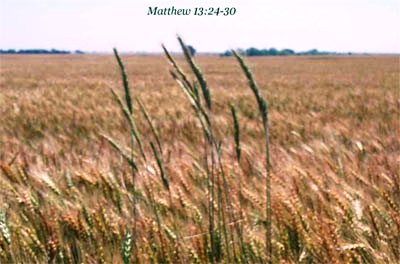 the children of the wicked one; 39 The enemy that sowed them is the devil; the harvest is the end of the world; and the reapers are the angels. 40 As therefore the tares are gathered and burned in the fire; so shall it be in the end of this world. 41 The Son of man shall send forth his angels, and they shall gather out of his kingdom all things that offend, and them which do iniquity; 42 And shall cast them into a furnace of fire: there shall be wailing and gnashing of teeth. 43 Then shall the righteous shine forth as the sun in the kingdom of their Father. Who hath ears to hear, let him hear”.
You may recall John the Baptist said of Yahoshua in Matthew 3:11-12, “11I baptize you with water for repentance, but he who is coming after me is mightier than I, whose sandals I am not worthy to carry. He will baptize you with the Holy Spirit and fire. 12 His winnowing fork is in his hand, and he will clear his threshing floor and gather his wheat into the barn, but the chaff he will burn with unquenchable fire.” Yahoshua used similar words in the parable above.
You may ask, how does a Scribe becomes trained? Yahoshua told His disciples in John 14:26, “26 But the Helper, the Holy Spirit, whom the Father will send in my name, he will teach you all things and bring to your remembrance all that I have said to you.” This verse tells us that every Scribe trained for the Kingdom of Heaven must be baptized in the Holy Spirit and fire!
In Matthew 23:2-3 we read, “2The scribes and the Pharisees sit on Moses’ seat, 3 so do and observe whatever they tell you, but not the works they do. For they preach, but do not practice.” There is a portion of the translation of verse three which is a bad translation. The rest of the verse is fine except for the portion that says, so do and observe whatever they tell you. The bad translation for this phrase came as a result of the Greek translating from a bad Aramaic translation. Thus the Greek was not translated from the Hebrew text but from the Aramaic text. So the Greek is a translation from a translation. The Aramaic presented this word as “yomru” which means “they tell”, instead of “yomar”. The word that is being mistranslated is the word “yomar” which means “he tells” The actual translation for verse 3 reads, “Do what he (Moses) tells to do, but not the works that they do. For they preach but do not practice”. For more information visit http://www.ancient-hebrew.org/50_pharisees.html
According to the Jewish encyclopedia http://www.jewishencyclopedia.com/articles/13356-scribes teachers of the Torah are the Scribes. In Matthew 23 Yahoshua tells us not to obey the Takanot and Ma’asim (the reforms and additions to the Torah) of the Pharisees. In this chapter, Yahoshua rebukes and reprimands them severely because of their Takanot and Ma’asim. It appears that Yahoshua is recruiting scribes to be trained for the Kingdom of Heaven. Throughout his ministry, Yahoshua has been antagonized by the scribes and Pharisees continuously because he has been challenging their interpretation of the Torah. They accuse Him of breaking Torah and He is able to show them that He is not breaking Torah; however, he is not obeying their Takanote and Ma’asim (man-made additions and changes and private interpretations) of the Torah.
Thus, in verse 52 Yahoshua is implying that the sons of the Kingdom of Heaven are Scribes trained for the purpose of training others in the Torah. This new Scribe is in the position of authority like the master of a house. This is a honored position because he holds the keys to the house. He can differentiate between the old and the new treasure, which are the Old covenant and the Renewed Covenant.
Being our teacher and the greatest teacher of all times, Yahoshua knew that the information he was sharing was a hidden secret that was not to be shared with everyone. Have you ever heard of hiding in plains sight? Then this was an overt way of accomplishing a covert mission in public. Basically, He was saying to the sons of the kingdom, “for your eyes only”. Yahoshua had a mission to the lost sheep of Israel, so the message was directed to the few within the group who had ears to hear, eyes to see and a heart to understand. These are the ones who would hear the message, and follow through to action. This is why he started out with the parable of the Sower. The Good Soil group was the choice group though it made up a very small portion of the seeds that were planted yet it was the only group to produce fruit.
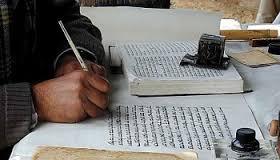 Understanding Torah comes through obedience to the commands of Yahovah. We must teach obedience to Torah because our obedience is an expression of our faith in Yahovah.
The apostle Paul in Acts 26:18-23 is an excellent example of the Scribe that Yahoshua is recruiting for the Kingdom of Heaven. He is adept in the Torah, and with the help of the Holy Spirit, he was able to impart knowledge and open the eyes of people to the scriptures so they may turn from darkness to light and from the power of Satan to God, that they may receive forgiveness of sins and a place among those who are sanctified by faith in Yahoshua, to the treasures of the scriptures, the reality of the power of darkness, to expound on the difference between the Old Testament and the Renewed Covenant, the prophecies concerning the Messiah, the law of grace, mercy, faith and redemption in the Torah, to teach clearly so the person can choose the power of Yahovah to deliver them from darkness.
by Rod Thomas | Feb 18, 2014 | Podcasts
The Gospel Your Pastor Never Taught You
Part 4
In Part 3 we looked deeper and analyzed the first four parables Yahoshua preached about the Kingdom of God from Matthew 13. In verse 35 we learn that the secrets hidden in the parables are so that: “35 …it might be fulfilled which was spoken by the prophet, saying, ‘I will open my mouth in parables; I will utter things which have been kept secret from the foundation of the world.’” The parable secrets about the kingdom of heaven in this chapter tell of hidden truths kept secret from the foundation of the world.
Continuing in Matthew 13, The next parable is found in verse 44:
Parable of the Hidden Treasure (Matthew 13:44)
44 Again, the kingdom of heaven is like unto treasure hid in a field; the which when a man hath found, he hides, and for joy thereof goes and sells all that he hath, and buys that field.
Based on the interpretations used in the previous parables, field represented the world and the man represented Yahoshua. The man spend all he had to buy the field and treasure together. From our study of the life and mission of Yahoshua, we can surmise that the price he paid was His blood. Therefore it must be the redemption price for the world. But what was the treasure which he discovered and (He hides) kept it a secret? We can also surmise that the treasure was built into the total package of his mission. We know the redemption price was paid for by His blood. John 3:16-17 tells, For God so love the world that He gave His only son that whosoever believed in Him should not die but have everlasting life. For God sent not his son into the world to condemn the world but that the world (field) through Him might be saved.
To redeem the world came with a price and also a reward to the man who qualified to pay the price. The man (Yahoshua) received the treasure (the reward) when he bought the field. Psalm 2:8 quotes Yahovah saying, “Ask of me, and I will make the nations your heritage, and the ends of the earth your possession” (Psalm 2:8)
Yahoshua was almost thirty years old when He began His ministry. Before He stepped out in public to take on the mission of being the redeemer of the world, He had the free will to exercise His option of either taking the normal track that a man’s life would take; or be the sacrificial Lamb of Yahovah in exchange for reward Yahovah had to offer him to fulfill the purpose for which He was born, to be the Messiah for Israel and the redeemer of the world. In Hebrews 12:2 we read, “2 Looking unto Jesus the author and finisher of our faith; who for the joy that was set before him endured the cross, despising the shame, and is set down at the right hand of the throne of God.”
By taking the route of His divine purpose, the treasure included in land deal is as follows: He would become the appointed King over the kingdom of Yahovah on earth. With this position He would be the Messiah, the ruler over Israel, the physical representative of Yahovah, the Commander of the Host of Army of Angels in heaven, He would also be the recipient of the covenant Yahovah made with Abraham, He would receive the nations of the earth as an inheritance, He would be the one who defeats Satan and the kingdom of Satan, and He would receive all power, authority and dominion over Yahovah’s creation.
I believe when Yahoshua weighed the cost for fulfilling his purpose and all the treasure that came with it; then decided to keep it a secret because if Satan understood that the mission included the plan to take back the title deed of the earth Satan had stolen from Adam and Eve, then Satan would not have plotted to kill Yahoshua on the cross. The choice between living the normal righteous life of a Jewish man; versus living His life of purpose caused the scale to tip in favor of choosing to live His divine purpose. While the cost of His purpose driven life of being the sacrificial Lamb of Yahovah, that takes away the sin of the world was a very steep price to pay, it was worth the trade in exchange for the value in the treasure Yahovah offered to Him.
Though this honor was prophesied for the messiah throughout the Old Testament, it was not understood by Israel nor by Satan. Thus, Satan was outwitted because everyone including Satan thought the Messiah would fulfill Isaiah’s complete prophecy when he came. They did not understand that the messiah would fulfill his mission on two parts on separate occasions first as the prophet and redeemer, then secondly as the messiah, judge and King. Also He was the prophet Moses said we must Shema. Yahovah kept the details of His plan secret and divulged it only to Yahoshua, who also understood the covertness of the operation and kept it a secret.
Thus, the treasure hidden in a field is the glory offered by Yahovah to the man from the house of Israel who qualified to be His appointed King to rule over the House of Israel and the kingdoms of this earth; and to receive the nations of the world as his inheritance. This is the most exciting offer because not only did Yahoshua have the desire to please His Father Yahovah and to accept the mission; but in addition, He qualified for the reward offered to Him. He agreed to suffer to please His father and fill His divine purpose. Being the sacrificial Lamb of God to pay for the sin debt of the world to redeem Yahovah’s creation from Satan was a great burden to bear because the pain, suffering, shame, disgrace, humiliation, rejection and death He experienced by the mob in public, was a very high price to pay with His blood for the sins of the world. But it was worth the price for the promised glory (or treasure) offered to him by His Father, Yahovah. In Hebrew 12:2 we read, “2 Looking unto Yahoshua the author and finisher of our faith; who for the joy that was set before him endured the cross, despising the shame, and is set down at the right hand of the throne of God.”
Therefore, The words to understand are: field (world), man (Yahoshua), finding the treasure (understanding the joy and the glory He would receive from Yahovah for fulfilling His purpose), man hiding the discovered treasurer (He kept the secret by telling it as a parable), sells all he has (gave his life as the sacrificial Lamb of Yahovah), buys the field (He paid the redemption price with His life blood for the glory offered to Him). Revelation 5:12 reads, “12 Saying with a loud voice, Worthy is the Lamb that was slain to receive power, and riches, and wisdom, and strength, and honor, and glory, and blessing.” This is the treasure that was packaged with the field, which he bought together, with His blood.
Parable of the Merchant Man Seeking Goodly Pearls
45 Again, the kingdom of heaven is like unto a merchant man, seeking goodly pearls: 46 who, when he had found one pearl of great price, went and sold all that he had, and bought it.
In this parable, the kingdom of heaven is being compared to the merchant man who is in search of something valuable. His important mission was accomplished when he found what he was searching for. He was so excited that he invested all he had to obtain this rare treasure. The times when both Yahovah and Yahoshua demonstrate a “sold out, all or nothing attitude” was towards the value of a lost sheep. Therefore i believe the Pearl represent the lost sheep or a sinner in need of salvation. As the Good Shepherd, they both take drastic action on behalf of their lost sheep. Therefore the merchant man is either Yahovah or Yahoshua. We read Ezekiel 34:7-11 where Yahovah shows how He will take drastic actions against the shepherds (Jews) He had appointed, who did not care for His flock: “7 Therefore, shepherds, hear a word of Jehovah: 8 I live — an affirmation of the Lord Jehovah, If not, because of My flock being for a prey, Yea, My flock is for food to every beast of the field, Because there is no shepherd, And My shepherds have not sought My flock, And the shepherds do feed themselves, And My flock they have not fed. 9 Therefore, O shepherds, hear a word of Jehovah: 10 Thus said the Lord Jehovah: Lo, I [am] against the shepherds, And have required My flock from their hand, And caused them to cease from feeding the flock, And no more do the shepherds feed themselves, And I have delivered My flock from their mouth, And they are not to them for food. 11 For thus said the Lord Jehovah: Lo, I — even I, have required My flock, And I have sought it out”.
Yahoshua tells us in Luke 19:10 that He came to seek and to save those who are lost. In the parable of the good shepherd, recorded in both Matthew 18:12-14 and Luke 15:3-7 Yahoshua asks, “Which of you men, if you had one hundred sheep, and lost one of them, wouldn’t leave the ninety-nine in the wilderness, and go after the one that was lost, until he found it? When he has found it, he carries it on his shoulders, rejoicing. When he comes home, he calls together his friends and his neighbors, saying to them, ‘Rejoice with me, for I have found my sheep which was lost!’ I tell you that even so there will be more joy in heaven over one sinner who repents, than over ninety-nine righteous people who need no repentance.”
Thus, we see that the merchant man is a seeker who goes all out to find and to redeem what he is searching for. Luke 19:10 tells us that Yahoshua came to seek and to save those who were lost. In Matthew 21:43, Yahoshua told the Jews that the kingdom of God would be taken away from them and given to the gentiles. “43 Therefore I tell you, the kingdom of God will be taken away from you and given to a people producing its fruits.” Producing fruits of the kingdom of God are the fruit of righteousness (Mark 7:20-23) and fruit of making disciples as seen in Yahoshua commission to us according to Matthew 28:19-20 to and according to Mark 16:15-16, to go into the entire world and preach the gospel of the kingdom to every nation, teaching them to observe all he commanded us, and whoever believes and is baptized will be saved; whoever does not believe will be condemned.
Consequently, the merchant man represents Yahoshua who has come with a mission to seek and to redeem the sinners in need of salvation. John the Baptist warned the Jews in Matthew 3 that they were not indispensable to Yahovah because He can replace them. We read in Matthew 3:7-9, “But when he saw many of the Pharisees and Sadducees coming for baptism, he said to them, “7You brood of vipers, who warned you to flee from the wrath to come? 8″Therefore bear fruit in keeping with repentance; 9and do not suppose that you can say to yourselves, ‘We have Abraham for our father’; for I say to you that from these stones God is able to raise up children to Abraham.”
The Torah was entrusted to the Jews to teach the nations about Yahovah and His laws; but they failed at their purpose. Therefore, the mission of teaching torah was taken from them and given to the Gentiles to be preached to the world according to what what we learned from Yahoshua. This spreading of the gospel of the kingdom is now being spread by using the technology of business and commerce to spread the teach the gospel of the kingdom and make disciples of all nations. Today these tools are the tools of commerce like the radio, television, internet and satellite which is used in commercial marketing strategies to take it to the ends of the earth, even at great expense.
Parable of the Net
47 Again, the kingdom of heaven is like unto a net, that was cast into the sea, and gathered of every kind: 48 Which, when it was full, they drew to shore, and sat down, and gathered the good into vessels, but cast the bad away.
Yahoshua Interprets of the Parable of the net
49 So shall it be at the end of the world: the angels shall come forth, and sever the wicked from among the just, 50 And shall cast them into the furnace of fire: there shall be wailing and gnashing of teeth.
