
Torah-Keeping–When it is Practiced in Sin
When Torah-Keeping is Practiced in Sin
This Week’s Torah Reading–D’varim
The Prophet Isaiah
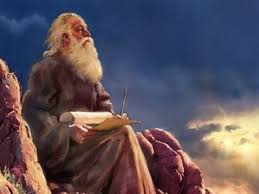
The Prophet Isaiah was sent by God to warn Judah of the dangers associated with sinning while falsely keeping Torah.
Isaiah served as a prophet during the reigns of 4-kings (i.e., Uzziah, Jotham, Ahaz and Hezekiah) of Judah in the 8th century B.C.E. Biblical experts (whatever that truly means today) suggests that the Book of Isaiah was penned entirely by the Great Prophet, but was also likely penned in in two periods. These two periods seem to have taken place between 740 and 686 B.C.E with roughly 15-year separation period in between.
Isaiah Delivers the Indictment Against Judah
25 “When you become the father of children and children’s children and have remained long in the land, and act corruptly, and make an idol in the form of anything, and do that which is evil in the sight of the LORD your God so as to provoke Him to anger, 26 I call heaven and earth to witness against you today, that you will surely perish quickly from the land where you are going over the Jordan to possess it. You shall not live long on it, but will be utterly destroyed. 27 “The LORD will scatter you among the peoples, and you will be left few in number among the nations where the LORD drives you. 28 “There you will serve gods, the work of man’s hands, wood and stone, which neither see nor hear nor eat nor smell. 29 “But from there you will seek the LORD your God, and you will find Him if you search for Him with all your heart and all your soul. (Deu 4:25-29 NAU)
17 “But if your heart turns away and you will not obey, but are drawn away and worship other gods and serve them, 18 I declare to you today that you shall surely perish. You will not prolong your days in the land where you are crossing the Jordan to enter and possess it. 19 “I call heaven and earth to witness against you today, that I have set before you life and death, the blessing and the curse. So choose life in order that you may live, you and your descendants, 20 by loving the LORD your God, by obeying His voice, and by holding fast to Him; for this is your life and the length of your days, that you may live in the land which the LORD swore to your fathers, to Abraham, Isaac, and Jacob, to give them.” (Deu 30:17-20 NAU)
28 “Assemble to me all the elders of your tribes and your officers, that I may speak these words in their hearing and call the heavens and the earth to witness against them. 29 “For I know that after my death you will act corruptly and turn from the way which I have commanded you; and evil will befall you in the latter days, for you will do that which is evil in the sight of the LORD, provoking Him to anger with the work of your hands.” (Deu 31:28-29 NAU)
“Give ear, O heavens, and let me speak; And let the earth hear the words of my mouth. 2 “Let my teaching drop as the rain, My speech distill as the dew, As the droplets on the fresh grass And as the showers on the herb. 3 “For I proclaim the name of the LORD; Ascribe greatness to our God! 4 “The Rock! His work is perfect, For all His ways are just; A God of faithfulness and without injustice, Righteous and upright is He. 5 “They have acted corruptly toward Him, They are not His children, because of their defect; But are a perverse and crooked generation. (Deu 32:1-5 NAU)
The Affects of Sin on the People of Yehovah
-
Sin causes a people to become stupid and foolish in terms of their responsibilities and the repercussions of their actions. In verse 3, Father expresses that simple-minded animals understand the natural order of things. However, sin has caused His people to “not understand” (i.e., biyn {bene} that is to discern, understand, consider). The prophet Jeremiah echoed a similar refrain when He wrote: “Yea, the stork in the heaven knoweth her appointed times; and the turtle and the crane and the swallow observe the time of their coming; but my people know not the judgment of Yehovah. In other words, initially the people of Yehovah may realize that the wages of sin is death and they may attempt to keep themselves from sin. However, once sin does take hold of the people, over time, they forget that sin leads to death and destruction and no matter how hard the emissaries of the Most High attempt to warn and sway Yah’s people to turn from their wicked ways, the people are too dense to understand the emissaries’ messages.
-
Sin causes a people to become corrupt in all their ways. Verse 4 describes the weightiness of sin and how it corrupted His people so that they simply abandoned their Elohim.
-
Sin brings with it penalties. In verse 5, Father asks His people, ” Why do you want more beatings?” No healthy-minded human being desires to be hurt or beaten. Yet sin has the pervasive nature of deadening one to pain and hurt, or at the very least, as in item 1 above, being so stupid and foolish that one does not realize that they are reaping the wages of their sin. Indeed, Father is trying, through Isaiah, to reason with His people by asking them: why do you insist on getting beat down? You can stop the continuous beat downs you are experiencing if you simply turn from sin and return back to me. The Prophet Jeremiah described this process as the people refusing to receive their correction. Instead of relenting to the scourging that sin brings them, the people of Yehovah harden their faces and their resolve to continue living as they’ve grown accustomed to living–the sinful, idolatrous, Torahless life.
-
Sin ultimately takes over the entire body leaving nothing good; nothing redeemable. Father laments in verse 6 that from the sole of the foot even to the head, no spot is uninjured–wounds, welts, and festering sores not cleansed, bandaged, or soothed with oil” (CSB). Do we not see such a thing happening in our nation today? Is not the very fabric of this nation’s republic becoming so corrupt and hateful that there’s little hope for healing?
-
Sin brings destruction to people’s property. In verse 7 Father points out to the people that their nation, cities and real properties are overtaken by destructive elements. The nation was warned that this would happen if they abandoned Abba’s Torah (Deuteronomy 28). In that warning, Father warned that the fruit of their land and all their labors would be consumed by others who were not of their nation. These marauding nations and people would consume all their produce and oppress and crush them. These oppressors will leave Yehovah’s people nothing behind. They will take everything. How many of us have abandoned Torah and given ourselves over to sin, only to see everything that we have worked so hard for dissolve away before our very eyes? Sin has that destructive effect. Eventually, nothing is left behind and our lives become desolate and barren (verses 8). We become as the people and land of Sodom and Gomorrah (verse 9).
Father Eventually Has His Fill of our Foolishness
“What are your endless sacrifices to me? says Yahweh. I AM SICK of burnt offerings of rams and the fat of calves. I take no pleasure in the blood of bulls and lambs and goats. When you come and present yourselves before me, who has asked you to trample through my courts [at feast gatherings]. Bring no more futile cereal offerings , the smoke from them fills me with disgust. New Moons, Sabbaths, assemblies–I CANNOT ENDURE SOLEMNITY COMBINED WITH GUILT. Your New Moons and your meetings I utterly detest; to me they are a burden I am tired of bearing” (Isa. 1:11-14; NJP).
Father’s Response to Solemnity with Guilt
“And I will bring a sword upon you that shall avenge the quarrel of my covenant. And when ye are gathered together within your cities, I will send the pestilence among you; and ye shall be delivered into the hand of the enemy…And I will scatter you among the heathen and will draw out a sword after you: and your land shall be desolate and your cities waste” (Lev. 26:25, 33).
“I Yehovah have spoken it” (verse 20).
“God is not a man that He should lie; neither the son of man that He should repent. Hath He said, and shall He not do it? Or hath He spoken and shall He not make it good” (Num. 23:19; KJV).
The Fix for the Solemnity with Guilt Problem
And this is Father actually speaking through Isaiah–“Come now and let us talk this over. Though your sins are like scarlet, they shall be white as snow; though they are red as crimson, they shall be like wool” (verse 18). And “if you you have a willing attitude (Heb. “abah;” to willingly consent to something) and obey (Heb. “shamah;” to hear and do that which Father instructs us to do), then you will again eat the good crops of the land” (vs. 19).
A Shadow Picture Revealed
“Even more blessed (Gr.=markarios, or happy; fortunate) are those who HEAR THE WORD OF YEHOVAH AND KEEP IT” (Luke 11:27, 28).
“My mother and my brothers are those who hear the Word of Yehovah and do it” (Luk. 8:21).
All is Not Lost–A Bright Future Ahead
“But who may abide the day of His coming? And who shall stand when He appeareth? For He is like a refiner’s fire and like fullers soap. And He shall sit as a refiner and purifier of sliver; and He shall purify the sons of Levi, and purge them as gold and silver that they may offer unto Yehovah an offering in righteousness (3:2, 3; KJV; adjusted).
“Seek first Yehovah’s Kingdom and His Righteousness” (Matt. 6:33). If we make this our primary focus each and every day, everything in our lives will fall wonderfully and happily in line.
Drafted Into a Cosmic War: Defining Spiritual Warfare in a Time of Global Darkness: Part 1 of our Spiritual Warfare Series
Episode Overview We are living in a time of global upheaval, moral inversion, and spiritual confusion. Scripture warned us that such days would come—but it also prepared us for them. In Part 1 of our Spiritual Warfare Series, we lay the foundation by answering a...
The Suffering Warrior: Unveiling Judah’s Mashiyach ben Joseph and the Messianic Mystery – Part 10 of our Melchizedek Series
The Suffering Warrior: Unveiling Judah’s Mashiyach ben Yosef and the Messianic Mystery Overview In this post, Rod explores Judah’s conception of Mashiyach ben Yosef (Messiah son of Joseph), tracing its development through biblical, Rabbinic, and apocalyptic...
“Messiah the Prince: Daniel’s Prophecy, Jewish Tradition, and the Identity of Yeshua” – Part 9 of our Melchizedek Series
Overview In this installment, Rod Thomas explores the Jewish concepts of the Messiah, focusing on the three-messiah framework: Mashiyach Nagid, Mashiyach ben Yosef, and Mashiyach ben David. The discussion delves into Daniel’s prophecy, Jewish tradition, and the...
Beyond Protests: How Prayer and Fasting Topple Evil Regimes – Venezuela-Minnesota-Iran-The Extreme Radical Left Weighing Heavy on my Mind
Episode Overview In this episode of the Messianic Torah Observer, Rod Thomas explores the spiritual dynamics behind the persistence and collapse of evil regimes. Drawing from current events, biblical prophecy, and personal reflection, the discussion centers on how...
Have We Finished the Great Commission — and Triggered the End Times?
Welcome, beloved saints of the Most High! I’m Rod Thomas, and I’m honored to bring you another installment of the Messianic Torah Observer. On this unusually warm Preparation Day here in DFW, I invite you to join me as we tackle a provocative question: Have we truly...
Runway to the Royal Priesthood-How Hebrews Builds the Case for Yeshua as our Melchizedekian High Priest: Part 8 of our Melchizedek Series
Title: Runway to the Royal Priesthood—How Hebrews Builds the Case for Yeshua as Our Melchizedekian High Priest Episode Description: Are you ready to discover the deeper meaning behind Yeshua’s role as our Melchizedekian High Priest? In this powerful episode, Rod...
Israel’s Inextricable Link to our Salvation Part 7-My Thoughts & Reflections on Torah Reading Vayigash-And He (Judah) Approached
Show Notes Title: Israel’s Inextricable Link to Our Salvation—Reflections on Torah Reading Vayigash Host: Rod Thomas, Messianic Torah Observer Date: Preparation Day, Friday, December 26, 2025 Episode Overview In this installment of TMTO, Rod explores the prophetic...
Torah Reading Miketz: Kingdom Character: Emulating Humility, Faith, and Wisdom from Torah to Messiah
This episode of the Messianic Torah Observer, hosted by Rod Thomas, explores the Torah portion Miketz (Genesis 41:1–44:17), focusing on the life of Joseph (Yosef) and drawing prophetic parallels to Yeshua (Jesus). The teaching highlights how both figures exemplify...
Hanukkah Unveiled: The True Meaning, History, and Relevance for Messianic Believers
This episode of TMTO explores the origins, meaning, and relevance of Hanukkah from a Messianic Torah Observer perspective. Rod discusses the biblical and historical foundations of Hanukkah, its connection to the dedication of the altar, and whether modern Messianic...
Thoughts and Reflections on Torah Reading Vayeshev-And He Settled: Lessons from the Life of Joseph Ben Israel
This is Thoughts and Reflections on Torah Reading Vayeshev or And He Settled: Lessons From the Life of Joseph Ben Israel. Our parshah is contained in Genesis 37:1-36, focusing on the life and story of Yosef (Joseph), son of Ya’achov (Jacob), and its prophetic and...