
Why Aren’t We Wearing Tzitzits or Fringes?
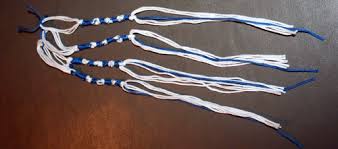
38 “Speak to the sons of Israel, and tell them that they shall make for themselves atassels on the corners of their garments throughout their generations, and that they shall put on the tassel of each corner a cord of blue.
39 “It shall be a tassel for you 1to look at and aremember all the commandments of the LORD, so as to do them and not 2follow after your own heart and your own eyes, after which you played the harlot,
40 so that you may remember to do all My commandments and abe holy to your God.
(Num 15:38-40 NAU)
A Million-Dollar Question
One of several things that interest me greatly as it relates to present-day practices of members of our Faith Community is the overwhelming number of us who do not wear tzitzits as commanded of us by Yahuah our Elohim. I guess the question I have for our community is: why is the wearing of tzitzits by members of our community such a rare thing?
Likely Excuses
I would imagine a great many in our community who choose not to wear these divinely commanded implements would offer as a defense that we, living in 21st-century western society, no longer wear four-cornered garments; ergo, the expectation that one wear tzitzits is at best a moot assumption.
I would concede that, yes, we generally do not wear four-cornered garments in 21st-century western society. Thus, we must reconcile the practicality of wearing tzitzits with articles of western attire that are not cornered.
Others might contend that when Abba gave the command to wear these implements as reminders of Him and His Torah in our day-to-day walk, as it relates to 21st-century western life, with the Spirit writing Torah on our minds and in our hearts, the tzitzit is now an archaic relic of our desert dwelling forefathers and would no longer be a requirement for us.
I guess this particular line of thinking is similar to the logic that argues an adherence to the Calculated Jewish Calendar over that of the Biblically inspired Observational Calendar. A fellow Hebrew Rooter and staunch adherer to the Calculated Jewish Calender once criticized: why rely upon an observational calendar when we have a perfectly good calculated calendar that we can reference today and even a hundred years in the future if need be; beside, the observational calendar is too subjective whereas the calculated calendar is much more accurate.
Yep–I would contend that under the renewed covenant, Torah should exist in our hearts and dwell eternally on our minds (Hebrews 8:8 and 10:16). Nevertheless, does the renewed covenant negate every element of Torah?
Questions Begging Answers
As with so many aspects of Torah as it relates to applicability and relevancy to the 21st-century Netsarim’s day-to-day walk, our wearing of tzitzits also poses a lot of questions. And the funny thing about Torah and our Community/Movement is that when questions arise over applicability and relevancy in our modern-day lives, we tend to take the path of least resistence and ignore the issue altogether. I would contend that the issue of tzitzit wearing by Netsarim in 21-century western society is probably one of those issues that the majority of us choose to ignore rationalizing that there are just too many questions without good answers to justify wearing them. Right?
What I am finding to be most helpful when it comes to my adherence or non-adherence to Torah commands, particularly as it relates to those questions of Torah that have no good answers attached to them, is to answer those answerless questions with follow-up questions. Those follow-up questions often clarify an issue and settle them in my mind better than simply taking a non-comforming stance on the issue in question.
I have some follow-up questions to the questions posed above regarding the wearing of tzitzits by modern-day Torah Observant Believers in Yeshua Messiah:
- Should our wearing (or non-wearing) of tzitzits be wholly contingent upon the existence of four-cornered-garments common to 21-century western garb?
- Does the existence of the Renewed/New Covenant negate the commandment to wear tzitzits? (And yes, I realize that many of you may disagree with me that the renewed covenant has not been implemented yet and to those of you who hold to this belief, then it stands to reason that there is no good sense to ignore this commandment. Right?)
Somehow I believe that the non-existence of four-cornered garments and the renewed covenant are not deal breakers as it relates to this commandment. I mean, if one desires to debate the present day relevancy of individual commandments such as the wearing of tzitzits by Torah Observant Believers in Yeshua Messiah, then I would argue that one must be prepared to turn over their Torah-Keeping card because he or she has officially entered the realm of picking and choosing which applicable Torah commandments he/she will be keeping at any given time of their lives based upon preferences and personal opinions.
What Part of “In All Our Generations…” Don’t We Understand?
Abba stipulated that this mitzvah was non-negotiable since it was to be followed “in all our generations.” We have no problem keeping the seven-mandated-feasts of Yahovah/Yahweh/Yahuah, but tzitzit wearing appears to be one of those negotiable items of Torah that we have chosen to keep or ignore as a community.
I further contend that tzitzit wearing for some in our community may be too much of a challenge for our fragile 21st-century Hebrew Roots egos and could be one of the primary reasons why tzitzit wearing by members of our community is such a rare occurrence.
The Virtues of Tzitzit Wearing
Tzitzit wearing is a conspicuous practice. As a result of that conspicuousness, those simple but strangely adoring little buggers have the capacity to any wearer in our society. Not do tzitzits appear foreign to virtually every member of our society (with the exception of the Jew) and not only do they cause people to wonder what in the world those things are hanging from the wearer’s person, they also force the blessed and obedient wearer to be everso prepared to give an explanation to any who ask why he or she is wearing them.
I can readily attest that this virtue was one of the biggest impediments to my diving headlong into the wearing of these implements in the first place, until just recently (i.e., just in the last four-years). The wearing of tzitzits out in public certainly places an often unwanted spotlight light on you and it tends to do so at the most inopportune times. It is not uncommon to have some random individual come up to you on the street or in a workplace or a business and inquire what those things hanging from your waist are and why are you wearing them.
Yet, tzitzit wearing probably offers one of the greatest witnessing opportunities available to us, short of engaging in old-fashion street-corner evangelism and personal, individual witnessing.
As unwelcoming and as disconcerting as such random inquiries may be, especially to natural introverts such as me, it is those opportunities that that tzitzit wearing offers to the Torah Observant Believer in Yahoshua Messiah that is one of greatest virtues associated with the wearing of these commanded implements. The other great virtues of wearing tzitzits, of course, are the opportunities to obey Yahuah/Yahovah/Yahweh our Elohim and to be reminded of Him and His commandments and desired way of life that He has set out before us throughout each and everyday.
Where do you Stand on Tzitzit Wearing?
So I must ask you, dear Saint, dear Son and Daughter of the Most High Elohim: If you do not wear tzitzits in public, each and everyday, and you are a Torah Observant Believer in Yahoshua Messiah, may I ask you why you do not wear them? I would love to hear your perspective on this matter. Simply write your position in the comment section that proceeds this post.
Bear in mind: I do not judge nor condemn any who chooses not to wear tzitzits: wearing or not wearing tzitzits is between you and our Creator.
I will touch upon this subject in coming postings and I hope that you will return and read, reflect, share and opine at your convenience and leisure. We are all in this walk both individually and collectively and it is my greatest desire that this journey of mine (for lack of a better discriptor) wil not so much “talk at you” about issues and topics that I find to be of significance to us as Torah Observant Believers in Yeshua Messiah, but moreso to encourage you and cause you to reflect upon these issues; and as a result, that you, like me, will seek Abba Father regarding His eternal will for our lives that will glorify Him and bring a smile to His Face.
Until next time me friend and brother and sister in the Faith Once Delivered, I bid you Shalom.
Faithfully Yours in Yahoshua our Master,
Rod Thomas

3 Comments
When Nations Tremble: The Prophetic Significance of the Unrest in the U.S., France, and Italy
🔥 When Nations Tremble: The Prophetic Significance of the Unrest in the U.S., France, and Italy A Messianic‑Hebraic Analysis of Global Birth Pangs in the 8th Biblical Month By Rod Thomas — The Messianic Torah Observer Yom Sheni — 7th Day of the 8th Biblical Month...
Mashiyach/Messiah ben David: The Convergence of Three Messianic Profiles in Yeshua
Mashiach ben David: The Convergence of Three Messianic Profiles in Yeshua Part 11 of the Melchizedek Series Greetings, beloved saints of the Most High Ahlohim. In this installment of the Messianic Torah Observer, we turn our attention to one of the most...
The Serpent’s Oldest Question: Genesis 3, October 7, and Beresheit Faith
The Serpent’s Oldest Question—and Why the World Gets to Start Over Shabbat Shalom, beloved, and welcome to another installment of the Messianic Torah Observer. In this teaching, we stand at a sobering and deeply meaningful intersection: the third anniversary of...
The Eighth Day: The Feast Nobody Leaves
Chag Sameach, beloved saints in training. In this installment of The Messianic Torah Observer, we turn our attention to Shemini Atzeret—the Eighth Day Assembly, otherwise known as the Last Great Day. It is the Feast that arrives after the seven days of Sukkot, when...
Every Nation Will Come: Sukkot, Zechariah 14, and Yeshua Tabernacling With Us
Episode Summary Chag Sameach Sukkot, beloved of the Most High. In this installment of The Messianic Torah Observer, we turn our attention to Sukkot, aka the Feast of Tabernacles; the Feast of Booths; and the Feast of Ingathering to consider what this appointed time...
Ha’azinu and Shabbat Shuva: The Song of Moses, Teshuvah, and Yom Kippur
Ha’azinu: The Song That Knew the Future—and the Shabbat That Stands Between You and Yom Kippur Greetings, Saints of the Most High Ahlohim, and welcome to another installment of The Messianic Torah Observer. In this teaching, we turn our attention to Parashat...
The Hidden Feast: Yom Teruah, the New Moon, Hannah’s Prayer, and the Return of the King
Beloved, in this installment of The Messianic Torah Observer, we turn our attention to one of the most mysterious and prophetically charged moedim on Yehovah’s sacred calendar: Yom Teruah, the Day of the Blowing of Trumpets. It is a feast that Father commanded, yet...
How Should We Evaluate Prophetic Voices? A Biblical Framework — With Jonathan Cahn as Our Starting Point
Opening This morning — Tuesday, September 8, 2026, the 25th day of the 6th Biblical Month, conceivably four or 5 days before Yom Teruah, a significant fact-checking analysis of Jonathan Cahn's prophetic claims was published. (Reference: “What Prophecies Has Jonathan...
The King Is in the Field: Elul, Yeshua, and the Meeting Your Jewish Cousins Are Still Waiting For?
Beloved, in this installment of The Messianic Torah Observer, we step into one of the most tender and spiritually rich traditions associated with the traditional Jewish month of Elul: the teaching that the King is in the field. Our Jewish cousins have long understood...
Yeshua and Ki Teitzei: The Torah Fulfilled Through Mercy
Episode Focus In this installment of the Messianic Torah Observer, I revisit this week’s Torah Reading, Ki Teitzei, and bring it into conversation with the words of our Master Yeshua in the Sermon on the Mount. And what we discover, Saints, is that Moshe and Yeshua...
What the Greek Mindset Stole from Our Bible Reading and How We Get It Back
Beloved, this teaching is about recovering the lens we were never supposed to lose. Most of us were discipled, trained, and conditioned to read a Hebrew Bible through a Greek and Hellenistic framework, and many of us never realized that this inherited lens was shaping...
Parashat Ki Teitzei: Cursed on a Tree and the Covenant of Peace: Called to War, Comforted by God, and Drawn Near Through Messiah
Episode Overview Beloved, in this installment of The Messianic Torah Observer, we take up Parashat Ki Teitzei, one of the most commandment-rich portions in the entire annual Torah reading cycle. At first glance, Ki Teitzei may appear to be little more than a long...
Righteous Judges and True Prophets: Shoftim’s Call to a Spirit-Led Elul Generation
Righteous Judges and True Prophets: Shoftim’s Call to a Spirit-Led Elul Generation August 14, 2026 | 30th Day of the 5th Biblical Month 6026 | Parashat Shoftim "Righteous Judges and True Prophets: Shoftim's Call to a 6th Biblical Month Generation" Parashat...
UFOs, UAPs, and the Unseen Realm: A Messianic Response to a World Looking Up
Shalom and greetings, beloved Saints of the Most High. In this installment of the Messianic Torah Observer, we stepped into a subject that many in our Faith community either avoid altogether, casually dismiss, or hand over to the secular world to define for us: UFOs,...
Re’eh: What Does It Mean To Truly See?
Episode Title Re’eh: What Does It Mean to Truly See? Episode Overview Beloved, this week’s Torah Reading is Parashat Re’eh, found in Deuteronomy 11:26–16:17. And the parshah opens with one simple, yet spiritually loaded admonishment from Moshe to the people of Yah:...
Hebrew Roots Versus Messianic Judaism: A Debate Every Torah-Keeper Needs to Understand
In this installment of The Messianic Torah Observer, we take up a timely, necessary, and in some respects uncomfortable discussion surrounding the distinction between the Hebrew Roots Movement and Messianic Judaism. And beloved, this is not merely an academic...
The Commandments We Trample Underfoot: Eikev, Yeshua, and the Torah-Grace Question
The Commandments We Trample Underfoot: Eikev, the Wilderness Test, and the Torah-Grace Question Beloved, in this installment of The Messianic Torah Observer, we take up Parashat Eikev, our reading for this coming Shabbat, August 1, 2026, contained in...
Tu B’Av: The Day Nobody Told You About
Episode Title: Tu B’Av: The Day Nobody Told You About And greetings, saints of the Most High. In this special installment of The Messianic Torah Observer, we take up a Jewish traditional memorial day that many in our faith communities have likely never heard taught,...
Is the Hebrew Roots Movement a False Gospel? Answering the Critics
Episode Title Is the Hebrew Roots Movement a False Gospel? Answering the Critics Episode Summary In this installment of The Messianic Torah Observer, we take up a serious accusation that has been leveled against the Hebrew Roots, Messianic, Torah-honoring, and...
Torah in the Constitution: What Israel’s New Basic Law Reveals About the Covenant
Opening On July 13, 2026, the Israeli Knesset passed something that would have been most unlikely just a generation ago. It passed a Basic Law that formally enshrines Torah studies as a foundational value of the modern Jewish state. Consequently, this is the only...
One Messianic’s Perspective on Tisha B’Av: What Matters and What Doesn’t Matter
Episode Title: One Messianic’s Perspective on Tisha B’Av — What Matters and What Doesn’t Matter Episode Summary: Beloved, in this second installment of our brief two-part discussion on Tisha B’Av, we consider what should and should not matter to the modern-day...
When God Says Stand Alone: The U.S. – Iranian Escalation through the Lens of the Hebrew Prophets
Opening Well, it appears the tenuous ceasefire between the U.S. and Iran has come to an inevitable end. As of this writing, the United States has expanded its military campaign against Iran’s IRGC. This go-round, the Strait of Hormuz, Hezbollah in...
From Mourning to Comfort: Our Biblical Calendar Queue for the Week of July 20–26
Episode Title From Mourning to Comfort: The Biblical Calendar Signal for the Week of July 20–26 Opening Word Greetings Saints. In this installment, we are dealing with a week on Yah’s reckoning of time that is not simply another week on a religious calendar. It is the...
Shabbat Chazon: The Sabbath God Shows You the Temple You Lost
Episode Title: Shabbat Chazon: The Sabbath God Shows You the Temple You Lost Series / Format: The Messianic Torah Observer — Messianic-Hebraic Shabbat Teaching Primary Torah Portion: Parashat Devarim — Deuteronomy 1:1–3:22 Haftarah Reading: Isaiah 1:1–27 — the vision...
Why Tisha B’Av Is the Day Yeshua Wept — And Why Every Believer Should Know It- Part 1
Why Tisha B’Av Is the Day Yeshua Wept — And Why Every Believer Should Know It Episode Type: Messianic-Hebraic Teaching | Series: Part 1 of 2 | Topic: Tisha B’Av, Yeshua’s lament over Yerushalayim, the destruction of the Temples, and the recovered discipline of...
Persia in Ezekiel 38: What the Death of Khamenei Means for Prophecy Watchers
Episode Title: Persia in Ezekiel 38: What the Death of Khamenei Means for Prophecy Watchers Episode Summary: In this installment of The Messianic Torah Observer, we take a sober, text-first look at Ezekiel 38 and the prophetic place of Persia, or modern-day Iran, in...
Every Stop Is Recorded – The 42 Stations, Yeshua’s Genealogy, and Your Desert Season
Beloved, in this installment of The Messianic Torah Observer, we slow things down and take a careful, Spirit-led look at one of those passages in Torah that many of us have either read past or simply endured: Numbers/Bemidbar 33. At first glance, this chapter may...
Parashat Mattot-Massei: Israel’s Prophetic Hour and the Narrow Places of our Generation
Shalom and welcome, beloved, to this installment of The Messianic Torah Observer. In this discussion, we find ourselves standing at a sobering prophetic intersection: the closing chapters of Bemidbar, the double Torah Reading of Mattot–Massei, the season known as Bein...
AI, Spiritual Authority, and the Image of Elohim
Episode Title AI, Spiritual Authority, and the Image of Elohim: A Messianic Torah Perspective on Artificial Intelligence Opening Thoughts Shalom and greetings, beloved of the Most High. In this installment of The Messianic Torah Observer, we step slightly outside our...
What Torah Cannot Do For Us, Part 5: The Mystery of Torahlessness
Episode Title: What Torah Cannot Do for Us: The Mystery of Lawlessness — Part 5 of the “What Torah Can and Cannot Do for Us” series. Episode Summary: Beloved, in this concluding installment, we bring this series home by putting Torah in its proper, Yah-given place in...
What Torah Can Do For Us, Part 4: How Torah Reveals God, Points to Yeshua, and Strengthens the Redeemed
In this fourth installment of What Torah Can and Cannot Do for Us, we examine what Torah does for the redeemed believer. Beloved, Torah does not save us, justify us, or redeem us apart from the finished work of Yeshua Messiah. Redemption belongs to Yeshua alone. But...
What the Torah Can and Cannot Do for Us, Part 3: Torah Cannot Justify Contempt for Israel
What the Torah Can and Cannot Do for Us, Part 3: Torah Cannot Justify Contempt for Israel Greetings saints of the Most High. In this installment of the Messianic Torah Observer, I offer a needed clarification regarding comments I made in the previous teaching...
Torah as our Constitution and God’s Culture: What the Torah Can and Cannot Do for Us Part 2
Torah as Our Constitution and God’s Culture: What the Torah Can and Cannot Do for Us, Part 2 In this installment of the Messianic Torah Observer, I continue our discussion on what Torah can and cannot do for us. Given that we are approaching Shavuot 2026, I also...
Saved by Faith, Guided by Torah: What the Torah Can and Cannot Do for Us Part 1
In this installment of the Messianic Torah Observer, I begin a multi-part discussion on what the Torah can and cannot do for the people of Yah. This is a foundational and, at times, misunderstood topic, especially for those who have inherited denominational teachings...
Sabbath, Jubilee, and the Kingdom: A Yeshua-Focused Journey Through Behar–Bechukotai
In this installment of The Messianic Torah Observer, I invite you to join me on a Yeshua-focused journey through the double Torah reading of Behar–Bechukotai found in Leviticus 25.1–27.34. Together, we reflect on the profound spiritual meaning behind Sh'mittah,...
Parashah Emor (Speak!). An Ancient Framework for Walking in Kingdom for 2026 Messianics
Episode summary: In this installment of The Messianic Torah Observer, we take a walk through Parashah Emor (Leviticus 21:1–24:23), highlighting the Torah’s holiness expectations for the priesthood, the danger of profaning Yehovah’s Name, and the enduring relevance of...
What Does Walking with God Look Like From a Yeshua-focused Torah-Living Perspective?
Episode title: What Does Walking with God Look Like From a Yeshua‑Focused Torah‑Living Perspective? Overview: In this installment of The Messianic Torah Observer, we will explore the biblical meaning of “walking with God.” Using the lives of Enoch and Noah as anchor...
Clean or Unclean? The Torah’s Call to Set-Apart Living. My Sabbath Thoughts and Reflections on Torah Reading Tazria-Metzorah
Episode: Torah Reading Tazria–Metzorah — Clean or Unclean? The Torah’s Call to Set-Apart Living Summary: In this installment of the Messianic Torah Observer, I reflect on Torah Reading Tazria–Metzorah (Leviticus 12:1–15:33), exploring the Torah’s purity standards and...
TMTO Update and Biblical Rosh HaShanah Announcement
Rosh HaShanah 6026 Passover - Sunset 4/2/2026-Sunset 4/3/2026 Feast of Matzah or Unleavened Bread - Sunset 4/3/2026 through Sunset 4/10/2026 Day of Firstfruits - Sunset 4/4/2026 - Sunset 4/5/2026 (Day 1 of the Counting of the Omer) Personal Update House Dynamics...
Drafted Into a Cosmic War: Defining Spiritual Warfare in a Time of Global Darkness: Part 1 of our Spiritual Warfare Series
Episode Overview We are living in a time of global upheaval, moral inversion, and spiritual confusion. Scripture warned us that such days would come—but it also prepared us for them. In Part 1 of our Spiritual Warfare Series, we lay the foundation by answering a...
The Suffering Warrior: Unveiling Judah’s Mashiyach ben Joseph and the Messianic Mystery – Part 10 of our Melchizedek Series
The Suffering Warrior: Unveiling Judah’s Mashiyach ben Yosef and the Messianic Mystery Overview In this post, Rod explores Judah’s conception of Mashiyach ben Yosef (Messiah son of Joseph), tracing its development through biblical, Rabbinic, and apocalyptic...
“Messiah the Prince: Daniel’s Prophecy, Jewish Tradition, and the Identity of Yeshua” – Part 9 of our Melchizedek Series
Overview In this installment, Rod Thomas explores the Jewish concepts of the Messiah, focusing on the three-messiah framework: Mashiyach Nagid, Mashiyach ben Yosef, and Mashiyach ben David. The discussion delves into Daniel’s prophecy, Jewish tradition, and the...
Beyond Protests: How Prayer and Fasting Topple Evil Regimes – Venezuela-Minnesota-Iran-The Extreme Radical Left Weighing Heavy on my Mind
Episode Overview In this episode of the Messianic Torah Observer, Rod Thomas explores the spiritual dynamics behind the persistence and collapse of evil regimes. Drawing from current events, biblical prophecy, and personal reflection, the discussion centers on how...
Have We Finished the Great Commission — and Triggered the End Times?
Welcome, beloved saints of the Most High! I’m Rod Thomas, and I’m honored to bring you another installment of the Messianic Torah Observer. On this unusually warm Preparation Day here in DFW, I invite you to join me as we tackle a provocative question: Have we truly...
Runway to the Royal Priesthood-How Hebrews Builds the Case for Yeshua as our Melchizedekian High Priest: Part 8 of our Melchizedek Series
Title: Runway to the Royal Priesthood—How Hebrews Builds the Case for Yeshua as Our Melchizedekian High Priest Episode Description: Are you ready to discover the deeper meaning behind Yeshua’s role as our Melchizedekian High Priest? In this powerful episode, Rod...
Israel’s Inextricable Link to our Salvation Part 7-My Thoughts & Reflections on Torah Reading Vayigash-And He (Judah) Approached
Show Notes Title: Israel’s Inextricable Link to Our Salvation—Reflections on Torah Reading Vayigash Host: Rod Thomas, Messianic Torah Observer Date: Preparation Day, Friday, December 26, 2025 Episode Overview In this installment of TMTO, Rod explores the prophetic...
Torah Reading Miketz: Kingdom Character: Emulating Humility, Faith, and Wisdom from Torah to Messiah
This episode of the Messianic Torah Observer, hosted by Rod Thomas, explores the Torah portion Miketz (Genesis 41:1–44:17), focusing on the life of Joseph (Yosef) and drawing prophetic parallels to Yeshua (Jesus). The teaching highlights how both figures exemplify...
Hanukkah Unveiled: The True Meaning, History, and Relevance for Messianic Believers
This episode of TMTO explores the origins, meaning, and relevance of Hanukkah from a Messianic Torah Observer perspective. Rod discusses the biblical and historical foundations of Hanukkah, its connection to the dedication of the altar, and whether modern Messianic...
Thoughts and Reflections on Torah Reading Vayeshev-And He Settled: Lessons from the Life of Joseph Ben Israel
This is Thoughts and Reflections on Torah Reading Vayeshev or And He Settled: Lessons From the Life of Joseph Ben Israel. Our parshah is contained in Genesis 37:1-36, focusing on the life and story of Yosef (Joseph), son of Ya’achov (Jacob), and its prophetic and...
TMTO Final Update for 2025
In this episode, we explore the recent Kenya Missions Trip with the Qumran Family Foundation (QFF), whose mission is to deliver critical resources and opportunities to Kenyan widows and orphans living in poverty. The episode highlights: Why Kenya? Unlike in the U.S.,...
In this post I asked the question: Why aren’t we wearing tzitzits as commanded in Torah. One individual on Facebook responded to this question with the answer of: “because it’s Jewish!” Granted, I don’t know whether or not this brother is a Netsarim or not; I doubt it given his abrupt statement. But just in case there is any question as it relates to my position on this particular subject: the commandment to wear tzitzits found in Numbers 15 is NOT a Jewish commandment. Without getting too deep into this issue on a social media post, there is a difference between Hebrew and Jewish. Torah was given to the world, initially through the 12-tribes of Israel. Judah is just 1 of 12 tribes who essentially adopted over time the religion of Judaism. Judaism was developed by the so-called sages of old to “erect a fence around Torah” (the Oral Law or The Law) through the implementation of man-made rules and traditions (the Oral Tradition or Oral Law) . Most of those traditions and rules corrupted the purity of Torah to the point that Torah was a gutted out shell of its former self. Master Yeshua spoke out against this in speaking to the Pharisees: CJB Mark 7:13 Thus, with your tradition which you had handed down to you, you nullify the Word of God! And you do other things like this.” (Mar 7:13 CJB)
Even as it relates to the wearing of tzitzits today, Jewish traditions have nullified this Torah commandment by stipulating that the tassels not have the mandated ribbon of blue contained therein. Thus, when you see Jews out in the street wearing tzitzits, they fringes are simply white, absent the blue.
And thus the age-old battle rages on whereby the world assigns Torah-keeping exclusively to the Jew, which is absolutely not true. Some day the Christian world will come to realize that Torah is NOT just a Jewish thing but a gift from our Heavenly Father to us who seek to be His children and the Kingdom of Priests that Abba desired of us from the very beginning.
Shalom and Warmest Blessings to you all.
Faithfully
Rod
Rod,
Do you know anyone casting out demons who follow Torah and use the Messiahs true name not a false messiah jesus. The demon who attacked the 7 sons of scuba said I know Paul and I Know Yahushua but I don’t know you. Paul or more correct Shaul was known to cast out demons by the demon. He said we were to imitate him, and he imitated Yahushua! So Yahushua said “If you believe in me you will cast out demons.” I am under attack daily. Do you know anyone? I want to learn more from a Torah observant follower. Satan is casting out Satan in these churches. So his army is not looking but fooling them.
Shalom. I am so sad to read of your struggles and yes, I do know of a Spirit-Filled Torah Observant Believer in Yeshua HaMashiyach who is well versed in things of the spirit realm. You’ve probably heard of him if not heard his messages. His name is Arthur Bailey out of Charlotte North Carolina. I would have you check out his website at your earliest opportunity. There you will find a few ways of contacting him. His website is arthurbaileyministries.com. He does receive prayer requests at the end of his messages each Shabbat and prays for the healing of those requesting such prayers. I will hold you up in prayer and seek your deliverance.