No Results Found
The page you requested could not be found. Try refining your search, or use the navigation above to locate the post.
Let the woman learn in silence with all subjection. But I suffer not a woman to teach, nor to usurp authority over the man, but to be in silence” (1 Timothy 2:11-12; KJV).
These two-verses, attributed to the Apostle Paul, is the basis upon which untold numbers of woman of Faith over the centuries have been denied the opportunity to serve the Body of Messiah: to exercise their God-given gifts and talents of teaching, preaching, prophesying and leadership in both Christian and Messianic Communities.
A simple plain reading of these cited verses, through the lenses and filters of our 21st century western sensibilities and understanding, could (on the surface) certainly lead us to think that for whatever reason, Paul set out to finally put women into their proper place at home and in the church.
However, when one takes this passage in context with the whole of the New Testament writings, something seems amiss. For in other places of scripture, we find Paul lovingly endorsing and certifying the offices and works of women leaders, preachers, teachers, prophets and at least one apostle in the various assemblies of the Body of Messiah.
So what’s up with Paul and his seeming two-faced view of women in Faith?
Well, as we found in our study of 1 Corinthians 14:34 and 35, that which we at first brush think Paul said about women in the Faith may not be what Paul actually meant when he wrote this letter to Timothy.
In this 10th-installment of our multi-episodic series on Paul and Hebrew Roots, we will attempt to answer the question: What did Paul actually mean when he wrote that women must learn and live in silence? This is content you won’t likely find anywhere else in the Hebrew Roots/Messianic Faith Community.
Now, what we’ve tried to do in this series is to take some of the Apostle Paul’s most difficult; seemingly contradictory; most challenging writings and see if we can make any real sense out of them from a contextual—socio-cultural-historical-Hebraic-spiritual perspective. And not rely on the conventional wisdom and widely accepted, churchianity-based talking points that most of us have been raised and taught to accept as the basis of our Faith.
Most of us now recognize, having come out of churchianity in one form or another, that the writings of Paul have been improperly used by churchianity to create a religion that has very little resemblance to the Faith that our Master Y’shua Messiah founded and His anointed disciples turned apostles built upon.
My purpose here today in this and succeeding additions to this series is to bring the discussion regarding women’s so-called roles in the “church” and in the Body of Messiah back to center and back to Spirit and Truth by examining another one of Paul’s most challenging and widely misunderstood writings found in 1 Timothy 2.
Because of the complex nature of the content I have to share with you, I will break up our discussion on this particular Pauline passage into smaller, easier to consume units.
Bear in mind that my studies on just this Pauline passage alone has taken me several months to complete. And for me to try to feed the whole of what I’ve learned and the conclusions I’ve drawn into a single post would be spiritual abuse.
So I’ve determined the best way to present this content to you is to do so in bite-size, easier consume installments that I will try to keep as close to an hour in duration as I possibly can.
Today, I want to look at our focus passage—1 Timothy 2:9-15—from the standpoint of its widely accepted conventional interpretation in churchianity and in some Hebrew Roots/Messianic communities. I want to also begin to look at this passage from a contextual perspective as well as break it down into component parts so as to set the table for further examination of the passage in future installments of this series.
So what do you say we get started with our study.
Our Focus Passage in Light of Biblical and Extra-Biblical Context
Our focus passage for this study is located in 1 Timothy 2:9-15 and it reads as follows:
“In like manner women also in decent apparel: adorning themselves with modesty and sobriety, not with plaited hair, or gold, or pearls, or costly attire, but as it becometh women professing godliness, with good works. Let the woman learn in silence, with all subjection. But I suffer not a woman to teach, nor to use authority over the man: but to be in silence. For Adam was first formed; then Eve. And Adam was not seduced; but the woman being seduced, was in the transgression. Yet she shall be saved through childbearing; if she continue in faith, and love and sanctification, with sobriety” (DRA).
A Plain Reading of our Focus Passage
A basic, plain read of this passage, especially when read by itself—absent chapter 1 and verses 1 through 8 of the 2nd chapter—has the natural tendency to appear as a rather harsh and overbearing indictment against women of Faith by the one-time orthodox Pharisee turned apostle to the Gentiles.
Now, I quickly identify at least 7-areas of concern regarding women of Faith that Paul puts forth to his reader in this letter:
Related or Similar Pauline Passages
It should be readily recognizable to you that this passage is somewhat similar to other Pauline writings regarding women of Faith within the Body and Assemblies of Messiah:
1 Corinthians 14: 34, 35—Recall that we examined this passage in detail in parts 8 and 9 of this series. I would highly recommend you take the time and review those posts as a great amount of the content we looked at in those posts will bleed-over into this one. The passage reads: “Let women keep silence in the churches: for it is not permitted them to speak, but to be subject, as also the law saith. But if they would learn any thing, let them ask their husbands at home. For it is a shame for a woman to speak in the church” (DRA).
I concluded in part 9 of this series that this particular passage in no way was prohibiting women of the Body and Assemblies of Messiah from preaching, teaching, leading, prophesying or publicly praying. For we learned, based upon a great many factors that included the Greek words Paul in this passage, that Paul was simply saying to the Corinthian women: “Hey ladies, when you come to worship gatherings, stop the chattering; don’t try to over-talk the teachers and speakers; and don’t disrespect your husbands by questioning them about things of the Faith in the midst of assembly services. In other words, be respectful of others during assembly gatherings.
Titus 2:3-5—”The aged women, in like manner, in holy attire, not false accusers, not given to much wine, teaching well: that they may teach the young women to be wise, to love their husbands, to love their children, to be discreet, chaste, sober, having a care of the house, gentle, obedient to their husbands, that the word of God be not blasphemed” (DRA).
Certainly, on the surface, these passages give the reader the sense that Paul requires women to assume the very role that they did under Orthodox, Rabbinic Judaism. And that role, which we discussed in earlier installments to this series, was one of subservient dedication to their husbands, children and their homes. Beyond that, they were to be seen and not heard in Jewish society.
Now this is not meant to be an attack on Judaism. Indeed, rabbinic Judaism has her share of faults and her treatment of women back in the day, in my opinion, is one of those faults. But, rabbinic Judaism, for all things considered, has served a righteous purpose through the ages: she maintained the oracles of YHVH for the world. And what are those oracles: Torah and the prophets and the writings—the Word of YHVH. And we cannot marginalize the greatness of that God-ordained achievement and purpose.
Important Considerations Related to our Focus Passage
In getting to the heart of our focus passage, there are just a few considerations that we all must be cognizant of if we are to be true to our studies:
We’ll certainly talk more about this in the posts ahead.
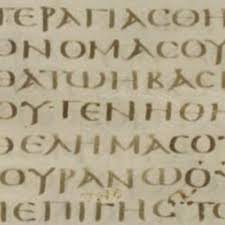
Most scholars believe Paul’s letters were written in Koine Greek; an extinct language that is not always easy to fully into modern English.
4. Context—Context—Context. I’ve said it countless times throughout my career here on the Messianic Torah Observer—and I’ll say it a thousand times more: context is king and context must be our primary guide when studying any passage of scripture. And 1 Timothy 2:9-15 is no different a situation. For as we can clearly see in our focus passage, when plainly read by itself, there are a lot of inherent problems associated with it. And if context is properly employed in our studies of the text, it just may help solve and answer some of those inherent problems.
So needless to say, we’re going to be employing a lot of context to our study of the text and you will see for yourself just how important it is to our arriving at a reasonable understanding of the passage.
Problems With Interpreting the Passage as Plainly Written—Contradictions Abound!
So for the remainder of this post, let’s carefully walk through our focus passage and identify the problems associated with a plain read of the text. In so doing, we’ll refer to the King James Version.
Verse 9
“In like manner also, that women adorn themselves in modest apparel, with shamefacedness and sobriety; not with boided hair, or gold, or pearls, or costly array” (KJV).
Problem 1—”In like manner…”
When we read the phrase “in like manner” in our 21st-century parlance, we generally understand it to mean, “in a similar fashion be.” In other words, Paul is saying to the women: hey ladies, I want you to be just like…I want you to do as…whoever that person or thing is.
So then, what is that thing or person the women are supposed to imitate or be like?
Well, that thing or person to be imitated is not found in this verse, is it? Or at least it doesn’t appear to be present. So what do we do about this unknown? It means that we have to step back a verse or two to figure out what that thing or person to be imitated is. And this is the heart of contextual study—acknowledging and understanding that at times we must look verses that come before the passage in question; and at times look at verses that come after the passage in question in order to fully grasp what the writer is trying to say.
It is vitally important that we learn what that thing or person is that women must imitate for the sake of all women in the Body of Messiah. If, on the other hand, we overlook context here, we’re sort of forced to either squeeze out a meaning that’s likely going to be wrong; or we’ll simply dismiss that part of the verse altogether and move on to areas of the passage that make better sense to us.
We’ll find out what that thing actually is in our next installment to the series.
Problem 2—Paul Prohibiting Nice Attire
Paul seems to be saying to the reader that women should not wear their hair in braids; nor should they wear gold jewelry or even pearl necklaces; nor nice expensive clothes.
As it relates to us living in the 21st-century west, this may seem problematic and a bit off-putting. For it is common for women in this day and age to wear their hair in braids and to wear nice clothes and gold jewelry and pearls.
So why would Paul prohibit women wearing such seemingly innocuous things? Is he saying that gold jewelry, nice clothes and braids have some inherent evil associated with them? It doesn’t make a whole lot of sense now does it?
We’ll get into some very interesting stuff related to these prohibited items in the next installment of the series.
Skipping verse 10 and moving on to verse 11 we find:
“Let the woman learn in silence with all subjection” (KJV).
Problem 3—Paul Once Again Silencing Women Simply Because They’re Women
Well, if you’re familiar with the content of previous installments of this series, you’ll easily recognize the inherent problem associated with this verse. If you’re not familiar with previous content, I’ll let you in on a little secret: The biblical record affirms that Paul certified, endorsed and had mad love for women of his evangelistic team. These women included, as previously mentioned: prophets, teachers, preachers, deacons, matrons, congregational leaders and at least one apostle. And to think that Paul would advocate women be silent—can’t teach, preach, prophesy or pray publicly–and then be in subjection to men (or whoever) simply because they’re female, is contrary to the character and person we’ve all come to know and love.
The other problem associated with this verse is key: Where would Paul get the idea that women must be silent and subject to men? Is it a Torah command? Did Y’shua or the Holy Spirit pass that instruction on to him? There’s no indication as to the inspirational source of this instruction.
The one cool thing that so many people tend to overlook when reading or studying this verse is Paul’s admonishment that women be afforded the opportunity to learn the elements of their Faith. It’s right there in black and white. Paul says “Let the woman learn.” And what we’ll find as we continue on in our study of this passage is the immense relevance of this verse to the entire passage. For contrary to the conventions of Judaism, which we all know Paul grew-up in; was educated in, and zealously practiced, Jewish women were not afforded formal education opportunities whatsoever. So for Paul to break out and promote female education here is huge! Indeed, he was a revolutionary bar none if not for this one single instruction.
Verse 12 reads:
“But I suffer not a woman to teach, nor to usurp authority over the man, but to be in silence” (KJV).
Problem 4—Women Prohibited from Teaching
Of course this problem is founded in problem 3 above from the standpoint of knowing that Paul promoted the teaching ministries of a number of women on his evangelistic team. So knowing this fact exists and was well documented by Luke in his Acts of the Apostles and throughout a number of Paul’s very own letters, the question must be asked: how can Paul say here that he doesn’t advocate women teaching, which would by default require women to have some authority over men? You know, the teacher-student relationship requires that the student be subject to the teacher, otherwise, learning would be hampered. So is Paul flip-flopping on this issue? Is he two-faced? It just doesn’t make any sense does it?
At least in this verse—which I’m happy to point out—Paul gives the source of this prohibition against women teachers. The source is him. For Paul writes: “…I suffer…” which strongly suggests that he was the sole source of this instruction.
Verses 13-15 reads as follows:
“For Adam was first formed, then Eve. And Adam was not deceived, but the woman being deceived was in the transgression. Not withstanding she shall be saved in childbearing, if they continue in faith and charity and holiness with sobriety” (KJV).
Problem 5—Adam and Eve and Salvation
The whole Adam and Eve inclusion here in this passage is extremely mysterious and problematic on a few levels.
The first level of concern is that it doesn’t fit. What does the story of Adam and Eve have to do with women teaching or being improperly attired or being in silence? And since there is no obvious reason for Paul to include the Adam and Eve story into his instructions here, people have decided to make up stuff to fill in the missing pieces. One of the made-up things is that Paul used the Adam and Eve story to justify the prohibitions he placed on women here in our focus passage. Okay. If that’s what it takes to get you through a day.
The other level of concern which is actually the big elephant in the room has to do with Paul’s assertion that women are saved through childbearing which is contrary to what we’ve been taught in other parts of the bible. We know that salvation is a free gift from YHVH and it was facilitated by the sacrifice of our Master Y’shua Messiah.
It was Paul himself who wrote:
“For the wages of sin is death; but the gift of God is eternal life through Jesus Christ our Lord” (Rom. 6:23; KJV).
So how then does Paul get away with stating that female salvation is had through childbearing? What happens to a woman who cannot have children or who sadly dies before even having the opportunity to bear a child? Are these hopelessly lost?
Fortunately, I have some answers to these problematic questions. As well as I think I may have some reasonable explanations why Paul included the Adam and Eve saga into this portion of his letter. And those reasonable explanations will have nothing to do with justifying his stated prohibitions against.
The Context of 1 Timothy—False Teachings and a Word of Encouragement and Instruction
If we are intent on properly interpreting this above passage, we must understand first and foremost that Paul’s concern here was not church organization, nor was it an indictment against women leadership in the assemblies of Messiah. This is a popular teaching in most churchianity congregations and not too few Hebrew Roots/Messianic groups.
The truth of the matter, based on context, is that 1 Timothy had one purpose and one purpose only: to address “the teaching of false doctrine by both men and women” (Eddie Hyatt; pg. 88).
Consider 1 Timothy 1:3 which reads:
“When I left for Macedonia, I asked you to stay behind in Ephesus so that you could instruct certain individuals not to spread wrong teaching” (CEB).
Our focus phrase here is “wrong teaching” which in ancient Greek is “heterodidaskelein,” which simply means a “different doctrine” (ibn; pg. 88).
Almost right off the bat we find contained here in this single verse a summary of Timothy’s entire marching orders: to confront false teachings in Ephesus. Period.
Now, Paul’s marching orders to Timothy was to deal with the ongoing false teachings in the Ephesian Assembly, but the purpose of the letter was to “encourage and instruct him (ie., you Timothy) in his unpleasant task” (ibn; pg. 89).
Thus, once we have this essential, foundational information firmly embedded in our noggins, we are better set to accurately interpret what Paul actually meant in our focus passage of 1 Timothy 2:9-15.
The established convention of 1 Timothy somehow being a modern day manual for church organization is churchianity pablum, plain and simple (personal). It’s a ploy by the enemy to quash the voices and talents of women in the Body of Messiah. Again plain and simple. And for a long while I fell pray to that pablum. I’ve since repented and have determined to set the record straight as Yah provides.
I touched briefly upon the issue of Pauline passages such as 1 Timothy 2:11-15 being the handy-work of ambitious, misogynistic scribes and not that of Paul. Those who advocate such thinking point to the Greek wording in these troublesome texts being noticeably different from Paul’s other writings. Thus a plain read of such passages as 1 Timothy 2:11-15 and 1 Corinthians 14:34,35 on the surface seem to contradict what we’ve already established as Paul’s pro-women position in the Body and Assemblies of Messiah.
Call To Action:
In closing I want to leave you with a couple take-aways:
So then if we are to grasp the great things that Father has for us, especially those things contained in His eternal Word, we must be willing do the hard work of searching out the Truth. And that’s what I’ve tried to do here for you in the hopes that you will in turn take this content where I’ve left it and take it to the next level by conducting your own studies.
King Solomon wrote:
“It is the glory of Elohim to conceal a thing; but the glory of kings is to search out a matter” (Pro. 25:2; ASV).
And last, have a blessed but powerful week in Y’shua Messiah my friend in the Faith once delivered. Until next time, may you be most blessed fellow saints in training. Shavu’tov. Take care.
The page you requested could not be found. Try refining your search, or use the navigation above to locate the post.
Peace—shalom—is one of the greatest benefits promised to every disciple of Y’shua Messiah. In fact, peace is vitally important to every disciple’s day-to-day walk with Mashiyach. For when a disciple’s peace is negatively impacted, or that peace is even absent, the walk is disturbed or even impeded.
Yet peace eludes so many in the Faith for various and sundry reasons.
So today, using the backdrop of this week’s Torah Portion Pinchas, we’ll reflect on this critical issue of peace—it’s importance—it’s absence in so many believers’ lives—and how every believer can find that illusive peace for themselves.
Many within the Faith attribute the absence of peace in their walk with Messiah to outside influences—specifically to demonic spiritual attacks and or just the hardships associated with life.
There’s not a week that doesn’t go by when I don’t run across social media posts from brothers and sisters in our Faith, begging the brethren for financial assistance in one form or another. Others set about complaining about the various physical and spiritual hardships their having to endure each and every day—seeking prayer and or directions from the Body of Messiah to help them through their difficulties.
To be honest with you, it’s not that brothers and sister of Faith are asking for help that troubles me. Rather, it’s generally the same people time and time again who find themselves in some trial or even tribulation, seeking help from the brethren.
And I find myself wondering why do these same individuals time and time again find themselves in problems? Is it really because of attacks by the enemy? Or is it just bad luck?
I would suggest that maybe there is an alternate reason for the lack of peace that so many in our Faith fail to realize. And I believe that alternate reason may be found in the story and example of the Levitical Priest Phineas, which is the main focus of this week’s Torah Portion entitled Pinchas.
The goal of this installment of the Messianic Torah Observer, which I’ve entitled “Phineas’ Covenant of Peace—Our Road Map to Peace in Messiah–is to discover how we as disciples of Messiah may obtain that peace that Y’shua declared would surpass all understanding.
Each of us who claim Y’shua as our Messiah and YHVH as our Creator and Elohim, needs a Covenant of Peace in our lives. It is our birthright as priests of the Kingdom of YHVH.
When peace is absent in our day-to-day walk, we lose focus and purpose. We tend to divert our attention to everything other than our role and purpose as disciples of Y’shua and priests of the Kingdom of YHVH.
As we reflect upon Torah Portion Pinchas for this week, I believe the question of peace—or even a covenant of peace—being the blessed possession of every disciple of Y’shua under the renewed covenant is necessarily available to each of us.
The covenant of peace is not just for the very special members of our Faith as some might erroneous think. Instead, I assert that it is available to each of us who are willing to follow the example of Phineas in spiritual principle.
And this access to a covenant of peace is immediately available to any who would follow the spiritual example of Phineas.
Now I’m certain more than a few folks would outright dismiss all of what I’ve said here, no doubt citing a lack of direct biblical proof to my claims. And certainly for the most part, I too would be cautious in making similar, seemingly unsupported spiritual connections to Torah Portions.
However, I would take issue with dismissing my claim of a covenant of peace for every disciples of Mashiyach through Phineas’ spiritual example because the promise of peace is one of the central promises made to Netzarim by our Master Y’shua. There is a Torah-Prophetic-Messianic foundation for my claim here, just saying.
So it really becomes a question of whether we desire to possess the covenant of peace or not. And I believe most, if not all of you would agree that it’s preferable to have it over not having it.
So, let’s allow scripture to state the case for a covenant of peace for, not just Phineas and his posterity, and for all who would be YHVH’s elect.
Our Torah Portion Pinchas (aka Phineas) is found in Numbers 25:10-30:1 with its accompanying Haftorah Reading in 1 Kings 18:46-19:21. And I should mention that this reading covers two other topics that includes a tribal census to be taken of the nation and the required daily and feast-offerings. Today, of course, I wish to focus on Phineas and the covenant of peace that he received of YHVH as a result of the righteous actions he took against a Simeonite and Midianite who engaged in harlotry and idolatry in the midst of the camp.
Now bear in mind that the two things we should always be cognizant of when we study the weekly Torah Portions is: (1) the elements of each reading contain shadows of good things to come (Heb. 10:1), and (2) everything in Torah points to Y’shua haMashiyach (Rom. 10:4). For our goal is not to simply get through each week’s scheduled Torah Portion for the sake of getting through each week’s Torah Portion. Instead, our goal must be to learn what Father has in store for us through His Son Y’shua Messiah.
______________________________________________
The Zeal of Phineas is recorded in Numbers 25:10-13.
It reads as follows:
“And YHVH said to Moses, Phineas the son of Eleazar, the son of Aaron the priest, has turned my wrath from the people of Israel, in that he was jealous with my jealousy among them, so that I did not consume the people of Israel in my jealousy. Therefore say, ‘Behold, I give to him my covenant of peace, and it shall be to him and to his descendants after him the covenant of a perpetual priesthood, because he was jealous for his God and made atonement for the people of Israel” (ESV).
In order for this passage to make sense, you have to refer back to the very tail end of Torah Portion Balak, found in Numbers 25:1-9. In this passage we learn that Midianite Ba’al prostitutes had seduced the men of Israel to commit harlotry and idolatry. Israel’s disgusting sin resulted in the wrath of YHVH being poured out upon the nation in a massive plague outbreak. In the interim, Phineas, son of High Priest Eleazer, witnessed Zimri, a Simeonite chieftain’s son, hand-in-hand with Cozbi, a Midianite Princess-Ba’al prostitute, head into an enclosure and engage in an obvious disgusting act. Phineas, filled with the zeal—the jealousy of YHVH, upon seeing the outrageous hubris of Zimri, grabbed a javelin (ie., a spear), entered the enclosure where the couple had gone into to engage in their disgusting act, and simultaneously executed them.
Phineas’ zealous-jealous-righteous act against Zimri and Cozbi caught YHVH’s attention and stayed Yah’s judgment against Israel.
In this week’s reading, we find Phineas described by YHVH as being “jealous with YHVH’s jealousy” (ASV; ESV) among the people of Israel (25:11). Other translations such as the KJV use the verb “zealous” (as opposed to “jealous”) to describe. The Hebrew verb used by Moshe here is qana’ {kaw-naw} which has a number of similar meanings that include: to envy; to be jealous; and or to be zealous. So it’s conceivable that zealous and jealous within this scriptural context can be used interchangeably.
_______________________________________________
So what was YHVH actually saying about the person—the character of Phineas—in our reading today? He was saying that Phineas possessed and demonstrated a righteous zeal that was devoid of fear and was inspired by pure and holy motives.
In this sense, Phineas was one with YHVH: for he loved what YHVH loved and hated what YHVH hated. In some ways, it could be said that Phineas possessed aspects of the Creator’s righteous and holy nature.
In fact, aspects of Phineas’ righteous zeal is epitomized in the person of the Prophet Elijah. Our Haftorah Reading for this week actually entails the aftermath of another terrible event in Israel’s history. 1 Kings 18 records how Judah, her king Ahab and queen Jezebel had fallen into national Ba’al worship. After YHVH showed the people of Israel that He was indeed Elohim and that Ba’al was really no god at all. YHVH showed the assembled Israelites that He was indeed the God of Abraham, Isaac and Jacob by a massive display of power and might. Elijah, possessing and acting in righteous zeal similar to that of Phineas, slew all the prophets of Ba’al at the Kishon brook (18:40).
In both cases (ie., both the Phineas and Elijah stories), the nation of Israel had fallen into gross violation of Torah. Both violations involved harlotry and Ba’al worship. Both sets of violations demanded the deaths of the violators, at the very least the deaths of the perpetrators of these sins. And neither hero failed to disappoint and both, through their righteous actions, saved the nation from total destruction.
___________________________________________________________
As a result of Phineas’ righteous action, YHVH bestowed upon him His Covenant of Peace and the Covenant of a Perpetual Priesthood.
Why did Phineas over all the people of Israel that day receive such a blessing?
1. He was jealous (aka, zealous) for His Elohim.
2. His actions which resulted in the execution of Zimri and Cozbi atoned for the sins of the people before YHVH. How? Because Phineas’ zealous act made things right before YHVH. The deaths of Cozbi and Zimri were sufficient to stave off the total destruction of the nation for their blatant violation of Torah. Later on, we will see where Phineas’ zealous act was counted unto him as righteousness by YHVH.
__________________________________________________________
For the Midianites’ role in causing the Israelites to sin, YHVH commanded that they be destroyed (Num. 31:1-12). Balaam, our prophet for profit, who was highlighted in last week’s Torah Portion entitled Balak, was also dispatched in Israel’s battle against the Midianites.
______________________________________________________________
Who was Phineas?
Biblically speaking, he was the son of Levitical High Priest Eleazer. Thus, he himself was a Levitical Priest.
Phineas was a type of Messiah in that:
1. He was called by Yah to his priestly office. He was not appointed by man. (Heb. 5:4,5)
2. Phineas, like Y’shua, was given a title by YHVH. (Heb. 3:1)
3. Phineas, like Y’shua’s appointment was given to him by YHVH. (Isa. 61:1; Joh. 1:32-34)
4. Both Y’shua and Phineas made atonement for the people. (Lev. 16:33; Heb. 2:17)
_________________________________________
Interestingly, many Jewish sages reject Phineas’ actions (as recorded in Numbers 25), citing that it was not his place to execute judgment upon the couple—Zimri and Cobzi. These sages contend that Phineas acted on personal zeal, and that he did not act according to the teachings of Torah which directed actions against certain violations of Torah be handled in a prescribed, orderly, judicial fashion. Furthermore, the sages fear a lesser individual cannot be trusted to properly assess their own motivations or be trusted to carry out the Will of YHVH.
It seems to me that the sages believe every person needs a rabbi (or two) to instruct and properly ascertain the motivations and actions to be taken by the people of God in such situations difficult situations.
But the sages’ opposition to Phineas’ action is without merit. Their assessment of Phineas is contrary to YHVH’s opinion of Phineas. In fact, YHVH Himself approved of Phineas’ actions. We know that YHVH’s opinion on a matter is the only opinion that matters. And it is this awkward thinking on the part of the sages and rabbis that has led so many people astray and has enslaved the people of YHVH in religion. It’s been for centuries: let’s hear what the Rabbi has to say about the matter. And even for the Christian, for centuries, it’s been, let’s hear what the Bishop/Paster/Elder/Preacher has to say on the matter. And I’m not saying that the people who are in positions of leadership shouldn’t be consulted on certain matters and issues. Indeed, rendering counsel to the flock is a noble, God-given responsibility of overseers. (Or should I say, true overseers of the Body of Messiah.)
________________________________________________
So what’s the deal with the Covenant of Peace that YHVH bestowed upon Phineas? Better, what is meant, scripturally, by “The Covenant of Peace?”
Before actually looking at the concept of the “covenant of peace,” let’s first define exactly what peace (ie., shalom in Hebrew) is from a biblical; more so, from a Hebraic perspective.
Peace is Shalom in the Hebrew.
Completeness; welfare (personal); health.
From the Hebrew Root word we get many terms: (1) shalam=completeness; (2) nishlam=finished; (3) I’shalem=to pay a bill; (4) meshulam=repay; (5) shlaymut=wholeness. (https://coffeeshoprabbi.com/2018/05/23/what-is-shalom/)
Genesis 15:15—”And thou shalt go to thy fathers in peace (ie., tranquility; at ease; unconcerned”); thou shalt be buried in a good old age.”
Genesis 26:29—” That thou wilt do us no hurt, as we have not touched thee, and as we have done unto thee nothing but good, and have sent thee away in peace (ie., unharmed; unhurt)…”
Both uses of shalom are essentially the same as they express the root meaning of “to be whole.”
Psalm 41:9—”Yea, mine own familiar friend (ie., friend of my peace) in whom I trusted, which did eat of my bread, hath lifted up his heel against me” signifies “a state in which one can feel at ease, comfortable with someone.
In short, shalom (ie., peace) is about harmony and wholeness.
“A harmonious state of the soul and mind which encourages the development of the faculties and powers.” Thus the state of being at ease is realized both internally and externally.
Shalom is the opposite of strife and war:
“I am for peace: but when I speak, they are for war” (Psm. 120.7).
“Indeed, one may not be at war and still be miserable” (https://coffeeshoprabbi.com/2018/05/23/what-is-shalom/). For a msierable person by definition lacks shalom.
Shalom is also indicative of a “prosperous relationship between two or more parties” (cf. Jer. 9:8); in diplomacy (cf. Jug. 4:17); and warfare (Deu. 20:11).
Y’shua=Prince of Peace” (Isa. 9:6) who kingdom will introduce a government of peace (Isa. 9:7).
The new covenant is a covenant of peace (Eze. 37:26).
The Psalmist wrote that Yah’s elect should pray for the peace of Jerusalem (Psm. 122:6).
As Netzari, it is customary for us to greet and wish one another each Sabbath “Shabbat Shalom.” What does Shabbat Shalom really mean?
According to at least one rabbi, Shabbat Shalom means “Sabbath of Peace.” Informally it means: “I wish you a nice Sabbath.” (https://coffeeshoprabbi.com/2017/08/12/what-does-shabbat-shalom-mean/)
But when we wish someone a “Shabbat Shalom,” from a Hebrew perspective (some would say Jewish perspective), we are actually wishing the individual “wholeness of body and spirit” (https://coffeeshoprabbi.com/2018/05/23/what-is-shalom/).
Because shalom is not an abstract concept, but instead revolves around real-world conditions, persons who are in distress cannot truly possess shalom. The concept of shalom, when rendered to another individual, must include their physical as well as their spiritual. Remember the point of “wholeness” when looking at this thing.
Circumstances that negatively impact an individual’s spiritual and physical needs by default deprives them of their shalom—their peace.
Shalom does not operate in a personal vacuum. When we possess negative attitudes, such as hatred, grudges, anger, self-centeredness, and even access to YHVH’s grace and blessing because of unbelief and sin, we actually deny ourselves “spiritual” shalom. When we mistreat our bodies; deny it the proper nutrition and exercise; introduce unhealthy substances to it, we deny ourselves physical shalom and the body turns to sickness.
Thus, when someone wishes another Shabbat Shalom, what they are biblically saying to the other is: “May you dwell in completeness on this seventh day” (https://www.quora.com/What-does-Shabbat-Shalom-mean).
_________________________________________________
We can’t truly have a substantive discussion on the “Covenant of Peace” without us having a firm understanding of the biblical concept of covenant. Covenant in Hebrew is Berit which means “league” or “confederacy.” It’s root has a meaning of “to fetter.”
The term is used some 280 times in the tanakh. It is used a handful of time to denote a league, treaty or compact, whereby separate military forces or nations come together with a singleness of purpose (Jos. 9:6; 2 Sam. 3:12,13, 21; 5:3; 1 Kin. 15:19). Other places in the tanakh, covenant is used to denote an “agreement between individuals such as seen between Abraham and Abimelech (Gen. 21:32); David and Jonathan (1 Sam. 18:3; 20:8, 16-18, 42) just to name a couple examples. In such cases, the agreement was ratified by oath, blood, and material pledges (Gen. 21:28-31).
The vast majority of instances in which berit is used to denote covenant is where it relates to YHVH’s covenants with people. Generally, the agreement that is put forth by YHVH contains YHVH’s “establishing” of the agreement, which means “cause to stand” or “confirm.” Thus, it is common to read where YHVH states: “I will make my covenant (Gen. 17:2),” or a writer states, “He (YHVH) declared to you His covenant” (Deu. 4:13).
A verb used in conjunction with covenant in the Tanakh is “karat” which means to cut. The thinking here is that YHVH cuts an agreement with an individual, as He did with Abraham (Gen. 15:9-17; cf. Jer. 34:18). We learn from that story how YHVH passed between cut pieces of sacrificed animals to certify the agreement He made with Abraham. In fact, YHVH in that historical event, initiated and fulfilled the agreement.
The concept of covenant “emphasizes the authority and grace of YHVH in making and keeping the covenant and the specific responsibility of man under the covenant.” Thus humans “enter into” (Deu. 29:12) or “join” (Jer. 50:5) Yah’s covenant. It becomes an individual’s responsibility to carefully keep all the tenets of the agreement (Deu. 4:6). Covenants between YHVH and His elect is all about relationship. That relationship is one of love and loyalty between YHVH (the initiator of the covenant) and His elect:
“If ye will obey my voice indeed, and keep my covenant, then ye shall be a peculiar treasure unto me above all people…and ye shall be unto me a kingdom of priests, and a holy nation” (Exo. 19:5,6).
__________________________________________________
When putting these two terms together (ie., peace and covenant), it stands to reason that a “covenant of peace” is one in which YHVH establishes an agreement to extend His wholeness and wellbeing upon an individual (in this case Phineas) who He finds deserving and special. And the agreement for this YHVH induced wellbeing and wholeness to be imputed upon Phineas and his posterity (ie., Phineas’ descendants) is generally one-sided, such that YHVH gave no specific requirement for the inputed peace beyond the zealous nature and act of Phineas.
___________________________________________________
Having deliberated a little on the biblical definitions of peace and covenant, let’s now turn our attention to the concept of the “covenant of peace” that was bestowed upon Phineas and his posterity by YHVH.
According to J. H. Hertz (Pentateuch and Haftorah) in his commentary on Numbers 25:11, described “The Covenant of Peace” as the friendly attitude YHVH would have toward Phineas and his descendants. (I’m not a fan of this definition at all.)
The problem with Hertz’ definition of the “covenant of peace” here is that it skirts the meaning of shalom (ie., peace) too much. To me, it diminishes the importance of what Phineas did and ignores in great part the meaning of biblical peace. For Phineas’ zealous, righteous actions brought immediate peace to Israel who was about to be wiped out by YHVH’s wrath. In turn, YHVH established a relational pact, if you will, with Phineas that would involve Phineas and his progeny being in a perpetual state of spiritual and physical wellbeing and wholeness.
The Covenant of Peace that was bestowed upon Phineas, from a Rabbinic standpoint, is more more practical than spiritual in nature. According to Rabbaynu Avraham ibn Ezra, Pinchas, in his zeal, placed himself in mortal danger. For he executed a leader of the tribe of Simeon (ie., Zimri). According to Rabbaynu Avraham, Zimri’s friends and followers would seek retribution. Thus, YHVH promised Phineas “that he would live in peace and Zimri’s people would not succeed in disturbing Phineas’ life. (https://www.ou.org/torah/parsha/rabbi-fox-on-parsha/parshat_pinchas_3/)
_______________________________________________________
Our Covenant of Peace is not founded in Phineas’ version of the covenant of peace. His was a foreshadow of even a greater peace to come. For our covenant of peace is founded in the renewed covenant (Joh. 9:15; 10:1; Psm. 29:11; 85:8; Isa. 54:10). Our future in the Kingdom will be one of “peace” (ie., shalom). Until that time, we enjoy a token/a foretaste of that peace that is described as “surpassing all understanding” (Phi. 4:7; Joh. 14:27).
During what is popularly referred to as “The Last Supper,” Y’shua promised His disciples peace:
“Peace I leave with you, my peace I give unto you: not as the world giveth, give I unto you…” (Joh. 14:27; KJV).
Paul, in describing how his Ephesian followers, who were once pagan-Gentiles, having now come to Faith through Y’shua Messiah, were eligible for Y’shua’s peace and were now incorporated into the Body of Messiah:
“For He (ie., Y’shua Mashiyach) is our peace, who hath made both one, and hath broken down the middle wall of partition between us; having abolished in His flesh the enmity, even the law of commandments contained in ordinances; for to make in himself of twain one new man, so making peace…” (Eph. 2:14-16; KJV).
What’s so special about Y’shua’s shalom—His peace? Well, Y’shua’s peace does not come with strings attached, as man’s peace always comes with uncertainty. For even in the times of immense troubles—even unto certain death—the countless men and women of YHVH faced tribulation with a peace that not even the most astute of society could understand (Phi. 4:7). If you’ve not read Foxes’ Book of Martyrs, I would recommend you put that on your must read list. The author documented executions of some of the Faith’s early believers. In more cases than not, the author documents that the public deaths of these saints was met with a peace that the witnesses to their passing could not comprehend.
Simply consider the peace that Stephen displayed when he was martyred by the stones of an anti-Messiah crowd headed by Saul. Luke made note of the following before Stephen’s stoning:
“And all that sat in the council (ie., the Sanhedrin) looking on him (ie., Stephen), saw his face as it had been the face of an angel” (Act. 6:12; KJV).
And then Stephen’s death was described in peaceful terms:
“And he (ie., Stephen) kneeled down, and cried with a loud voice, Lord (ie., Master), lay not this sin to their charge. And when he had said this, he fell asleep” (Act. 7:60; KJV).
It’s easy to focus on Phineas’ Covenant of Peace, which I surmise a great many this week will no doubt do. But like everything else in Torah, the Covenant of Peace points squarely at Mashiyach and it brilliantly foreshadows some amazing things to come.
In particular, the Covenant of Peace is applied to the Messianic Age, for we find in Ezekiel 34 that YHVH vowed to eliminate the shepherds who were tasked with watching over His flock. The reason for eliminating those shepherds was that they refused to do what YHVH had ordained them to do. These took advantage of and neglected the flock.
Instead of permitting such negligent shepherds to persist over His flock, YHVH promised to install King David over His flock who will tend His flock honorably. And most importantly, as it relates to our discussion here, Ezekiel goes on to entail how YHVH will establish a covenant of peace with His people (Eze. 34:25; 37:26). Imagine that.
As I mentioned just a moment ago, we run across reference to King David ruling over the Kingdom of YHVH in the World Tomorrow as we see in Ezekiel 34, it is presumed to be Y’shua, who is appointed by YHVH to rule over His reconstituted nation [Israel] in the World Tomorrow. For Y’shua is of David’s royal line. And when He finally comes back to earth to sit on His throne in Jerusalem over reconstituted Israel, one of the greatest things He will bring to His people and to the world is peace. Thus a covenant of peace will be established in the Kingdom of YHVH.
Of Y’shua, the coming, reigning, righteous King, the Prophet Isaiah wrote:
“For unto us a child is born, unto us a son is given: and the government shall be upon His shoulder: and His name shall be called Wonderful, Counselor, The mighty God, the everlasting Father, the Prince of Peace” (Isa. 9:6; KJV).
Thus, Israel will no longer experience persecutions, wars, plagues, death and destruction. She will exist instead in spiritual and physical wellness and wholeness.
This same covenant of peace will extend over to the entire world as prophesied by the Prophet Isaiah who wrote:
“The wolf also shall dwell with the lamb, and the leopard shall lie down with the kid (ie., lamb); and the calf and the young lion and the fatling together; and a little child shall lead them; and the cow and the bear shall feed; their young ones shall lie down together: and the lion shall eat straw like the ox. And the sucking child shall play on the hole of the asp, and the weaned child shall put his hand on the cockatrice’s den. They shall not hurt nor destroy in all my holy mountain: for the earth shall be full of the knowledge of YHVH, as the waters cover the sea” (Isa. 11:6-9KJV)
Another prolific image of this amazing, worldwide covenant of peace is drawn by the Prophet Micah who penned the following:
“And He (ie., Mashiyach) shall judge among many people, and rebuke strong nations afar off; and they shall beat their swords into plowshares, and their spears into pruninghooks: nation shall not lift up a sword against nation, neither shall they learn war any more. But they shall sit every man under his vine and under his fig tree; and none shall make them afraid: for the mouth of YHVH Savaoth hath spoken it” (Mic. 4:3; KJV).
Now some may say: well, that’s all well and good as it relates to a covenant of peace in the World Tomorrow. But what about us Netsarim having some aspect of that covenant of peace today?

The Millennia Reign of our Messiah will be characterized by a Covenant of Peace.
But let me also point out that Yah has since the Fall of Adam, sought after a people who would willingly adopt His unique character and qualities. Occasionally, He stumbles upon those rare individuals such as Phineas who possess aspects and elements of His holy and righteous character. And when He does, He establishes a unique relationship with them that includes His Covenant of Peace.
Under the auspices of the Renewed Covenant and the sanctification process, we gradually take on Father’s unique qualities and character. He told us that He would write upon the fleshly tables of our hearts His Word—His Ways—which are simply a blue print of who He is. When we adopt His Ways, we receive His peace. All that is required of us then is allowing His Ruach to replace the old man/old woman that resided within us, with His righteous and holy character and nature.
Think about this beloved: If as a result of the sanctification process we take on the jealousy or zeal of YHVH such that it becomes part and parcel of who we’ve become in Mashiyach, we by default must receive YHVH’s covenant of peace in our lives.
____________________________________________________________________
So why then are so many in our Faith without peace? I mean, most of us claim that we are Yah’s elect—we’re Hebrew Rooters; Messianics; Netsari; Torah Observant Believers of Messiah; and the list goes on. We make an attempt to keep His Torah to the best of our ability while we possess at least a modicum of Faith in YHVH. And some of us even contribute to the Great Commission in one way or another. But at the end of the day, so many of us still lack peace. We’re always sick; always have strife and perpetual family and relational problems. Many of us suffer from endless financial challenges, while others of us are just unhappy, angry, bitter, grumpy, drug-food-entertainment addicted, and the like. So we ultimately end up asking Father: what gives? Why? Why do I not have your peace and prosperity over my life Father? I’m doing everything I know to do, yet life is just a massive let-down for me. Where’s the peace and abundant life that Y’shua promised? Why don’t I have it?
The writer of Hebrews revealed that the things contained in YHVH’s Torah are shadows of good things to come. That being the case, would it too much of a stretch to suggest that one of the reasons so many of us lack peace in our lives is that we lack the jealousy or zeal of YHVH operating in our lives.
So, let that thought stew in your noggin for a minute or so and we’ll circle back and bring this point to a head.
Certainly today we would not go out and execute those who we catch violating YHVH’s Torah as Phineas did. That would be absolutely foolish. For we live in in a non-theocratic nation (ie., a nation under the Government of YHVH) that does not recognize YHVH’s Torah nor His ways.
So as Netzari/Hebrew Rooters, when we see gross violations of Torah within our faith community, the only options we have to address the violations is separating ourselves from the violators and or admonishing the violator for their behavior. As it relates to violators outside our faith community, well, there’s virtually nothing that we can do to address their sin apart from prayer and actively seeking out and making disciples for Messiah, which of course is the absolute best thing we can do.
The overwhelming vast majority of this world rejects Torah. Thus in their rejection of Torah, they’ve thrown-out the very thing that establishes the standards by which they’re supposed to live. So how can we effectively hold a Torah-rejecting world accountable for gross violations of Torah? Or better, how can you reason with individuals who are hard-bent on living outside the ways and instructions of the Creator? For you could conceivably go out into the major highways and byways of our nation and declare that such things as homosexuality and abortion are abominations unto YHVH and thus are gross violations of Torah till you loose your voice, and you most likely will still not change their minds.
,
Now this is not to say that YHVH cannot change the heart and mind of a sinner to turn from his or her wicked ways, repent and seek after the Kingdom of Yah and His righteousness. For certainly, our God can do that if He so wills.
But for me, going out into the highways and byways of our nation to berate people for their sins is not what we’ve been called to do at all. We’ve been tasked with making disciples for Y’shua Messiah, plain and simple.
Between the 2nd and 4th centuries C.E., the Body of Messiah tragically lost her way. Save but a small remnant of Netzari who were forced into hiding, the Body of Messiah morphed into the so-called Body of Christ as she unceremoniously rejected the Hebrew Roots of her Faith, thereby rejecting Torah; rejected her Hebrew-Messiah, replacing Him with a Greek demigod; and made the organization they called the church into a monolithic entity that is worshiped by her adherents even more than the triune God she professes to serve.
Over time, the Great Commission went from Mashiyach’s instruction to His disciples to go forth into the world and make disciples for Him, teaching the new disciples that which Y’shua taught them, to “getting people saved” by urging the willing to make an emotional decision to adopt the church’s doctrines and traditions with a promise that the convert will go to heaven when he or she dies. In recent decades, the church’s mission has gotten even more watered down, as a result of her getting involved in social engineering, politics, entertainment, community activism and so much more; all distractions and detractions from her real Y’shua-given-purpose and objectives.
Beyond our commission to make disciples for Y’shua Messiah, as YHVH’s elect, we have at least two important responsibilities: (1) to be light and salt to this dying world; examples to the world of how man is supposed to live; and (2) to intercede on behalf the nation-peoples of the world. I believe both responsibilities require YHVH’s jealousy in order for our efforts to be effective.
YHVH desires for every individual to be saved, come to repentance and come into the full knowledge of His Truth (2 Pet. 3:9; 1 Tim. 2:4). And thus He relies upon us to help make this thing happen. And frankly, it is impossible to make this happen if we are not one with YHVH; if we don’t share His thoughts and have His heart and Spirit in us. Thus we must be fully aware of; passionate of; zealous or jealous of that which YHVH loves, hates and cares about. The world must see Y’shua in each of us. And I submit to you, if we have the zeal or jealousy of YHVH as Phineas possessed, we stand to receive YHVH’s covenant of peace.
Let us not kid ourselves: we get Father’s attention when He sees Himself reflected in the lives of His people. When Father does not see Himself manifested in the lives of His children, He may or may not respond to our pleas. Is it no wonder how so many of us never hear from YHVH; that so many of our prayers go unanswered? I would submit to you here today that the reason Father does not respond favorably to some of our prayers and inquiries is because we lack His jealousy—His zeal in our lives. He cannot see Himself in our lives. There’s more of us than of Him in their lives.
_____________________________________________________________
Beloved, I beg you to give this some serious thought.
So many of us in Hebrew Roots get into the circular habit of openly condemning anyone and everyone outside our little faith community. And for some strange reason (probably because of scriptural and spiritual ignorance) we become deluded into thinking that our condemnations of outsiders and of those we simply don’t like are doing the Body of Messiah and the Kingdom of Yah some good.
Indeed, as Yah’s elect, we do have a responsibility to speak out against sin, especially when those evils and violations of Torah are ongoing in the Body of Messiah.
However, it is also our responsibility to intercede on behalf the Body of Messiah and on behalf of the non-believing world: that Father’s judgment and wrath be stayed against this nation and the peoples of our nation and the world; as well as for the salvation of the people of the world.
___________________________________________________________
Consider the fact that we have been called to be priests unto YHVH (Rev. 1:6; 5:10). And one of the main responsibilities of the Levitical priests was to make atonement on behalf of people before YHVH. Today as priests of YHVH, under the Melchezedekian order, we serve the people of the world by interceding on their behalf before YHVH.
In his instructions to Timothy who was taking over leadership of the assemblies in Ephesus, Paul told Timothy that:
“I desire…that the men [of the assembly] pray everywhere by lifting up hands that are holy, without anger or argument” (1 Tim. 2:8; CEB ).
In other words, Paul required Timothy to instruct the men of the Ephesian Assemblies to invest their time in intercessory prayer; supplications; thanksgiving (1 Tim. 2:1); their words and hands lifted upwards to YHVH for His mercy and good will, as opposed to bickering and striving with one another, both within and without the Body of Messiah. And these supplications, intercessions and thanks were not just for the members of the Body, but for “all that are in authority, such that we may lead a quiet and peaceable life in all godliness and honesty” (1 Tim. 2:2; KJV).
Paul goes on to explain to Timothy that interceding on behalf of the world was “good and acceptable in the sight of YHVH our savior” (2:3). Why? Because He wills that all men be saved and come to know Him (2:4). And that’s what it’s all about my friends.
Beloved: are we spending enough time each day on our knees praying, thanking and interceding on behalf of the world?
There is a beautiful story of James the Just, who was also the biological brother of our Master Y’shua, who became known as “old camel knees” among the brethren of his day. Apparently, it was James’ custom to journey from his abode in Jerusalem to the Temple and pray—intercede on behalf of His people—his brethren—the nation of Israel for untold hours each day. So intense and so frequent and long were his prayers, that He was alleged to have developed callouses of his knees that were comparable to the appearance of the knees of a camel.
Church historian and scholar Eusibius (c. 325 C.E.), in citing Hegesippus, wrote of James:
“[James] alone was permitted to enter into the holy place; for he wore not woolen but linen garments. And he was in the habit of entering alone into the temple, and was frequently found upon his knees begging forgiveness for the people, so that his knees became hard like those of a camel, in consequence of his constantly bending them in his worship of God, and asking forgiveness for the people.”
Dr. Robert H. Eisenman, author of “James the Brother of Jesus,” suggests that given the inspiring image that is painted here of James by Hegesippus, “…it is difficult to imagine that Hegessippus simply made it up.” And I concur wholeheartedly.
May we do likewise.
________________________________________________________________
Let us never overlook the fact that nothing is ever lost when we study and live Torah.
The example of Phineas and his zealousness, his jealousy for YHVH, points us squarely to the place where we all need to be: constantly on our knees; zealous/jealous with the jealousy of YHVH; interceding for the souls of men; coming against every principality, every stronghold; against rulers of the darkness of this world; against the spiritual forces of evil in the heavenly places (Eph. 6:12). Our zeal—our jealousy must be such that we seek to move heaven, through our powerful and righteous prayers and intercessions, to destroy the works of the enemy and bring men and women to a substantive relationship with the Creator of the Universe.
And then to live a zealous and holy life, that is wholly acceptable unto YHVH our Elohim. That we love what Yah loves and hate what He hates. That we get our homes in physical and spiritual order. That we not tolerate evil and sin in our midst. That we speak Truth and honor our God—YHVH Sabaoth—in all that we do. That the world sees Y’shua in us as we walk out our Faith in the power and might of YHVH’s precious Holy Spirit.
Then, just maybe, YHVH will bestow upon us His Covenant of Peace. I believe, in fact, based upon what Scripture tells us, that we will positively inherit YHVH’s peace, not just in the world tomorrow, but even today. For Isaiah wrote:
“You will keep the mind that is dependent on You in perfect peace, for it is trusting in You” (Isa. 26:3; CSB).
Beloved, the only reason any of us lacks YHVH’s covenant of peace is because we lack YHVH’s zeal/jealousy. Therefore, let us make every effort to adopt His Ways and live Torah powerfully as His precious Ruach haKodesh empowers us so wondrously to do.
With that, we will bring this installment of the Messianic Torah Observer to a close. Until next time, fellow saint in training, may you be exceeding blessed and in His eternal, perfect Will.
Shalom. Take Care.
Music by Dan O Music
The page you requested could not be found. Try refining your search, or use the navigation above to locate the post.
Most of us who are members of the True Faith Once Delivered, have one or more social media accounts. Many of us share our Faith convictions and or even minister on these platforms.
But Social Media, like Hebrew Roots, can be likened to the Americana images of the western states of the union that were once desribed as the wild-wild west. And because our Faith Community lacks true unity and a solid base of believers who stand for the truth of Scripture, one is very likely to run into a number of individuals who are not who they initially seem to be: that is Torah Observant Believers in Y’shua HaMashiyach.
In this post I share an experience I had on social media that exemplifies the inherent dangers of social media for those in our Faith who may not be firmly grounded in Truth.
What follows is a heart-felt warning to the Body of Mashiyach to discern who’s who in the social media zoo before engaging them.
I recently had a very interesting experience. It centered around social media. Specifically it centered around a so-called Messianic/Hebrew Roots Facebook Group I had recently joined.

Facebook and Hebrew Roots
So, I use social media to promote “The Messianic Torah” each week. And I also use social media to interact with other like-minded Torah-observant believers in Y’shua Messiah.
Within the last several months or so, I received a number of invitations to join what I believed were Hebrew Roots-based Facebook groups. At first I resisted those invitations. But then I thought about the potential increased exposure The Messianic Torah Observer would receive by interacting with members of these groups. So I relented—against my better judgment mind you—and joined a couple of the groups.
Before joining both of these groups, I checked out each group’s lean profile and felt that they were consistent with the Messianic-Hebraic principles of which I ascribed. And so, I signed up.
Well, to be honest, I did not involve myself in group discussions that often. There would be weeks between my visits to these groups. And when I did visit, I found some of the discussion to be somewhat off-putting.
What I mean by that is that some of the discussions that some of the members were engaged in seemed more geared towards Messianic Judaism, than towards Hebrew Roots. In fact, I rarely came across any discussions where Y’shua was even mentioned. And that sort of concerned me, but did not sway me at those times to leave the group.
Now, many within and without our Faith treat the mutually independent groups of Hebrew Roots, Messianic Judaism, Jews for Jesus or Christian Jews, the crossover groups like the Churches of God splinters, the Congregations of Yahweh, and I’m certain there are others that don’t readily come to mind–as being of the same Faith. But the truth of the matter is that these are NOT of the same faith.
You see, the problem with bundling all these sects (if you will) into one Faith Community is that, for the most part, each of these groups or sects are drastically different in their beliefs and outreach. Generally speaking, the only commonality between these groups is a varying degree of Torah-keeping and the acceptance of Yahoshua as Messiah.
The problem comes into play here, however, if one is not careful to discern the differences between these sects/groups, specifically when seeking to interact with members of these groups, he or she may find themselves in discussions or interactions that may not be good for one’s longterm spiritual wellbeing—so to speak.
Case in point. This past week I decided to enter into one of the two-Facebook Groups I was a member of and see what people were talking about at the time. Upon entering, I quickly came upon a rather interesting post in the form of a question that an apparent member of the Faith (note I said apparent) had posed to the entire Facebook group.
Her question was a simple, but very important one. She essentially said that she generally keeps Sabbath by joining into online fellowships and or availing herself to online teachings. She went on to say that she would, instead, much prefer to attend a fellowship consisting of like-minded brethren in person on the weekly Sabbaths. So she asked the group if anyone knew of a fellowship or congregation (what type of congregation she did not state) in which she might attend on the weekly Sabbath.
Well some fellow—I was unaware of his relationship with the person posing the question to the group—answered her question with a somewhat snide admonishment that she should not be online during Sabbath. And then he went on to suggest a congregation—I’m guessing a Messianic Jewish congregation in hindsight, that he felt would meet her needs.
Curious at this gentleman’s remark and suggestion that people of Faith aren’t supposed to be online during weekly Sabbaths, I opted into the conversation and responded to this gentleman’s statements. First I expressed my non-confrontational intent for asking the question I was about to ask. And then I simply asked him where I would find in scripture a prohibition against the use of the internet on Sabbaths.
Well, it wasn’t very long before I received a rather curt reply from the gentleman. The first thing he set out to do was berate me for my spelling of Sabbaths in my post. He asked what the hell the term even meant.
He then rather curtly pointed me to a Mishnaic or Talmudic reference for the prohibition against internet usage on the weekly Sabbath.
I then thanked him for his reply and stated that that forum or group was not a place I felt I should be. And after that, I unceremoniously opted out of both Facebook Groups with the expressed aim of not joining any more social media groups with the exception of the one paid group I’ve been a member of since 2014. That group by the way is a paid professional group.
So what? What is the point I’m attempting make here?
Well, interestingly enough, what I experienced in that Facebook Group exchange indirectly plays into this week’s Torah Reading entitled “Balak.” And I’ll tie this incident into my discussion of this reading when we get to the main content of this post.
My concern over this incident is not over the pompous, arrogant attitude that this gentleman displayed towards me and the woman posing the question in the Facebook group. It’s part of life. We’re always going to run into rude, arrogant people like that, regardless the area of life we’re dealing with at the time.
My concern—and I hope that you as a Torah-loving, Disciple of Y’shua Messiah share my same concern—is the danger that such individuals pose to the Body of Messiah.
Truth be told, such individuals are nothing more than 21st-century Judaizers who seek to destroy or take captive the liberty Hebrew Roots/Messianic believers are supposed to have in Mashiyach.
Of these people, the Apostle Paul wrote:
“And that because of false brethren unawares bought in, who came in privily to spy out our liberty which we have in Messiah Yeshua, that they might bring us into bondage…” (Gal. 2:4).
Y’shua in his Revelation to the Apostle Yochanan (ie., John) described these folks in a much more sinister way. In addressing the Assembly of Messianic believers in Smyrna He said:
“I know your affliction and poverty, yet you are rich. I know the slander of those who say they are Jews and are not, but are a synagogue of Satan” (Rev. 2:9; cf. 3:9).
Folks, these are the very spiritual descendants of the 1st-century C.E. Judaizers that the Apostle Shaul (ie., Paul) contended with throughout his evangelical ministry. These were the folks that required the Gentles coming in to the Faith convert to Judaism before becoming official members of Assemblies of Messiah (reference Acts 15 and Galatians 2).
Churchianity has put forth over the years that the Judaizers’ real message was one requiring that Gentles entering the Faith had to first keep Torah before becoming official members of the Body of Messiah. (If only that were true!) That doctrine cannot be further from the truth. Judaizers instead were requiring that newly inducted Gentiles in the Faith convert to Judaism.
Look: there’s a huge difference between keeping/living Torah and converting to Judaism. And sadly, churchianity has had an extremely difficult time over the centuries differentiating between the two.
Continuing on about these modern-day Judaizers trolling the Body of Messiah online: these seek to enslave the disciples of Mashiyach by underhandedly teaching their potential followers to deny the primacy of Torah over the lives of the Creator’s true people—the elect of the Most High. Again, it’s an attempt by such individuals to subject and subjugate the Body of Mashiyach to their religious government. Their religious government seeks to block out all biblical Truth from the eyes, hearts and minds of the true Faith’s members.
Like me, you may be wondering: how does an almost 2,000-year old set of writings like the Talmud and Mishnah deny any supposed member of the Faith the opportunity to utilize the internet on the Sabbath, for whatever purpose? Well, you and I both recognize that it can’t possibly do such a thing. The internet was not even conceived of back then. And that’s where the skill of hasatan to manipulate, alter, mislead and control the unknowing and new members of the Faith comes in. Unfortunately, many of us are not at a place in our walk with Mashiyach, spiritually, to challenge the lies, manipulations, alterations to Truth and control that these people seek to have over the Body of Messiah.
I contend that the actions and purpose of these modern-day Judaizers is tantamount to that of child-abuse. That is, these take the young and innocent of the Faith (ie., of the flock) and lead them down a path of destruction, religious enslavement, ignorance, spiritual blindness, hopelessness and lies.
The other point I want to get across is simply that of a word of caution, especially for those who are either new to Faith or who are not firmly grounded in the Faith.
Social media is a pervasive element in most of our day-to-day lives. And it has become probably one of the most important and central elements for the expressing of our individual Faith convictions to one another and or to the world.
Unfortunately, social media is not the safest place for people of Faith to be at times. As I mentioned in one of my blog posts back in 2017, I have a love-hate relationship with social media. Why? Because I recognize the potential for good in social media. However, it’s often impossible to recognize just who’s who in the spiritual zoo of social media, if you will. Unless you personally know the individuals you enter into communications with one these mediums, you may be interacting with someone you thought was a true brother or sister in the Faith, with supposedly pure and mutual intentions for being there; only to find at some of the most inopportune times, that they weren’t at all who you thought they were.
And just like back during the first-century Assemblies of Messiah, we have a lot of wolves in sheep’s clothing prowling in and around the online Hebrew Roots/Messianic sheepfold community, seeking for themselves choice prey to ply their false and extremely dangerous doctrine. But Master Y’shua advised us to be wise as serpents, yet harmless as doves (Mat. 7:15; 10:16; Luk. 10:3).
Please bear in mind that I am in no way suggesting that we of Faith abandon social media. I personally use social media very sparingly and cautiously, and I would advise you to do so as well. Be careful who you follow and befriend. Guard your heart and spirit at all times while navigating through the various forums.
I’ve said many times on this program, Hebrew Roots is like the wild wild west. For our Faith Community has a lot of individuals with varying levels of understanding, ideas, beliefs, experiences, etc. Etc. And when you throw social media into that existing confusion, you’re really putting yourself in spiritual harm’s way if you’re not properly prepared.
So many of the men and women of Faith you’re prone to meet on social media believe they’ve got it all down and that they’ve spiritually arrived if you will. These will often attempt to tell you the latest and greatest Truth (at least what they believe to be Truth) that they embraced. And often they demand that you too embrace that Truth; that is, if you want to be on the right side of the Faith. Thus these have the great potential of leading those of us who are not in the know (ie., those of us who may be new to Faith or simply not firmly grounded in the Faith), astray, and even down a road that can lead to spiritual destruction.
Now, beyond the answer that gentleman gave the woman in the Facebook Group that day, I know nothing about the woman who asked the question. I pray that she is led down the proper road and is not led astray by way of man-made religion, such as was being expressed to her by the gentleman in question.
Which leads me to another point.
Just so we’re clear: Despite the title of this podcast show being the Messianic Torah Observer, we are a Hebrew Roots ministry. We are in no way associated with Messianic Judaism. I don’t seek to villainize Messianic Judaism; I only seek to put forth the Truth of the Hebraic Roots of Faith: Yeshua-centric Torah Living.
What I do want to say about Messianic Judaism in relation to Hebrew Roots is the following:
Messianic Judaism, for all intents and purposes, is repurposed and repackaged orthodox Judaism. The only difference between Messianic Judaism and Orthodox Judaism, for the most part, is the members of Messianic Judaism accept Y’shua as their Messiah. Beyond that, Messianic Jews revere and generally follow the traditions and teachings and tenets of Messianic Judaism. (Note I say generally.) These generally congregate in a Messianic Jewish synagogue and are led by a Messianic Jewish Rabbi. They’re primary focus is not Y’shua-centric Torah Living. Their primary focus instead is Talmudic/Mishnaic-based living. You’ll rarely ever hear their members mention Y’shua in their discussions and teachings. Additionally, many—not all—Messianic Jews are of Jewish lineage and background. Unfortunately, Messianic Jews tend to deny the authority of Scripture over their lives, but choose to walk according to Rabbinic standards, which is what Master Y’shua railed against during His earthly ministry. This is the same religion that Paul and the other apostles had to contend with in their administration and teaching of the Gospel that Y’shua passed on to us.
Hebrew Rooters, on the other hand, for all intents and purposes, recognize the centrality of Y’shua to a believer’s Torah-based life. We keep, of course, the food, Sabbath and Feast Laws; as well as the moral laws of Torah. I believe Hebrew Roots is the most scripturally correct version of the True Faith once delivered to the first-century Faith. In short, she’s the real deal.
It does not matter where one comes from as it relates to becoming a member of Hebrew Roots. But like Hebrew Roots teacher Paul Nisan has brilliantly proclaimed, Hebrew Rooters have a firm understanding and sense of where they’re going. We don’t dwell on who we were; our lineage; or our past. We live in accordance to the teachings of Y’shua Mashiyach. He is our Master. Torah is our constitution. The Ruach haKodesh empowers and guides us. We reject man-made teaching and spiritual authority over our lives. Central to our devotion to the Faith is the sacrifice of Y’shua Messiah which atoned for our sins once and for all. We keep Torah, not to earn our salvation or to curry favor with YHVH. Instead, we keep Torah because we choose to please our heavenly Father and because our Master kept Torah. Most importantly, we choose to keep Torah because it is the right thing to do.
And there are, of course, other Hebrew Roots/Messianic affiliated sects that span the spiritual gulf that exists between Hebrew Roots and Messianic Judaism.
So what’s a person of Faith to do regarding social media?
For me, I’ve become more and more distant from social media for some of the reasons I’ve outline in this post. Nevertheless, I would not presume to dissuade any brother or sister of Faith from engaging or using social media to the fullest extent possible. Even those pesky Facebook Groups. If that’s your thing and you feel Father has you there for a purpose, or whatever, then I say Yah bless you. Go forth and conquer in the Name of YHVH.
I would simply say to you, however, use social media wisely and carefully, especially when dealing with things of the Faith. Let Yah’s Ruach (ie., His Spirit) guide your journeys there. Avoid controversial and pointless debates and arguments. Always refer to Scripture as the basis of your understanding. I would also screen those whom you befriend or follow. Do your best to determine who’s who in the zoo before you get too chummy with those who would seem to be the real deal. You may never know who is really behind that Hebrew name.
Faithfully.
Can the character and principles of the prophet for profit Balaam be found in each of us? You may be surprised at what Scripture has to say about that. Welcome to The Messianic Torah observer and our reflections on Torah Portion Balak.
This week’s Torah Portion/Reading entitled Balak is one of the most important stories to be recorded in the Tanakh (ie., the Old Testament).(I certainly wouldn’t go so far as to say it is The Most important story of Torah.) But it is indeed of tremendous value to the Truth-seeking disciple of Y’shua Messiah. And we’ll certainly get into the reasons for that in the take-away portion of this post.
But suffice for the time being to consider the words of the Prophet Micah regarding the main character of the Balak Reading, who wrote:
“Remember…what Balaam the son of Beor answered him from Acacia Grove to Gilgal (ref. Num. 25:1), that you may know the righteousness of YHVH” (6:5).
Balaam serves as a tremendous lesson to Yah’s people. Why? Because Balaam, as Micah states, serves as a means by which we may know the righteousness of YHVH.
Although the rabbis in their apportioning of and naming of the chapters and verses of Torah into what we know today as Torah Portions or Readings entitled this reading “Balak,” the main character of the story is really Balaam. And my reflections regarding this Torah Portion and its main character today will be from a rather unconventional perspective. That perspective being that the character of Balaam as described in our reading this week can be found to a greater or lesser extent in each of us; and certainly to a great extent in churchianity and certain segments of our faith community.
I will narrow down the players of our story this week to just three: Balak, Balaam and YHVH.
We already know about YHVH. Yet we could go on forever about aspects of His character and Person and how they impact us as His beloved children. Interestingly enough, we learn a tremendous deal about YHVH’s character through the various interactions and dealings that take place between the other two players of the story.
So as it relates to this story, we’ll focus on the other two players: Balak and Balaam.
Balak (aka Balac), king of the Moabites.
Now the Moabites were the incestuous descendants of Lot’s older daughter near Zoar, south east of the Dead Sea as recorded in Genesis 19:37). Moab consisted of territory that was about 40-miles long and 12-miles wide (Deu. 2:10,11). The country had a bit of a scuffle with her neighbor, the Amorites, which ultimately drove the Moabites southward.
Although Balak became consumed with Israel’s immense numbers, which prompted this overall story in the first place, YHVH forbade Israel to meddle with the Moabites on account of their ties to Lot, Abraham’s nephew (Jud. 11:9,19). The problem was, however, that Balak was unaware of Israel’s total lack of interest him and his country.
Balak enjoyed an ancestral friendship and league with the Midianites. Midian, if you recall (or not) was Abraham’s son by Keturah (Gen. 25:2). The Midianites occupied regions of northern Arabia, as far south as the eastern gulf of the Red Sea. The Midianites over the course of years had somewhat of a colorful history. Midian merchants (described in Genesis as Ismaelites) passing through Palestine purchased Joseph from his brethren (Gen. 37:28) and in turn sold Joseph to the Egyptians. Moshe fled to the Land of Midian for safety, ultimately marrying a daughter of the priest of Midian. Interestingly, they joined in league with the Moabites in opposition to Israel.
When it comes to any discussion of the character and person of Balaam, it is his beating of his ass that generally and most notably comes to mind. Indeed, the beating of Balaam’s ass is in and of itself an amazing story with a ton of spiritual significance attached to it. But the overall story surrounding the animal’s beating is of even greater relevance.
Balaam appears to have been an enchanter (Hebrew=aw-nan); a soothsayer; a conjurer; a sorcerer. He hailed from Mesopotamia, generally considered to be the cradle of ANE civilization and ground zero, so to speak, of the establishment and reign of most of the pagan pantheon.
In general, Balaam is considered by some to have been a composite consisting of a heathen sorcerer; a true prophet of YHVH; and a perverter of Faith.
Most importantly, despite his obvious ties to paganism, Balaam appears to have been a member of the scattered worshipers of YHVH who were not connected to Israel, such as Job, Melchizedek and Jethro. This is of course speculative at best.
Joshua 13:22 identifies Balaam as the son of Beor, a soothsayer, that the children of Israel ended up killing with the sword.
The NT discusses Balaam in connection to apostasy in the Body and Assemblies of Mashiyach (2 Peter 2:15).
Interestingly, as it relates to this passage of Torah, some scholars doubt the existence of Balaam. Instead, these contend that Balaam was an amalgamation of characters or characteristics, made up by Jewish writers. A fictional character if you will. Yet these ignore the oft-times complexities of people (cf. Jer. 17:9).
Certain elements of Christianity hold Balaam in ‘avarice’ and unholy ambition; and self-deceived. In an article entitled “Balaam: A Prophet for Profit” (www.ttb.org), J. Vernon McGee identifies Balaam as a “prophet for profit.” He describes him as a very complex, hard to understand individual.
Other Jewish scholars see Balaam as a prophet on par with Moshe. Some have advocated Balaam’s utterances be entered into the Shema.
Interestingly, the following statement from Balaam is recited in every synagogal service: “How Godly are thy tents, O Jacob, thy dwellings, O Israel.”
According to Jewish tradition, Jacob’s uncle Laban’s son, Be’or,was Balaam’s father (ie., Laban’s (grandson) (www.hebrew4christians.com). The article goes on to suggest that given the similarity between Beor and Peor, it’s a strong possibility that they are one and the same. If this is indeed the case, then Balaam would have been first and foremost a prophet of Baal Peor. There’s just not enough available information to firmly support such a contention.
Other Jewish traditions identifies Balaam as a seer, magician and sorcerer.
Furthermore, it is contended that he possessed an “evil eye,” which drew demonic spirits to seize anything upon which Balaam gazed (Avot 5:22)—which could, in part, explain why Balak was so intent upon Balaam simply gazing upon the nation and cursing them from 3-vantage points.
Balaam was routinely sought after by powerful people for purposes of invoking curses upon their enemies.
Sanhedrin 106a contends that Balaam, a great magician, was a chief advisor to Pharaoh. It is further contended that it was Balaam who advised Pharaoh to enslave the Israelites and afflict the nation with bondage (Exo. 1:8-11).
Here’s another fun fact: rabbinic literature represents Balaam as one of seven-heathen prophets; the other six being Balaam’s father, Job, and his four-friends.
Balaam gained notoriety among the heathen as being exalted as that of Moses.
Also associated with the name and person of Balaam is the epithet “rasha,” that is, the wicked one. He is pictured as being blind of one eye and lame in one foot. He comes replete with disciples who were distinguished by 3-morally corrupt qualities: and evil eye, a haughty bearing and an avaricious spirit.
Balaam received his divine communication at night only.
The title Billa ‘Am has been affixed to Balaam, the meaning of which is “one that ruined a people.
There is a hostility against Balaam’s memory. The rabbis have declared that Balaam has no portion in the world to come (Sanh. 10:2; 90a).
Interestingly enough, the rabbis wrote commentary on why God took away the power of prophecy from the Gentiles (Tan., Balak, 1), of which Moshe is declared to be the author thereof.
Our Torah Portion—Balak—is found in Numbers 22:2-25:9
The story takes place during the last stage of the nation’s sojourn. This Torah Portion has been referred to by some as “The Book of Balaam.”
22:2-4.
Israel having defeated the Amorites had at this juncture settled on the border of Moab. Their presence on the Moabite border was quite unsettling to the Moabites, especially Balak their king.
22:5-14—Enter Balaam—Famed Soothsayer
Given Israel’s overwhelming size and appearance, as well as the street creds she received in her recent defeat of Moab’s neighbor the Ammorites, Balak quickly determined that his military would be no match for Israel.
So Balak devises a rather unconventional method of defeating Israel. He decides to contract a well known soothsayer of the region to curse Israel by the name of Balaam. (Well, maybe not so unconventional when you consider that it was not uncommon for enemy combatants in the ANE to consult and employ soothsayers to conjure up spells and cite curses upon the other prior to battle.)
Moab, who was in league with, as I mentioned earlier, his ancestral relatives the Midianites, puts together an ambassadorial contingency—if you will—to pitch the curse-deal to the renown soothsayer Balaam.
So this ambassadorial entourage consisting of Moabite and Midian elders set up to Pethor (known by some as a place of magic) to entreat Balaam to come with them to curse Israel. The entourage take with them, of course, “Rewards of Divination;” that is payment for his services.
The entourage spokesmen pitch the deal to Balaam, who in turn has the group lodge overnight while he goes off somewhere to consult YHVH (vs. 8). I guess one can say that Balaam goes off somewhere to pitch the pitch to YHVH. If you have any sense of the character of YHVH, you can probably figure out ahead of time that this can’t possibly go the way the entourage, and secretly the way Balaam wants it to go.
Any way, during Balaam’s pitch of the pitch to YHVH, YHVH informs Balaam that the Israelites were a “blessed” people (vs. 12—a protected people), and instructs Balaam (1) not to accompany the entourage back to Moab, and (2) not to curse Israel.
Now, the relationship that YHVH had with Balaam is inexplicable as it seems that Balaam is so distant from YHVH’s chosen people the Israelites (ie., he had no association with Israel whatsoever), who YHVH gave explicit instructions on how He required them to interact and worship Him. So Balaam is indeed an enigma, which makes this whole story all the more fascinating to say the least.
Continuing, Balaam tells the men only that YHVH denied him leave to accompany them back to Moab. Interestingly, Balaam left out in his response to the Moabite/Midian entourage that YHVH told him that he could not “curse the people whom He (YHVH) had blessed.” Instead, Balaam watered down what YHVH told him to do. Which at first brush may seem noble to most readers. But in reality, the abridged words of Balaam to the entourage are quite revealing. For they reveal the true intent of Balaam. They left open a door for Balak and his ambassadors to return with an even better offer. It also gave Balaam, in my humble opinion, more time to strategize a way around YHVH’s constraints on him.
22:15-20—The Second Deputation
Upon the entourage’s report of Balaam’s rejection of the curse-pitch (ie., the offer to curse Israel) Balak presumed Balaam’s refusal to accept the deal was because the price offered for his services was not hitting on all cylinders, so to speak. So, an even better offer is made and taken to Balaam by even greater representatives of Midian and Moab. (I’m sure when the second entourage arrived, it was quite a spectacle to behold—pomp and circumstances; red carpet; lights; cameras; etc.)
During this second entreaty, Balaam reaffirmed his allegiance to the will of YHVH (vs. 18). But he still entertained the entourage’s pitch and goes back to inquire of YHVH.
Why? It would seem that Balaam wanted to explore the offer just a little more with YHVH (vs. 19). Or maybe Balaam foolishly thought He could twist YHVH’s arm in allowing Him to go with the entourage, curse Israel, and claim His prize. (You know how we do? Don’t we at times feel and at times even attempt to sway YHVH’s direct will over our lives? Certainly not something that any true child of the Most High entertain, much less engage in.)
This go-round, YHVH permits Balaam to return with the entourage back to Moab. However, YHVH still prohibited Balaam from casting curses upon Israel.
So why did YHVH permit Balaam to accompany the entourage back to Moab if He wasn’t going to allow Him to complete his mission of cursing Israel? Was it to test Balaam’s intent and character and obedience? To allow Balaam to hang himself? Or maybe to be a witness to the Moabites and Midianites of YHVH’s uncompromising Will (vs. 20)? One could certainly entertain a great many reasons why for sure.
22:21-35—Balaam’s Journey
It was during Balaam’s journey with the Moabite/Midianite contingent back to Moab that the beating of Balaam’s ass took place. Quickly put: YHVH dispatched a messenger to confront Balaam and stall his journey for a specific, crucial purpose.
Despite YHVH “permissively” allowing Balaam to accompany the entourage back to Moab, Balaam’s intent was contrary to the “Direct Will of YHVH.” (And we’re going to touch upon the permissive and direct Will of YHVH near the end of this discussion.) And YHVH cared enough for Balaam that He dispatched His angel to inhibit Balaam’s purpose (vs. 32): “I am come forth for an adversary, because thy way is contrary unto Me.”
Indeed, YHVH is a reader and interpreter of the hearts and intent of man.
It was the writer of Hebrews that penned:
“For the Word of YHVH is quick, and powerful, and sharper than any twoedged sword, piercing even to the dividing of soul and spirit, and of the joints and marrow, and is a discerner of the thoughts and intents of the heart” (4:12).
Despite revealing to Balaam that He knew Balaam’s true intentions and heart, YHVH let’s Balaam off with just the warning. And thus Balaam continues on with his journey to Moab.
22:36-40—Balaam’s Arrival and Reception
Upon the entourage’s arrival back in Moab, Balak chides Balaam for his initial refusal to comply with his request. But that chiding is quickly dismissed as being much to do about nothing. You know, some people just feel that their wealth can buy them anything, even the compliance of individuals who belong to YHVH.
22:41-23:6—Preparations for the Great Incantation
Altars are erected and bullocks and rams sacrificed in preparation for Balaam’s cursing regimen.
Balaam inquires of YHVH, who in turn places His Word in Balaam’s mouth, which he utters in the hearing of Balak (vss. 4,5).
23:7-10
In what some translations describe as a parable (ie., an oracular utterance), Balaam extols the sanctity of Jacob (ie., the nation of Israel) and the unique destiny she possesses under YHVH’s care.
In Balaam’s oracular utterance we learn that Israel stands apart from all other nation-peoples of the world (vs. 9). She is not reckoned among the nations of the world. Furthermore, she does not conspire against the nations of the region.
Balaam describes Israel’s immense numbers, likening them unto dust (’ashes’ by some rabbinic accounts) (vs. 10).
23:11-17—New Arrangements
Balak is extremely disappointed in Balaam’s failure to curse Israel as his business deal stipulated. Instead, the supposed curse was an acknowledgment of the greatness of Israel. Not to be entirely deterred from his purpose, Balak adjusts Balaam’s perspective of Israel by relocating the entourage to a field so that Balaam may see the utmost part of the people (vs. 13). One can only guess that Balak figured that Balaam didn’t get a full sense of the problem that Israel seemed to pose on his and his compatriots’ nations.
A second set of altars are erected and sacrifices offered. YHVH again meets with Balaam and places His Words into Balaam’s mouth.
23:18-24—Balaam’s 2nd Prophecy
Balaam prophesies one of the most famous prophecies in Scripture:
“YHVH is not a man that He should lie; neither the son of man that He should repent. When He hath said, will He not do it? Or when He hath spoken, will He not make it good” (vs. 19)?
The bottom line to Balaam’s oracular utterance is that YHVH remains with Israel. Israel is acceptable in YHVH’s sight. YHVH’s plans for Israel will not change. No weapon formed against Israel will prosper.
At this time in her sojourn, Israel was without iniquity nor calamity. She was compliant with the will and instructions of YHVH (vs. 21). There was no paganism practiced in Israel (vs. 23).
Israel was YHVH’s handy work and the nations of the region were to sit back and “exclaim in wonder at God’s dealings with His people” (Hertz) (vs. 24).
Israel was becoming an irresistible lion on the earth at that time.
23:25-24:2—Remonstrances and New Preparations
Balak again remonstrates against Balaam’s oracular utterances that favored Israel. Yet Balaam again reminded Balak:
“Told not I thee, saying: ‘All that YHVH speakteth, that I must do?’” (vs. 26).
Balak makes a third attempt to get Balak to curse Israel by yet again changing the prophet’s view of the nation. He takes Balaam to Mount Peor.
Altars were erected and sacrifices made a third time and Balaam was moved by YHVH’s Spirit to utter a third prophecy in favor of Israel.
24:3-9—Balaam’s 3rd Prophecy
Another well known prophecy is uttered here:
“How goodly are thy tents, O Jacob, and thy tabernacles, O Israel” (vs. 5)!
24:10-14—Balak’s Anger is Expressed.
24:15-17—A vision of Israel’s glorious future and the destruction of Moab is foretold.
24:18-24—Oracles Concerning the Nations
This oracle includes a revelation that Israel would soon triumph over a number of nations in her conquest of the Land of Promise.
24:25-25:1-9—Balaam Returns to his Place and The Sin of Baal-Peor
Balaam ultimately returned to his home. We can only assume that he did not cash in his award for cursing Israel. Nevertheless, at some point Balaam met an untimely death among the Midianites (31:8).
The story takes sort of a wild turn however. For we learn that the people of Israel out of nowhere took up Ba’al worship. We later learn, that Balaam was behind this heinous inducement. For it was through the enticements of Ba’al prostitutes that the men of Israel sinned. The Ba’al prostitutes enticed the men into harlotry; sacrifices to false gods; eating animals sacrificed to those false gods; and worship of those same false gods. Specifically, we learn that Israel “joined herself to Baal of Peor.” This horrid turn of events vociferously angered YHVH which resulted a plague breaking out against the people of Israel.
I would encourage you, if you are so led, to do some research on Ba’al of Peor worship. There appears to be some particularly disgusting aspects to the worship of Ba’al of Peor that no doubt rubbed even greater salt in the wound inflicted upon YHVH by his peoples’ sinful acts. We won’t get into those aspects of Ba’al worship here however.
As a result of the nation’s disgusting sin, YHVH instructed Moshe to have all the offenders (referred to as chiefs) hanged—impelled —facing the sun, such that Yah’s fierce anger would be turned away from Israel (25:4). The judgment against the offenders would be carried out by the judges of the nation—ie., the magistrates who were selected to govern the nation back in Exodus 28:21-26.
While lamenting in front of the tent of meeting, a male member of the children of Israel proudly paraded a Midianite prostitute (no doubt priestess of Baal) past many of the nation’s leaders, including Moshe, Eleazer and Eleazer’s son, Phineas, on their way to take care of some not-to-be mentioned business. The couple went to a tent (described in some translations as a chamber) to carry out their disgusting business.
Phineas, son of Eleazar, Levitical High Priest at the time, who was also a Levitical Priest in his own right, being outraged by the hubris of his fellow Hebrew brother, followed the couple to the tent/chamber and ran them both through with a javelin (ie., a spear), killing both.
It was Phineas’ decisive righteous actions that stopped the plague. The record states that some 24,000-Israelites died as a result of that plague.
As a Yeshua-focused Torah Observer, there are several things to consider when studying this Torah Portion:
Despite Balaam’s obvious pagan leanings, YHVH maintained a significant relationship with him. To me, there’s not a whole lot more that can be surmised about this strange relationship apart from acknowledging that YHVH is indeed sovereign, and He will work through and establish relationship with the most unlikely individuals to fulfill His purpose and to magnify and glorify His Holy Name in heaven and on earth. That being said, it behooves us, on either a collective or even an individual level, to not become too high-minded, thinking that YHVH works only with members of our faith community. [Expound] Unfortunately, at times, those that don’t fit into the boxes that we’ve erected for the ideal member of our Faith, we reject, condemn and judge. This is a dangerous mindset to possess, and if left unchecked, can result in us failing to receive the blessings that Father may have for us at any particular time.
Most of us have little to no problem recognizing the sovereignty of YHVH over our lives. But more times than not we are open to doing things our own way. At times, our way runs contrary to YHVH’s Will. This leads to the concept of YHVH’s “Direct Will” versus His “Permissive Will.” In our story here, Yah’s “direct will” was that Balaam would (1) not accompany the Midianite/Moabite entourage; and (2) not curse Israel. However, Yah’s “Permissive Will” can be seen in YHVH permitting Balaam to return to Moab with the entourage. Thus, Balaam subjected himself to YHVH’s direct will by refusing to curse Israel, but he took advantage of YHVH’s permissive will in entreating the Father to allow Him to go with the entourage to go to Moab. Father, being an interpreter of the heart and mind as we discussed earlier, recognized that and dispatched His messenger to confront Balaam. This event brilliantly served to let Balaam know that YHVH was aware of what he was up to. Needless to say, Balaam used the opportunity of YHVH’s permissive will to find a way of circumventing YHVH’s prohibition against him cursing Israel, and likely being able to claim his prize from Balak by showing Balak how to destroy Israel from the inside out.

We find from Torah Portion Balak, that perhaps there’s a little Balaam in each of us.
It has become rather common place for people, both within and without, our faith community to dismiss Balaam as a pathetic soothsayer; a prophet for profit, whose greed resulted in him circumventing the Will of YHVH. We must never forget that despite him no doubt having some pagan baggage associated with him, YHVH still had a real, unique relationship with Balaam: He revealed future events to Balaam; He spoke directly to Balaam; He revealed His direct will to Balaam. Yet none of this dismisses the fact that Balaam had a bit of bad baggage to go with his unique relationship with the Almighty. Sort of like many of us, right?
Regardless, as I mentioned earlier, the Prophet Micah suggests that we not forget Balaam so that through Balaam’s story we will learn the righteousness of YHVH.
But I believe there’s an element to the Balaam story that the 21st-century disciple of Y’shua Messiah must seriously consider. Maybe somewhat controversial; maybe not. But all things considered, I think you’ll find some degree of validity to my claim.
Given all that we’ve learned about Balaam in this study, would it be too far beyond reason to suggest that there’s a little Balaam in each of us? Additionally, would it be too much of a stretch to suggest that there’s a taste of Balaam in many of the faith organizations, along with those organizations’ teachers and leaders who are working in and around the Body of Messiah today? I truly believe there’s a scriptural case to be made for this claim.
The significance of Balaam’s story was not lost to the Apostles.
When addressing the issue of False Prophets operating in the Body of Messiah, the Apostle Peter wrote:
“Which have forsaken the right way, and are gone astray, following the way of Balaam the son of Bosor, who loved the wages of unrighteousness; but was rebuked for his iniquity: the dumb ass speaking with man’s voice forbad the madness of the prophet” (2 Peter 2:15,16; KJV).
So Peter introduces us to the concept of “The Way of Balaam.”
Then the Apostle Jude, when addressing the pending judgment of the same false teachers and prophets that Peter addressed in his second letter, wrote:
“Woe unto them! For they have gone in the way of Cain, and ran greedily after the error of Balaam for reward, and perished in the gainsaying of Core (ie., Korah)” (Jude 1:11; KJV).
Thus Jude introduces us to the concept of “The Error of Balaam.”
Then there’s the Apostle John, who records Yahshua’s message to the Assembly of Messianic Believers in Pergamum as follows:
“But I have a few things against thee, because thou hast there them that hold the doctrine of Balaam, who taught Balac to cast a stubmlingblock before the children of Israel, to eat things sacrificed unto idols, and to commit fornication” (Revelation 2:12-14; KJV).
And thus John reveals to us the concept of “The Doctrine of Balaam.”
Let’s take a quick look at each of these three Balaam concepts and see if we can identify aspects/elements of Balaam in each of us, as well as within the religious organizations that some of us are affiliated with.
Balaam realized that He could not override YHVH’s protection of Israel by cursing Israel as Balak had demanded and paid him to do. However, Balaam conceived of a means by which he could circumvent YHVH’s protection of Israel by having the men of Israel “curse themselves” through seductive idolatry. The doctrine of Balaam is about getting the people of God to violate YHVH’s Torah which would lead to their destruction via the curses of Torah. In other words, destroy the Body of YHVH from within through manipulative and twisted teachings and doctrines.
Balaam is forced by spiritual circumstances to find another way to undermine Israel and circumvent YHVH’s Will, which is a firm indictment of the wretched condition of this man’s heart and mind.
So Balaam could not destroy Israel by placing a curse upon them because of YHVH’s protection over them. But Balaam clearly recognized that he could convince the Israelites to subvert YHVH’s Torah by counseling or to borrow a popular business practice: to consult with Balak on how to get the upper hand on Israel.
Numbers 21:16—”The Moabite women caused Israel to, through the counsel of Balaam, to trespass against YHVH.”
So instead of destroying Israel from outside influences such as a curse, Balaam realized that Israel could handily be destroyed from the inside. And of course the rest is history.
We recognize that the true, original Body of Messiah that was founded in the 1st-century C.E., was all but decimated from the inside out, through the workings of Roman Emperor Constantine and his entourage in the 4th century C.E. Constantine was a devoted disciple of Mithra and the Sun God to the day he died. Yet he found personal favor with the true Body of Messiah that had endured on and off persecution and tribulation for years. Believing that Jesus Christ aided him in winning the decisive Battle of the Milvian Bridge in Ponte Milvio, Rome, favored Christianity. Within the confines of that favor, yet while still a devoted Mithra and Sun God worshiper, Constantine joined himself to Christianity with the expressed intent of fundamentally redefining the Faith from the inside out to better reflect his personal conceptions of what the Faith should be.
Today, a great example of the “Doctrine of Balaam” is clearly seen in the messages put forth by various ministries. And generally those organizations that place a lot of emphasis on raising and collecting the money from their followers epitomize the Doctrine of Balaam. These organizations and their leaders vehemently deny the Truth of Scripture and reject Torah. These make matters worse by teaching their followers to reject Torah and the primacy of Scripture over their lives.
Specific examples of this can be seen in such ministries as belonging to Creflo Dollar (who rejects Torah entirely) and T.D. Jakes (who teaches that Sabbath is any day of the week). These and other similar ministries teach (ie., counsel/consult) their followers to embrace sin by exploiting the hijacked doctrine of “grace.” Their teachings perpetuate a lawless grace that leads only to the members ultimate destruction. Another way of looking at this is that these ministries teach their followers to circumvent the Will of YHVH, which results in spiritual harlotry and idolatry in the lives of their followers.
Recall that in my first segment of this post that I discussed a recent experience I had in a Facebook Group where a Messianic Jew (I’m presuming so having no proof other than his response to the woman’s inquiry) was leading a woman to follow Talmudic/Mishnaic laws as opposed to the Truth of Torah. These individuals employ the Way of Balaam in their attempts to sway the unsuspecting, would-be people of Yah to abandon the rule and authority of Scripture in their lives for man-made laws and traditions. These deny the authority of Y’shua Messiah over the lives of would-be members of the Faith, instead elevating the rule and authority of the rabbis and so-called Jewish sages over the lives of believers. And their way is passed on and taught (similar to the concept of Balaam counseling Balak on how to defeat the Israelites from the inside out) to their unlearned and unsuspecting followers. And these leaders and teachers seek to reap unto themselves disciples that they can manipulate and lead astray just like the pharisees of old.
Recall Y’shua’s words when He denounced the Scribes and Pharisees, saying the following to them:
“Woe unto you, scribes and Pharisees, hypocrites! For ye compass sea and land to make one proselyte, and when he is made, ye make him twofold more the child of hell than yourselves” (Mat. 23:13; KJV).
Indeed, such is the Doctrine of Balaam.
We also learn from the Apostle Peter that those that speak evil of Torah are examples of the propagation of the Doctrine of Balaam.
We see further examples of this in modern hip-hop music and politics (Reference: Disciple of Yahshua—The Doctrine of Balaam).
As it relates to “The Error of Balaam,” we can easily see played out Balaam’s natural inclination to entertain evil. When we entertain the thought of evil despite knowing better—despite knowing the direct will of YHVH–we stand the chance of falling into the doctrine and way of Balaam.
It is apparent that Balaam’s ultimate goal was to sway YHVH over to his will. That process would employ his obstinate heart; his unbending personal will; and manipulative mindset.
The power and notoriety of ANE soothsayers such as Balaam was based on the soothsayer’s perceived control over the so-called deities. Thus Balaam could have foolishly believed himself to be wiser than YHVH and felt confident that he could get this one over on YHVH. I would imagine that he thought if he were indeed successful in getting over on YHVH, he would have yet another deity in his pocket portfolio, which could certainly make his services in the future a bit more lucrative for him.
When YHVH consented to Balaam accompanying the Moabite/Midianite officials back to Moab, did YHVH change His mind on the matter? Or maybe this was a prime example of the so-called “Permissive Will of Elohim?” I believe this could very well be the case.
If we wanted to, we could parallel this example with the Israelites’ demand for meat over the manna YHVH miraculously fed them with. Obviously, it was not YHVH’s will that His people eat meat at that time. Yet he permitted them to have meat as they demanded; which was of course granted to them till they grew sick of it. In the end was Israel the better for trying to circumvent the direct will of YHVH?
I believe the Psalmist gave us a very astute answer:
“And He (YHVH) gave them their request (ie., the quail), but sent leanness into their soul” (106:15).
Nagging YHVH may ultimately get us what we want, but we stand the great risk of becoming spiritually dried up (J. V. McGee; pg. 6).
The question that each of us must answer throughout our walk with Mashiyach is: Do we desire YHVH’s “Permissive Will?” or do we desire YHVH’s “Direct Will?” What is the best thing for our relationship with the Almighty? Obviously, when we are willing to give our all to Y’shua and trust YHVH for everything, regardless how unappetizing or unappealing it may seem to us at times, we strengthen our relationship with the Almighty and our walk with Messiah gets easier and easier each passing day.
It is the covetous, unconverted, non-compliant heart of some in Faith that wants what it wants, when it wants it, regardless what Father may say otherwise. And this situation often leads to the permissive will of YHVH being granted in their lives. All too often, however, the end result spells disaster for the child of YHVH.
For many of us, we become adept at rationalizing our ungodly, self-absorbed actions and behavior to ourselves, to others, and most importantly to Yah. And Father may at some point grow weary of our whining and contrived justifications for doing other than His will in our lives. And it is at those times that Father often grants us His permissive will to do what we want to do. More times than not, it doesn’t go at all well for us.
We must become adept at accepting YHVH’s direct will for our lives. And when the urge hits us to sway Yah’s will in our lives, we must be adept at rationalizing; at effectively analyzing our motives for trying to sway Yah’s will. And if we find that our motives; our intentions; our desires are not in alignment with that of our Creator, then we have to learn to say no to self and yes to YHVH! Yes to YHVH! Yes to YHVH our Elohim.
For example, Paul urged us to examine ourselves before we partake of Y’shua’s communion (1 Cor. 11:28-34). Indeed, self examination must become a common practice in our day-to-day walk with Messiah. And we cannot be afraid to recognize the rotten portions of our will; those aspects of our will that runs contrary to the will of YHVH. Thus, we must seek the Holy Spirit (aka, the Ruach haKodesh) to eliminate those jacked-up, non-functioning parts of our will that run contrary to the direct will of YHVH in our lives. If we are faithful to turn ourselves over to the full control of the Holy Spirit, Father will sync our will with His, and we will find that we get along with YHVH better than we could ever imagine.
Another example of the Error of Balaam playing out in our lives can be seen in our tendency to judge others whom we don’t necessarily agree with or simply don’t like.
“Whom YHVH has justified, no man can condemn.” (J. V. McGee).
An example of this principle can be found in Yah’s relationship with King David—an adulterer and murderer—who still found favor in Yah’s eye and heart. Another example may be found in wandering Israel; you; me.
We must ask ourselves when tempted to judge and condemn: Who are we to condemn or judge others? We must keep imputed righteousness in its proper perspective when it comes to assessing others in the Body of Messiah (Rom. 8:31-33).
Why are we quick to judge and write-off those who are not like us; who do not walk out their Faith as we do? The natural tendency when we see others who aren’t like us is to condemn and judge. But that’s hasatan’s job, is it not? And fortunate for those of us who are Yah’s elect: Y’shua is our constant advocate before YHVH our Elohim.
Thus the “Error of Balaam,” at least in part, judging and or working against those that belonged to YHVH circumventing the Will of YHVH; circumventing the plan of YHVH; seeking to get into YHVH’s eternal business all play into the concept of the Error of Balaam.
The “Way of Balaam” is simply the practice of circumventing YHVH’s direct will for our lives by taking advantage of YHVH’s “Permissive Will” for our lives.
According to https://bible.org/illustration/way-balaam:
“The way of Balaam” was a readiness to prostitute his high spiritual gifts and privileges for “The wages of unrighteousness” (II Peter 2:14), being willing to preach something contrary to God’s Word for personal gain.
The “Way of Balaam” is clearly seen in various and many sectors of churchianity today. For many organizations, it has become “all about the benjamins, baby” (to borrow a recent slight against Jews by a controversial Congresswoman)! For some Christian preachers and speakers, the work of the Gospel—so to speak—is an endless series of “gigs.”
It’s a permanent YHVH-circumvented lifestyle that one ultimately deludes him or herself into thinking that he or she can get away with error and false teachings. But Yah sees and knows everything. And regardless how solid we think we have this thing worked out in our heads, in the end we will reap all that we’ve sown.
In 2 Peter 2:15, we find Peter, obviously moved by the Ruach haKodesh, accurately profile the person of Balaam:
1. He fell outside the “Direct Will of YHVH.”
2. Balaam cherished the wages of unrighteousness.
3. Balaam was obviously covetous
And then we find in 2 Peter 2:15—”Following in the Way of Balaam;” Jude 11—”Run greedily in the Error of Balaam for profit;” and Revelation 2:14—”Those who hold the Doctrine of Balaam…” These 3-passages paint for us a character analysis of Balaam.
Thus, scripture seems to conclusively prove that there’s a little Balaam in each of us. And that little Balaam that resides in each of us, as well as in so many faith-based organizations in operation today, that will get us into serious trouble with the Almighty unless we do something to eradicate it from our lives.
For we do not want to hear, when we stand before our righteous Judge those horrifying words:
“…I never knew you, depart from me, ye that work iniquity” (Mat. 7:23; KJV).
So, I say, this week, let’s make every effort to eradicate Balaam from our lives and give every bit of ourselves over to the Will of our Creator. In the end, it’s never ever about us. It’s all about Him.
May you be outrageously blessed fellow saints in training. Shalom. Take care.
The page you requested could not be found. Try refining your search, or use the navigation above to locate the post.
We’ve all read or heard the psalmist urges his readers to “pray for the peace of Jersualem.” What does praying for the peace of Jerusalem mean to us today, if anything at all? Is praying for physical Israel something we’re supposed to do as believers?
In the previous two-installments of this series, we examined the significance of physical Israel to YHVH and the Body of Messiah. We also looked at some of the most commonly reasons people of Faith give for either revering or reviling Israel today. And we also considered some of the miraculous events surrounding physical Israel’s existence as well as some of her many negatives attributes.
Today we rap up this series with a discussion on what Scripture suggests the people of YHVH do related to physical Israel’s existence in the world. It is my goal to put this whole talk of Israel into a scriptural perspective for us.
In recapping part one and two of this series, I’ve tried to sum up most of the many moving parts related to physical Israel’s significance or insignificance to YHVH’s people. (Part 1–To Love or Not Love Israel is the Question; and Part 2–A Biblical Perspective on the significance of Physical Israel.)
And some of you are no doubt aware of just how burdensome this subject of physical Israel is, not just the Body of Mashiyach (aka the Body of Messiah) and Christianity, but also to the non-believing world. For there’s not a day that passes that Israel does not show up in the news feeds in one form or another. Surely anyone knowledgeable of current world events and scripture must concede that Israel is increasingly becoming that “cup of trembling” Father speaks of in Zechariah 12:2.
When we hear news that major violent crimes against Jews worldwide increased by 13% in 2018 (Washington Post Emily Tamkin–May 2019–Violent Antisemitic Incidents Rose 13% Last Year); that certain Islamic nations have plans in place to annihilate Israel; and that history over the last millennia records unbridled persecution and even extermination of the Jews around the world, is it reasonable to conclude that Israel today is irrelevant to YHVH and His elect?
Many within and without our Faith community today strongly believe that Israel (including Jews worldwide) is of no importance to YHVH and His elect. For these see themselves as replacements to Israel or to the Jews in God’s plan of redemption. Thus you’ll frequently hear many of these folks refer to themselves as “Spiritual Israel.”
In the last installment of this series I attempted to show that the concept of “Spiritual Israel” is not founded in Scripture. Yet the dangerous concept of “Spiritual Israel,” like so many other pop-Christian concepts, has in effect become a mainstream doctrine of Faith.
As cute a concept as the title may suggest, the non-Jewish elect of YHVH are NOT spiritual Israel. We are, instead, a called-out, set-apart people who have been designated to be light and salt to the world. For under the provisions of the renewed covenant (Jer. 31:31-34; Heb. 8:8; 10:16), as disciples of Y’shua Messiah, we have been adopted into the Creator’s human family—ie., we’ve been engrafted into the commonwealth of Israel (Rom. 11).
Our adopted, engrafted existence within the Creator’s renewed covenant and plan of salvation/redemption does not in anyway erase physical Irael’s relevance to that plan. In fact, physical Israel is extremely important to YHVH for covenantal reasons. Additionally, she is extremely important to the Body of Messiah from an eschatological perspective.
So in wrapping up this series, I want to expound upon four-things that Scripture suggests we, as YHVH’s elect, should focus on regarding physical Israel.
Please bear in mind that none of what follows is doctrine. These are merely suggestions that I believe are biblically-based. They are in no way, shape or form to be construed as biblical mandates.
It is my hope that these four-suggestions not only equip and edify you in your day-to-day walk with Mashiyach, but also glorify YHVH our Elohim Who is in heaven.
6 Pray for the peace of Jerusalem: they shall prosper that love thee.
7 Peace be within thy walls, and prosperity within thy palaces.
8 For my brethren and companions’ sakes, I will now say, Peace be within thee.
9 Because of the house of the LORD our God I will seek thy good. (Psa 122:6-9 KJV)
Do these three-verses command disciples of Messiah to “pray for the peace of Jerusalem?”
No. In its truest context, this passage is more akin to that of a song or recitation than that of instructive writing. Some have suggested that this beautiful piece of prose is an example of intercession (ie., an intervening on behalf of Jerusalem). For it appears that the writer was moved by the Ruach haKodesh (aka the Holy Spirit) to encourage a spirit of continuous intercession on behalf of Jerusalem by the just.
The writer petitioned that the reader pray for the peace of Jerusalem.
Peace in Jerusalem ensured that Yah’s people were afforded the opportunity to worship in the city YHVH placed His Name, without fear of calamity or loss of access (Deu. 12:5).
Thus the sentiment of the writer here is pretty simple: Jerusalem—the place; what it represents; as well as the people that call her home–should have a profound, universal affect upon God’s elect.
Matthew and Luke recorded three incidents where Yahoshua lamented over Jerusalem:
A. Luke 13:22-35—As He (ie., Yahoshua) traveled through Perea toward Jerusalem, He received warning from representatives of the Prushim (aka Pharisees) that He should avoid their area. They warned that Herod was intent on killing Him. Yahoshua sent back a rather snide retort that He had work to do. He was firm that He would not be deterred from that work out of fear of Herod.
And it is here that He speaks to the prophetic side of His earthly ministry. He hearkened back to Jerusalem’s violent history towards the prophets that YHVH sent to warn and sway the people from their evil ways. Thus, Yahoshua affirmed His pending fate as that of the prophets of old that preceded Him. For indeed He realized that He too would be subject to death in Jerusalem for His teachings.
Master exclaimed:
“Urishlim! Urishlim! You have killed and you have stoned prophets, those who were sent to you” (vs. 34a; AENT).
And then He waxed poetic over Jerusalem’s historic refusal to turn from their wicked ways and return to YHVH their Elohim.
Master here likened Father’s heartfelt outreach to His stiffnecked people as that of “a hen gathering her chicks under her wings.” But unlike the would-be compliant chicks of Master’s poem, the people stubbornly refused to teshuvah (ie., return; vs. 34b).
B. Luke 19:41-44—As Yeshua made His triumphal entry into Jerusalem just days before His crucifixion, He wept over her. Luke recorded the thoughts of Yahoshua as He weeps over Jerusalem, which ties in so beautifully to our focus passage in the Psalms:
“If perhaps you had known those things that were for your peace, even if in this your day now, but they are hidden from your eyes. But to you will come the days when your enemies will surround you, and will oppress you from all sides. And will overthrow you and your children within you, and they will not leave in you a stone upon another, because you did not know the time of your visitation” (vss. 42-44; AENT).
Master foretells of the coming destruction of the Temple and the city (c. 68-70 C.E.), due in part to Israel’s refusal to hearken to the Words of her greatest prophet: Yahoshua Messiah. Jerusalem ignored her historic visitation. Ultimately she would kill her greatest Prophet and foolishly believe she had done the world a big favor.
Little did she realize, however, that her fate was sealed, in great part because she refused to shema The Prophet that Moshe wrote about in Deuteronomy 18:18.
Even today, Israel continues to reject The Prophet that YHVH sent her 2,00o0-years ago. Consequently, eschatology suggests that Jerusalem along with many of her people be destroyed (Luk. 21:24). She indeed remains impossibly stiffnecked.
C. Matthew 23:37-39—Just two-days before His crucifixion, Yahoshua while teaching on the Temple Mount, exposed the illegitimate authority of the Prushim (aka, the Pharisees). In so doing, yet again, Master laments over the pending fate of Jerusalem:
“Urishlim! Urishlim! Murderess of the prophets and stoner of those that are sent to her” (vs. 37a).
And in identical fashion to the lament that Luke recorded as Yeshua made His way toward Jerusalem by way of Perea, Master yet again waxed poetic and historic:
“How often I have desired to gather your children like a hen gathers her chicks under her wings, and you did not desire it! Behold, your house is left desolate (cf. Jer. 22:5). I say to you that you will not see me from now on until you say, ‘Blessed is He who comes in the Name of Master YHVH” (vss. 37b-39; AENT).
Any logical talk of praying for the peace of Jerusalem must include the people who reside there, and or who have some aspirations or stake in the Land.
Regardless one’s views and feelings about the people presently residing in the Land of Israel, I believe it is important to at the very least recognize them as YHVH’s chosen caretakers of Jersualem. Granted, the people that govern and manage the Land, as well as many of the nation’s citizens are NOT God-fearing Jews. Indeed, some are likely Zionists; others secularists; still others heathens in every conceivable way. But I believe all that is beside the point.
The bible clearly suggests that the sincere orthodox and reformed Jews of the Land are going to turn to YHVH and accept Yahoshua as their Messiah in the Last Days (Rom. 11:26). Furthermore, I also believe there is presently a Messianic remnant residing in the Land, whose numbers are unknown. I believe these have been placed there by the Almighty for His divine purpose. Indeed, there is a remnant in the land that has NOT bowed a knee to Ba’al. These are the people who God is in love with and who are destined to do YHVH’s bidding on behalf of stiffnecked Israel (1 Kin. 19:18; Rom. 11:4).
So I say, to write-off physical Israel because of some hang-ups we may have related to Jews because some preacher told us that believers have replaced physical Israel today, is biblically unwise.
Biblical prophecy speaks to physical Israel looking upon Him whom they pierced (Yahoshua Messiah who they rejected) and mourning as one mourns over the death of their first-born:
“Then I will pour out a spirit of grace and prayer on the house of David and the residents of Jerusalem, and they will look at Me whom they pierced. They will mourn for Him as one mourns for an only child and weep bitterly for Him as one weeps for a firstborn” (Zec. 12:10; KJV).
(1) This event is to take place at some point in the End Times. It appears that Yahoshua will deliver a remnant of physical Israel destruction (Zec. 12:9). Which means that physical Israel will be in the Land prior to the time of the opening of their eyes by YHVH.
(2) If we are indeed Israel, as some claim to be, then it stands to reason—according to this prophecy–that we would be in mourning for our complicity in the death of Yahoshua haMashiyach when He returns. Right? For if we say WE ARE Israel today, then we’re going to have to take full ownership of those things that are coming to bear upon Israel in the End Times. And frankly, my blessed hope is on the other side of that brutal equation. Alongside those physical Jews and Hebrews who have given their lives over to Yahoshua and are YHVH’s elect, we look forward to being caught up to meet Master Yahoshua in the clouds and be with Him always (1 The. 4:17).
The psalmist in our focus passage encouraged his readers to extend good will or positive wishes for the welfare of the city and her inhabitants.
Prayers would be petitions to YHVH to protect the city from enemy invasion or devastation.
For us today, expressing such petitions is truly the best thing we could possibly do for physical Israel. In so doing our prayers would be that those who reside within the walls of that eternal city be secure and well.
The modern nation of Israel carries with her a lot of bad baggage that causes her to become more of a hindrance for many of us in the Faith. Nevertheless for me, I can separate the meat from the bones on this issue, which I believe is in harmony with Scripture. In other words, I can recognize the bad aspects of physical Israel (ie., the bones), while at the same time recognize the special place physical Israel has in the Creator’s heart and mind (ie., the meat).
The writer of our Psalms passage encourages the reader to pray to YHVH (ie., shaw-al; to ask, beg, request for) the peace (ie., the shalom; that is the “well-being”) of Jerusalem. The CEB words this part of the verse as: “Pray that Jerusalem has peace.” And then the writer continues with the hope that those who reside within her walls prosper (ie., shaw-law).
Now of the three-Hebrew lexicons I consulted for this verse, two apply a meaning of: to “be at rest; be secure; have peace and quiet.” The third sticks with the prominent English rendering of “to prosper.” This is suggestive referencing to passages such as Job 12:6, Jeremiah 12:1 and Lamentations 1:5. All three make reference to the enemies of YHVH prospering over His people.
Assuming that the preferred interpretation for shaw-law in this passage is indeed “prosper,” the term could be viewed as a twist on the whole enemies of God seeming to always prosper against His people. Thus, in this case, it is hoped that the prayers (ie., the petitions) of the righteous who pray for the well-being (ie., the shalom) of Israel will result in a blessed advantage over the enemies of God and His people.
According to YHVH Himself, “His eyes are always on Jerusalem and the Land of Israel” (Deu. 11:12).
So what does that have to do with you or me?
Well, that which YHVH cares about should naturally matter to His elect. That which He loves we must love, and that which He hates we also must hate.
Why? Because we are his adopted children. We are supposed to adopt all His Ways which means that we are to care about the things that Father cares about. It’s part and parcel of the covenantal relationship we share with Father.
Who else in the world is going to petition for the peace of Jerusalem unless we petition the Father for it? We are His hands and feet here on earth and through fervant prayer we have the potential to move YHVH to act on Israel’s behalf.
And with Yahoshua being the quintessential image of YHVH, we are to imitate our Master in every area of life? That includes compassion for others.
Despite that which He knew would befall Him, Yahoshua boldly entered Jerusalem. Yet He did NOT despise or reject her people (Luk. 19:41-44). Instead, with compassion and dread for the city’s future, He lamented over her. How then can we, as His disciples and as YHVH’s elect, possess an opposing view of Israel?
Debates and arguments over the significance or insignificance of Israel serve no purpose other than to agitate and polarize the Body of Messiah. Such chaos denies YHVH the glory He so justly deserves.
Our Faith community, for whatever reason, seems naturally drawn to conspiracy theories.
Now, I’m not at all saying that some of the conspiracy theories surrounding the modern state of Israel aren’t true. I’m simply stating that NOT ALL of those conspiracy theories and stories are true; or better, relevant, especially as it pertains to the truth and rule of Scripture.
I personally believe one’s stance on physical Israel must be based upon the truth of scripture and not on the musings of popular conspiracy theorists. A proper stand on Israel comes only after careful, heartfelt prayer and searching of the scriptures. But to engage the members of the Body of Messiah in meaningless debate and argument over the relevance or irrelevance of physical Israel to the Body and or to YHVH is ill-advised and not pleasing to the Father.
As I mentioned in the previous two-parts to this series, I believe the modern nation state of Israel serves as a sort of eschatological, end times weather vane for the Body of Messiah. Thus, as wese bridesmaids, we are to keep watch for the arrival of our Bride. And the thing that will help us keep watch for our Master’s arrival is to monitor what is going on with Israel.
It was our Master Y’shua who prescribed the following when asked by His disciples when the End Times would occur. Master replied:
“The end (ie., telos; that is the terminus of the Messianic pangs) will come when you see the abomination of desolation, spoken of by Daniel the prophet, stand in the holy place. (Whoever reads, let him understand!) Then let those who are in Yehudaea flee to the mountains. Let him which is on the housetop not come down to take anything out of his house. Neither let him which is in the field return back to take his clothes. Woe to those who are with child and to those who give suck in those days! Pray that your flight is not in the winter, neither on the Sabbath. For then, [when you see the abomination of desolation] there will be great tribulation such as was not since the beginning of the world to this time, no, nor ever shall be” (Mat. 24:14b-21; Rood’s Chronology).
“When you see Yerushalayim compassed with armies, then know that the desolation thereof is near…” (Luk. 21:20).
The Old Testament prophets foretold of a time, presumably during the End Times, when Jerusalem will become the absolute focus and concern of the world’s population. The Prophet Zechariah, through the inspiration of the Ruach haKodesh (aka the Holy Spirit), described Jerusalem and her inhabitants in those days as “a cup of trembling unto all the people round about” and “a burdensome stone for all people” (12:2,3).
Zechariah goes on to describe what will become of those who adversely concern themselves with Israel:
“…all that burden themselves with it (ie., Jerusalem) shall be cut to pieces, though all the people of the earth be gathered together against it…YHVH also shall save the tents of Judah first, that the glory of the house of David and the glory of the inhabitants of Jerusalem do not magnify themselves against Judah. In that day shall YHVH defend the inhabitants of Jersualem…And it shall come to pass in that day, that I will seek to destroy all the nations that come against Jerusalem. And I will pour upon the house of David, and upon the inhabitants of Jerusalem, the spirit of grace and of supplications: and they shall look upon me whom they have pierced, and they shall mourn for Him, as one mourneth for his only son, and shall be in bitterness for Him, as one that is in bitterness for his firstborn” (12:3-10; KJV).
In order for these things to happen, physical Israel will have to already be in the Land.
Granted, Israel is not the model of spiritual perfection that some would have her be in anticipation of the return of Messiah. Yet I believe that it is physical Israel’s current depraved state that’s going to make her ultimate conversion to true Faith all the more miraculous and powerful.
In terms of current events, the world is waiting in anticipation for Jared Kushner’s soon to be revealed peace plan, the full version of which is slated to be released sometime after this coming fall’s Israeli elections. Seems that the group most interested in the outcome of this peace plan, apart from Israel and the Palestinians, is Evangelical Christians and certain Messianics. There’s little doubt in most westerners’ minds these days that Israel’s security is a major concern for a great many Conservative and Evangelical Christians.
One reason Christians give for their undying support of Israel is that, despite Jews making up a vast majority of the citizens of that nation, there also exists a Christian minority in the Land. What isn’t addressed as a problem among Christian supporters of Israel, however, is the fact that Christian citizens of the state (be they Conservative, Evangelical, Messianic, whatever) are treated as second class citizens by the Orthodox religious authorities of the state. One such issue of contention is that the Israeli government does not recognize non-Orthodox Jewish marriages.
The other element driving heavy Christian support of Israel is the promise YHVH made to Abram:
“And I will bless them that bless thee, and curse them that curseth thee: and in thee shall all families of the earth be blessed” (Gen. 12:3; KJV).
In fact, the Vice President of the United States, Mike Pence, affirmed this in a recent speech he gave to a gathering of Israeli-supportive Evangelicals (Kushner Reassures Evangelicals Israel’s Security a Priority in Trump Peace Plan). In making this biblical reference Mr. Pence stated:
“We stand with Israel because we cherish that ancient promise that those who bless her will be blessed.”
The billion-dollar question that demands an answer is: How does a disciple of Yahoshua bless physical Israel? Is it by sending money and supplies to them? Or is it through prayers and petitions on behalf of the nation?
Here’s an even bigger question: What did Y’shua instruct us to do as His disciples?
(A) He commanded that we love one another as He loved us (Joh. 13:34; 15:12,17; 1 Joh. 3:11,23). When I think about this commandment in relation to the stated billion-dollar question, I’m reminded of the countless brothers and sisters in our Faith community who are in desperate need. Yet many in our very own Faith (as well as not too few Christians mind you) would rather send money and materials over to physical Israel over and above taking care of needy brethren in their own backyards. Whatever happened to take care of home first?
Master’s commandment that we love one another hearkens back to the great Torah commandment:
“Thou shalt not avenge, nor bear any grudge against the children of thy people, but thou shalt love thy neighbor as thyself: I am YHVH” (Lev. 19:18; KJV).
Contextually speaking, the commandment to love one another is really about members of the Body showing love to one another. Master referred to the object of our love as being “our neighbor.”
And who is our neighbor? Well, Master used the parable of the Good Samaritan to pinpoint who our neighbor is: any in our Faith community who is in need of our kindness, mercy and assistance (Luk. 10:37).
(B) We were commanded to make disciples for Yahoshua Mashiyach. This is known as the Great Commission:!
“Go! Teach all nations to carry out all the things that I have commanded you—forever” (Mat. 28:19; Rood’s Chronology).
(C) Master instructed us to seek the Kingdom of YHVH and His righteousness (Mat. 6:33).
(D) As our Master He requires that we keep His commandments (Joh. 14:15).
Thus, with all this in mind, I’m looking with great anticipation for a mighty work to take place in Israel. And it is that soon to occur great work in Israel that I believe will serve as a signal for us of the imminent return of our Master Yahoshua Messiah.
Indeed, it would be foolish to see prophesied future events take place with Israel that signal the return of Master Yahoshua and not make appropriate preparations.
I would submit that there are at least two-sides to the question of Netsarim preparing for the end times:
(1) preparation for the difficult times that Master Yahoshua and the Apostle John suggests will overtake this world in the coming tribulation. And,
(2) preparation for the return of Yahoshua haMashiyach.
Let me touch upon both these sides of the preparation question real quick here.
In being a non-pretribulationists or pre-trib rapturist, I do not ascribe to the belief that Yah’s elect are going to be snatched out of here on the eve of the coming tribulation. I’m a firm believer, unless it’s revealed to me otherwise, that the elect of YHVH are going to go through, at the very least, a portion of the turmoil that will befall the earth in those terrible days ahead.
I base my understanding on the following:
In preparing to send His inner circle of 12-Talmidim (aka disciples) out on their first evangelical mission, He instructed and warned them of a great many things that would befall them during their mission. In the midst of some of His preparatory talk, Master throws out a warning to them that seems to have dual significance: that is, it applied to their immediate mission, as well as it most likely applies to His end times disciples:
“And you will be hated by all men because of My Name, but whoever that endures until the end, he will live” (Mat. 10:22; AENT; cf. Mat. 24:9; Mar. 13:13).
From these and other similar texts, we get the sense that there’s coming a day when the elect of YHVH will become targets of persecution by the enemies of Yah. And Master here is simply encouraging His would be disciples that if they will but endure through the turmoil, they will be “saved” (ie., sode’-zo; a future tense verb, denoting rescue from danger or destruction).
The way I see this is, if we’re going to be snatched away before stuff hits the fan, why would our Master pass on such a profound warning to His disciples?
And then Yochanan (aka, the Apostle John) pens in His Revelation of Yahoshua haMashiyach regarding the tumultuous times that are ahead for the true disciple of Messiah:
“Be not terrified at any of the things you are to suffer. For lo, the Accuser will throw some of you into custody, that you may be tried; and there will be trouble to you ten-days. Be faithful to death, and I will give you the crown of life. He that has ears, let him hear what the Spirit says to the assemblies. He that is victorious, will not be harmed by the second death (ie., will not be separated from YHVH after the Great White Throne Judgment)” (Rev. 2:10,11; AENT).
And then there’s this compelling passage from Yochanan’s (ie., the Apostle John’s) Revelation:
“And after these things, I looked, and lo, a great multitude which no one could number, from all kindreds and nations and tribes and tongues; who stood before the throne and before the Lamb, clothed in white robes, and palms in their hands…And one of the Elders turned and said to me: ‘These who are clothed in white robes, who are they and whence came they?’ And I said to him: ‘My Master, you know.’ And he said to me: ‘These are they who came from great affliction; and they have washed their robes and made them white in the blood of the Lamb” (Rev. 7:9-14; AENT).
In fact, Master Yahoshua was so emphatic that YHVH’s elect are going to go through great affliction, He intimated the following during His Olivet Discourse:
“For then will be great suffering such as has not been from the beginning of the world until the present, nor will ever be again. And if those days were not shortened, not any flesh would live, but because of the chosen, those days will be shortened” (Mat. 24:21,22; AENT).
It should be mentioned here, contextually speaking, that this time of great affliction that Yahoshua is talking about is going to be somewhere around the time that Israel is going to be, once again, ravaged and destroyed by the enemies of YHVH (Mat. 24:15-20).
So I believe that preparation comes into play here, presuming that some of us stand a really good chance of going through a portion of the great tribulation, at least for me, in my preparing physically and spiritually for those troublesome times ahead.
And then in terms of spiritual preparation, I firmly believe that our work for the Kingdom will not cease during the tribulation. Certainly that work may be hampered quite a bit. But I believe we may be the only hope that some would-be believers in Yahoshua Messiah are going to have in order to make it out of the tribulation with their salvation opportunity intact.
So study, prayer, fasting and meditation on a regular basis I feel is essential for Yah’s elect in preparing for those days ahead, especially now while it is still day (Joh. 9:4). For Yahoshua, despite facing imminent death, worked up to the very evening before His arrest, teaching and admonishing and preparing His talmidim (aka, disciples) for the arduous days ahead of them. Master did not go into seclusion, awaiting the inevitable. He worked to the very end.
And then Paul, even while imprisoned, he continued to use the power of the pen to strengthen His proteges and ultimately strengthen the entire Body of Messiah before his execution. For Paul could have, understandably so, very easily gone into pity-mode, doing nothing but awaiting his inevitable execution. But neither our Master nor His apostle did such a thing.
And I believe it was their spiritual preparation for the end of their respective earthly ministries that facilitated their eternal efforts on behalf of the Kingdom of YHVH, even in the midst of their pending deaths.
These are indeed examples for us to aspire to and emulate as the days grow darker and dimmer, leading to the end of days. We must be prepared for the times ahead for sure. For Master was clear that those who would endure to the end would be saved.
And then we’ve got to prepare for the return of our Master Yahoshua haMashiyach. To this end, we have at our disposal several parables that were told to us by Master.
On the heels of His Olivet Discourse, Master gave the parable of the five-wise and five-unwise bridesmaids. As most of you know, the wise bridesmaids were fully prepared to receive the bridegroom when He came for the wedding in the middle of the night, while the unwise bridesmaids were caught unaware and missed the bridegroom’s arrival. The wise were taken into the marriage proceedings while the unwise were shut out (Mat. 25:1-3).
Then we have the parable of the talents. Master details the story of a wealthy gentleman who left various amounts of talents (ie., suggestive of money) in the care of His servants, pending His return. The servants took the money that was placed under their care, invested it, and made their Master some profit. However, there was one servant who chose to play it safe and do nothing to grow the money that was entrusted unto him. Upon the Master’s return, each servant was summoned to give an accounting of the talents that was left to their care. Each that made their Master a profit were rewarded, while the one who did nothing to grow his Master’s money was stripped of his privileges in his Master’s home (Mat. 25:14-30).
The other side to this preparation for Master’s return equation has to do with getting our lives right with YHVH. We have to be ready to receive YHVH’s right-hand Man—Yahoshua our Messiah. So we’re going to need to be in a state of spiritual purity to receive Him. We certainly do not want to be in a state of filth and confusion when He returns. As it related to the spiritual state of Messiah’s bride upon His return, Paul wrote:
“That He [Master Yahoshua] might present it to Himself (ie., the Assembly of Messiah) a glorious assembly for Himself, not having spot, or wrinkle or any such thing; but that it should be holy and without blemish” (Eph. 5:27; KJV).
In summary, we should pray for Israel. Secondly, we should avoid foolish and pointless debate about Israel’s significance or insignificance to YHVH. Thirdly, we should watch what’s going on in Israel in order to discern the signs of the times. And lastly, while these three things, let us prepare for our blessed hope in Yahoshua Messiah.
Faithfully
The page you requested could not be found. Try refining your search, or use the navigation above to locate the post.